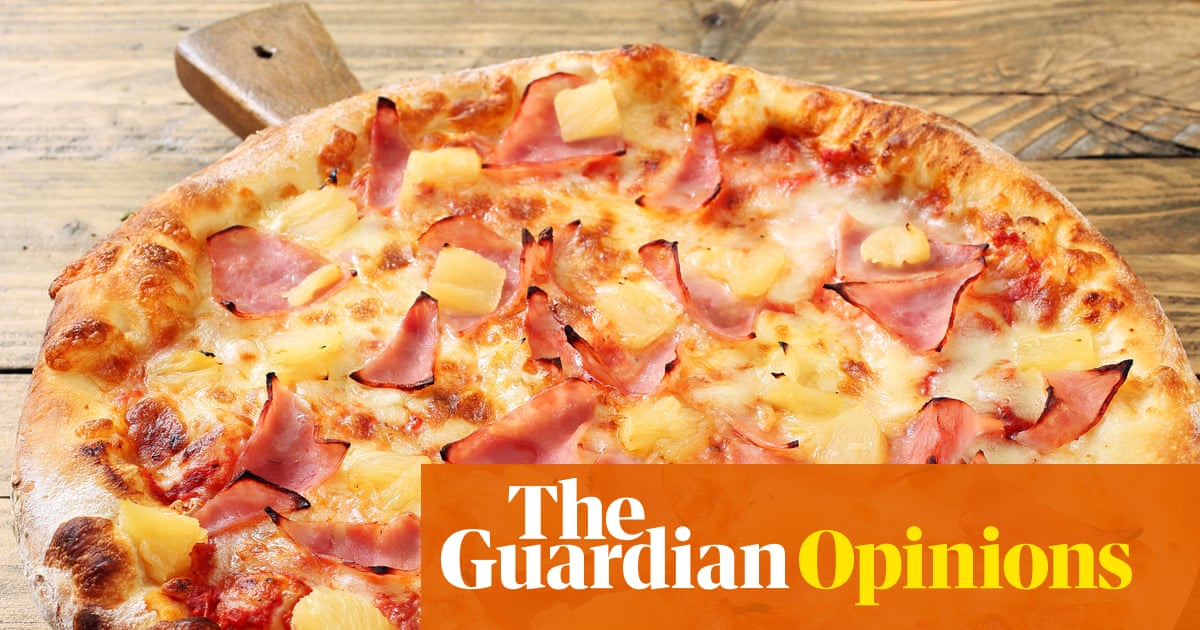
ou may have smiled at the news a few days ago: the Italian chef Davide Tamburella was sacked by a Brisbane restaurant after refusing to put pineapple on a pizza. Never mind that Queensland grows almost all of Australia's pineapples. Tamburella would not give way to his customers or his boss, insisting that the combination was an insult to Italian culture.
Strange as it may sound, he is not the first. In 2017, Maurizio Landi, a chef from Bologna, was sacked by a bistro near Lyon after resisting pressure to cook his pasta for longer and to serve spaghetti bolognese, a dish that does not exist in his home town. For anyone who doesn't know, Bologna is the only city in the world where ragù is eaten solely with tagliatelle, and putting it on spaghetti borders on an outrage.
Why would Italians rather lose their jobs than question their culinary certainties? The answer lies somewhere between anthropology and history. Food fashions are changing faster than ever. There are more chefs on television than grandmothers cooking at home, and Italians can sense the dangers hanging over their beloved cuisine.
It is a bit as if Renaissance paintings were crumbling before our eyes while we stand by, powerless. Yet there is one crucial difference between the Sistine Chapel and a pizza. Michelangelo's frescoes have looked the same for half a millennium, whereas a pizza from a century ago was nothing like the one we eat today.
Some of the most glaring sins against Italian recipes are simply old ways of eating that Italians themselves no longer recognise. Overcooked pasta and pasta as a side dish are two of them. Leaf through old recipe books and you will find that pasta was eaten soft for centuries, while macaroni with cheese was served alongside meat dishes from the middle ages onwards.
But it takes far less to drive an Italian mad. One spoonful of cream in a carbonara is enough to get you thrown out of the country. A pity, then, that this too is an old habit, introduced in the 1960s by a few Roman cooks and kept up for at least 40 years, a small detail everyone seems to have forgotten.
Then there is grated cheese on pasta with fish, an outrage to many Italians, who stand ready to scientifically prove that cheese ruins the taste of fish, while forgetting such ultra-traditional pasta dishes as mussels with pecorino.
No list of extreme pairings would be complete without the cappuccino, which foreigners order at the end of a meal under the horrified gaze of the waiters. Ask for a caffè macchiato, which is a cappuccino in miniature, and nobody bats an eyelid. Not all Italians are so rigid, and even pineapple on pizza has its admirers among the great pizza makers.
A few years ago, Gino Sorbillo, one of the world's most respected , opened the door to it, though only on a white pizza with no tomato, which would otherwise make it too acidic. Franco Pepe, considered by many the best pizza maker in the world, came up with the AnaNascosta ("hidden pineapple"), a cone of pizza filled with pineapple, San Daniele ham and Grana Padano fondue, making the heretical match respectable. And this summer, Berberè, a pizzeria chain with five sites in London, launched a pizza with a spiced pineapple sauce, to break with the prejudice once and for all.
Pineapple is only the latest blasphemy to land on a pizza. An article headlined "Neapolitan pizza", in the Morning Post of 17 December 1860, reads: "There are other modes of preparing the pizza, by the substitution of freshly-caught anchovies, or slices of sausage, or mushrooms for the cream and grated cheese; but the highest authorities on these points treat with disdain all such modern innovations, and protest that a pizza compounded after that fashion has no right to the name at all."
The toppings change, but the "authorities" will always have something to say about what can go on a pizza. It is hard to see why all the hatred should fall on pineapple, when Italian pizzerias offer frankfurters and chips, speck and mascarpone, tuna and onion, and the traditional pizza of Pesaro, in the Marche region, is a margherita with hard-boiled eggs and mayonnaise.
The truth is that we Italians don't need pineapple pizza to eat. We need it to despise. It stands for everything we fight against to keep our traditions intact, and loathing it makes us feel like better people, on the right side of the barricade.