Plastic contamination should be a central concern in efforts to deal with food waste, which campaigners call one of the most overlooked problems of the climate crisis, researchers have said.
This is despite the fact that, as the chef, author and activist Max La Manna puts it, food waste management is "one of the few climate problems where everyone wins".
About one-third of all food produced worldwide is wasted each year, according to UN data. In the US, 40% of food waste goes to landfill, where it creates 30m metric tonnes of CO2 equivalent a year – more than Cuba's total annual CO2 emissions in 2024, which amounted to 24.4m tonnes.
A new study, published in Nature Food, used life-cycle analysis modelling to compare the impacts – in terms of climate, nutrient pollution and plastic contamination – of different food-waste management scenarios.
The authors, based at the University of Vermont, compared the annual climate impacts of landfilled food waste with the climate impact of alternative recycling pathways and found that diverting food waste from landfill would reduce climate impacts by between 89% and 99%.
These non-landfill scenarios could also reduce nutrient pollution in water bodies – a process called eutrophication that occurs when excess nutrients result in algal blooms.
But the researchers also said that microplastics can persist in compost, which could lead to 20,000 tonnes contaminating US agricultural soils each year. To date, no study has looked at the "plastic pollution footprint" of different food-waste management strategies at national scale.
Kate Porterfield, the lead author, said the method was comparable to working out a "carbon footprint of a product or process". Essentially, the researchers looked at the process of managing food waste and "tall[ied] up what the carbon emissions are across all of those life-cycle stages", she said.
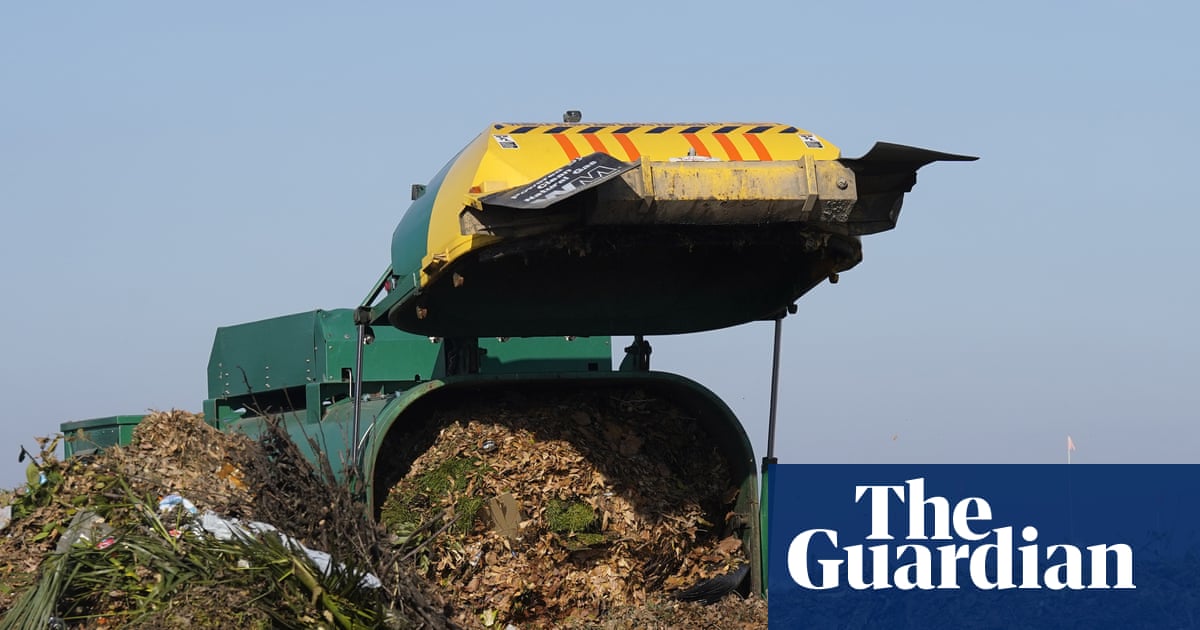
Porterfield said the large proportion of wasted food still in packaging "goes bad before it even reaches the consumer". One approach to recycling food waste is using a mechanical "depacker"; the packaging then goes to landfill, while food waste goes to "beneficial reuse, like composting or anaerobic digestion".
However, they found that even if plastic separation technologies were 99% efficient, diverting food waste from landfill could still increase microplastic pollution in soil by an order of magnitude. "Any time where you're diverting food waste, there is a risk of microplastic pollution" because "people aren't perfect, machines aren't perfect, and all of our food these days is packaged in plastic".
The US state of Vermont has "one of the most ambitious" state organics-diversion mandates in the US, according to the co-author Eric Roy.
The state's Universal Recycling Law has been fully effective from 2020 and requires food waste to be diverted from landfill. This applies to all households and means food scraps are banned from bins.
The authors said their findings provided an effective evaluation of the possible countrywide scale-up of such regulations and pointed to the need for "more attention to the plastics issue" from the outset of creating these policies.
Phil Holtam, a co-founder and director of the food waste social enterprise Sussex Surplus, said there was "a little bit of a misconception that [plastic packaging] is unnecessary", and that it was a "necessary tradeoff", essential to extending the shelf life of fresh produce, particularly for smallholder farms.
"That's where the tension lies because as environmentalists we want to reduce food waste but we also want to prevent needless use of plastics."
La Manna, who has worked with farmers in the UK and also witnessed food waste working in a Michelin-starred restaurant in New York, said consumer expectations of perfect-looking food were shaping what produce even made it to store shelves and adding to the waste problem. "Some of it may be misshapen, wonky, slightly cosmetically imperfect … [which is] challenging for supermarkets because they believe consumers want a perfect cucumber.
"We're allowing 'perfect' to become this enemy of good."
Roy underlined that in institutions such as schools, there "may be some well-intentioned rules that actually create challenges in moving away from highly packaged foods" because "food safety is always going to be a number one concern".
Porterfield said that, ultimately, to reduce plastic contamination food waste management systems needed to be "as easy as possible to make it mindless for people to separate things efficiently".
This included addressing the phenomenon of "wish recycling", said Roy, where people put non-recyclable items in recycling in the hope they will be recycled.
He advised "old-school environmentalism" to reduce litter overall: "buy in bulk", "make every effort to separate" – and "if in doubt, put it in the landfill stream".