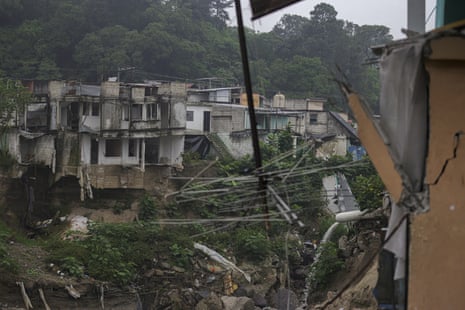
What will it take for elites in finance, business and politics to finally publicly admit the game is up and that climate change is the greatest threat humanity we have collectively ever faced?
Gabby says: I wish I knew the answer. It certainly feels overwhelming to see the escalating threats alongside both inaction and downright denial. One thing I can say is that while the problem is global many solutions are local. Experts have told me time and time again that we must adapt to the extremes caused by the climate crisis while we continue to push for a better future and that happens at the community level. Perhaps a silver lining of this El Niño is it may offer a glimpse of the challenges that will arise as the world warms - and there is still time to prepare.
Dormant2 asks: I'm surprised how suddenly we seem to have gone from small climate effects to very noticeable ones such as this year's heatwaves and the lateness of the first Atlantic hurricane. Is this an acceleration and is it a worry?
Jon says: This concerns me enormously. I started to be worried about this in 2023, when sea surface temperatures jolted upwards. The following year - as the trend persisted - I put a similar question to Gavin Schmidt, the director of the Nasa Goddard Institute for Space Studies in New York who said scientists were still struggling to explain whether the sudden rise was a blip or an alarming new trend.
Since then various explanations have been put forward, including the possibility that the Earth is warming faster because it is losing the heat-reflecting "albedo" effect of white snow and ice at the poles, or the widely-held view that pollution controls have reduced aerosols that previously limited the amount of sunlight reaching the earth's surface.
Scientific opinion seems to be moving towards an acceptance of the theory that global heating has sped up over the past 15 years. Last year, Zeke Hausfather, an influential climate scientist, said there is now sufficient evidence from multiple sources - climate models, ocean heat content, and changes in earth energy imbalance - to "tips the scale toward pretty clear acceleration in recent years."
Sometimes you can't help wishing experts are wrong. But I trust climate scientists - who include some of the smartest people on the planet - are trying to find the truth and they are the best guides to what is happening.
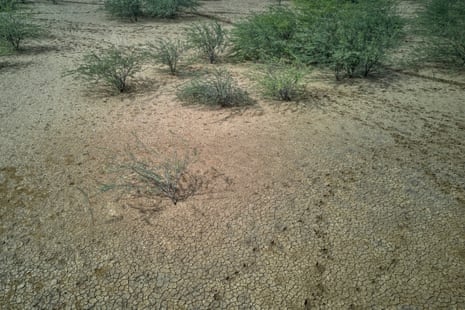
Unrelated to El Niño, what is the likelihood of the AMOC (Atlantic meridional overturning circulation) shutting down?
Jon says: I don't think these two things are unrelated. Everything is affected by climate breakdown. And both El Niño and the slowdown of AMOC are related to the staggeringly huge amounts (see this article on zettajoules which I also referred to above) of extra energy that the oceans are being forced to absorb as a result of greenhouse gas burning.
Quick refresher for any readers who are unfamiliar with this topic: "Amoc, or the Atlantic meridional overturning circulation, is a system of ocean currents that brings heat into the northern Atlantic. Warm surface water from the tropics flows north and releases its heat in the subpolar Atlantic, south of Greenland and west of Britain and Ireland. Then it cools and sinks to a depth of between 2,000m to 3,000 metres before returning south as a cold current. Amoc is one of our planet's largest heat transport systems, moving the equivalent of 50 times the human energy use, and it has a particularly strong impact on the climate in Europe, affects the ocean's CO2 uptake and oxygen supply, as well as rainfall patterns in the tropics."
A collapse of AMOC would be catastrophic for large parts of the world. This was considered a remote likelihood until relatively recently. But recent studies show a much higher risk indeed. AMOC is now at its weakest for 1,600 years. One of the leading experts in the field, Stefan Rahmstorf put it to me in these terms: "It is a question of risk assessment. I compare it to being told that there is a 10% chance of an airplane crashing. Would you get on that plane? I wouldn't. The disastrous consequences are unacceptable."
He was speaking to me in 2024. Since then the dangers have increased. My colleague Damian Carrington wrote earlier this year of new AMOC research that "found an estimated slowdown of 42% to 58% in 2100, a level almost certain to end in collapse."
There are many areas where climate journalists, scientists and activists feel the urge to pull their hair out in frustration at their inability to close the huge gap in understanding between the dangers we face and the action that governments need to take. For me, this is one of the worst.
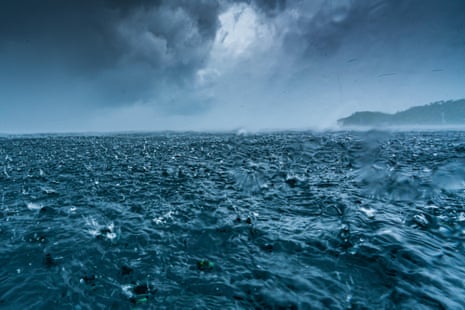
Rad_Mobil asks: Why is it called "El Niño" rather than something like "El Monstruo Gordo"?
Gabby says: The name "El Niño" actually harkens back to long before forecasters used the phenomenon to track global weather patterns. Fishermen off the coast of South America began to track unusually warm water that would show up every few years right around Christmas - thus "The Little Boy" referring to the Christ child in Spanish. Scientists adopted the name, and added "La Niña" as its counterpart (when sea surface temperatures cool), and together they became ENSO - the El Niño Southern Oscillation. This year, though, feel free to call it "El Monstruo Gordo!" It's going to be a big one.
: Assuming that future El Niño events are likely to become more frequent and more intense, primarily caused by additional warming of the Pacific Ocean due to human-caused climate alteration, is it feasible that most or all current oceanic lifeforms might eventually die off over centuries or even decades?
Jon says: I haven't heard anyone suggest the total eradication of all lifeforms in the ocean. Even in the previous five great waves of extinction, some forms of ocean life have survived. In fact, I would guess marine life is usually less vulnerable than terrestrial life. But there are unprecedented threats right now in the forms of heat acidity, destratification, a weakening of the biotic pump and the slowdown of currents.
For me, the most shocking statistic of the year is about the heat content of the oceans, which has doubled in the past two decades. That is because the oceans absorb 90% of the excess energy left in the Earth System as a result of human-caused climate disruption (the burning of oil, gas and coal, which has a "greenhouse effect" that prevents energy from escaping back out into space.
The scale of the energy build-up in the oceans is what knocks me sideways. As I wrote in an earlier story:
"The scientist John Abraham has previously calculated the accumulation of energy in terms of the explosive power of the Little Boy atomic bomb that devastated Hiroshima in 1945. In 2020, he observed that the amount of heat being added to the oceans was equivalent to about five Hiroshima bombs of energy every second. By 2022, this had gone up to seven Hiroshimas every second. Last year, the WMO figures suggest, it was closer to 11 Hiroshima explosions per second."
Imagine all that extra heat! Some of it accumulating in the depths for centuries. Some of it vomited back out into the atmosphere in the form of an El Niño.
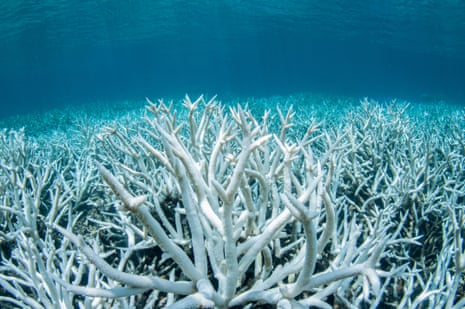
How can ocean life not be affected by that? We know that coral reef systems are dying (or as one expert described it to me "flickering out like lights across the world") but there must be so many other impacts that cannot yet grasp because humans know almost less about the deep than we do about outer space.
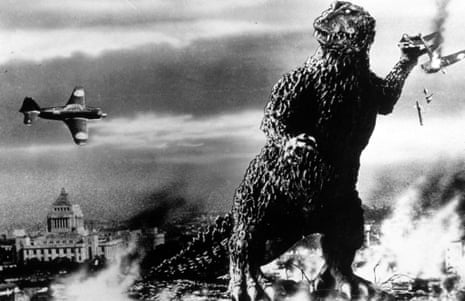
: Doesn't the hype, as in "Godzilla-level" just turn a lot of people off the whole issue? Why do the warnings always have to be so over top? And what will be said if very little actually happens away from the norm? Keeping in mind the norm has always been wildfires, floods and storms since time began.
Gabby says: I hear you - the names can be a little much. These colloquialisms aren't coming from scientists who are still describing this El Niño as a "very strong" event. But I think what people who use these terms - whether they are journalists or emergency managers or others in communication roles - are trying to convey is the startling leap we are seeing in the numbers this year. It's a challenge to balance putting that into perspective, without causing either undue alarm or contributing to messaging fatigue. But here's what we know: this El Niño is well on its way to being off the charts and it's expected to strengthen over the next few months. An El Niño is classified by how many degrees Celsius monthly sea surface temperatures in parts of the Pacific warm.
El Niño is declared after that region rises 0.5C above normal. As of 21 September, the daily anomaly in that region reached over 3C - setting a new record. This is alarming because temperatures are exceptionally high - and still climbing. There is of course some nuance needed here. Scientists have had to create a new system to measure these temperatures in recent years because overall the oceans are warmer.
So, to compare the strength of previous El Niños to this one, adjustments are needed. But even adjusting for the underlying warmth, this El Niño is still close to breaking the record overall and is far stronger than any other recorded for this time of year. While there may be places around the world that don't see the effects as directly, and experience the "norm," many places are already being impacted. Marine ecosystems are suffering, and strong storms and coastal erosion are already wreaking havoc.
Konchog asks: Does the current cycle represent a tipping point where the ENSO (El Niño-Southern Oscillation) becomes entirely chaotic? When will we be able to tell if the system has recovered? If the ENSO ceases to oscillate, what would the short and long term consequences be?
Jon says: The UK Met Office has warned this El Niño will be the largest in memory and probably the biggest since the 19th century. The impacts will be strongest around its peak, which is expected in November or December. "We expect the influence of El Niño to start to increase the chances of wetter, stormier conditions for northwest Europe, including the UK, in the coming autumn and early winter. But the Met Office has distanced itself from some of the wilder headlines, such as "El Niño to smash Brits with polar vortex of snow and storms in dire warning."
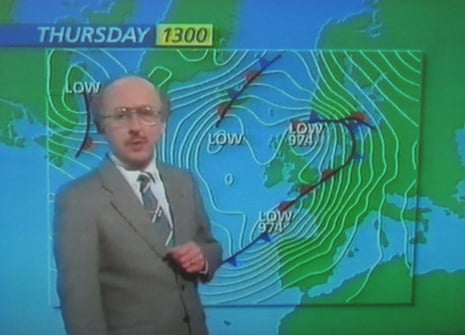
Rather more cautiously, its meteorologists observe: "El Niño can increase the likelihood of wetter, stormier and generally milder conditions in the UK during late autumn and early winter. Later in winter, following the peak of El Niño, the stratospheric polar vortex can become weaker. This may raise the chance of Sudden Stratospheric Warming events, which can increase the potential for cold weather. These are shifts in probability rather than guarantees. El Niño does not determine individual weather events, and the current forecast does not support the suggestion that the UK is about to be "smashed" by widespread snow associated with changes to the polar vortex." It also doesn't rule it out, though that may be caution on the part of an organisation that learned the hard way not to completely rule out extreme weather, as anyone old enough to remind Michael Fish and the storm of 1987 will attest.
In the short term, the UK forecast suggests a drop in temperatures, but no indication of widespread low-level snow across 12 areas. Rain, snow and more powerful El Niño impacts are more likely to come later in the winter.
The Met's full statement can be found here.
MrsWoo2 asks: Is El Niño mostly a maritime based event or does it also affect large continental areas?
Gabby says: El Niño may start in the sea but the ocean and the atmosphere are inextricably linked - and that's why the climate phenomenon can impact continental areas all over the world. Basically what's happening is a big transfer of heat. The way climate scientist Daniel Swain describes it, is like the ocean discharging a full battery.
The excess warmth in the Pacific is able to rise to the surface and burp off into the atmosphere. The more heat there is in the atmosphere, the more able it is to absorb moisture. But El Niño events also shift the jet stream - a current of air that encircles the earth that steers some weather systems.
This move changes rain and snow patterns and can leave places less accustomed to those patterns more exposed. Of course it's all a bit more complicated than that, and there are lots of features in play at once, but that is one of the underlying changes we see that can have a broader impact. El Niño also has the power to raise global temperatures overall, and that can fuel extreme weather.
Lilypad3 asks: How has this El Niño been affected by climate breakdown and how likely is it that the next El Niño will be more extreme?
Jon says: That is a key question, though disconcertingly scientists are not yet agreed on a definitive answer.
I recently asked this to Prof Mat Collins, a climate scientist at the University of Exeter and the author of some of the world's most important climate reports. He replied: "The easiest way to think about this is that they (climate change and El Niño) are two separate things that layer on top of each other. So if you've already got drought conditions as a result of global warming, then an El Niño is going to exacerbate that. The harder question is how they interact with each other."
Collins says we don't yet have the data to prove that climate change makes El Niños more frequent and intense. But that evidence may emerge in the coming decades. He said it was very likely that there will be more extreme El Niños in the future.
One of the world's most influential climate scientists James Hansen went further in a recent essay that states: "The abnormal El Nino strength is itself likely human-driven."
My journalistic take on this debate is:
El Niño + climate change = definitely worse than El Niño alone
And it is also possible that one is feeding back on the other, leading to more frequent and intense El Niños - though this is not yet confirmed by science.
Gabby says: Even without a direct connection, dangerous tipping points - especially in areas or in eco systems already pushed close to the brink because of global heating - could face further strain due to this year's El Niño. It could also increase the chances of compounding extremes - weather events that, when combined, create more catastrophe and test response and recovery systems. For example, we can think about the wildfires that are on the rise due to heating and aridity linked to global heating. In areas where El Nino produces greater chances of heavy rain - like in Los Angeles California, which is still recovering from the 2025 tragic firestorm that destroyed more than 16,000 homes and businesses - burn scars will be at greater risk from debris flows and landslides.
Has the accuracy of forecasting improved significantly in the last decade or do the same margins of error still apply?
PhDistracted asks: I've been trying to read up on El Niño, but having difficulty finding any other answer than (to expect) "extreme weather". It appears we're in truly uncharted waters - is anyone able to properly predict the effects?
Gabby says: Niño produces more of an underlying signal that can impact global weather systems rather than a direct cause and effect. But forecasters know a great deal about what take shape but there's still uncertainty about what exactly will unfold. For example, in California where I am based, El Niños in the past have correlated with much stronger rain storms in the southern part of the state, but it's unclear when or how many storms will form. El Niño increases the risks, but there are no guarantees.
There are some associations, however, that are stronger than others. Again, going back to California, scientists are fairly confident that sea level rise will have an impact up and down the coast. El Niño has also turned up the dial on the Pacific hurricane season, which is already packing a punch, and will increase global temperatures. But as El Niño strengthens - and especially if it smashes through records as it's expected to - there is still a fair degree of uncertainty.
The good news is that forecasting has improved since the last El Niño, and scientists are working diligently to build on the technology and capacity to predict extreme weather events sooner and with more accuracy. Unfortunately some of that progress was hampered by the Trump administration's cuts to federal research, programs, and climate-focused agencies.
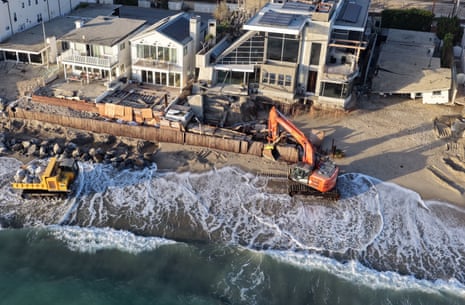
This year's huge El Niño is causing climate chaos around the world. Temperate records have already been broken, with extreme heat reported from western Europe to California. Meanwhile, Bangkok is suffering massive flooding and the weather phenomenon is projected to cause a further 450,000 deaths globally by February.
, the Guardian's global environment writer along with extreme weather reporter will be online from 4pm BST (11am EDT) today to answer your questions on the unfolding crisis.
Sign up or sign in to join the discussion. Post your questions in the comments below.