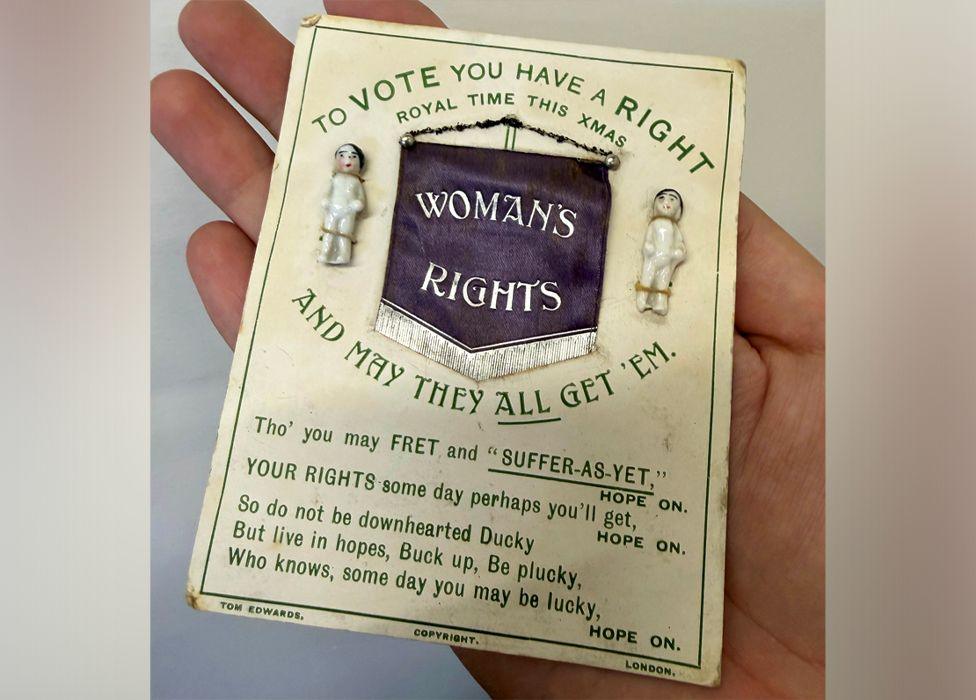
A rare Suffragette Christmas card from around 1910 has been discovered at a vintage roadshow.
The card, found in Mold, Flintshire, and which comes from the height of the campaign to win women the vote, was produced to raise funds and awareness for the movement.
Today, surviving examples are "exceptionally scarce", according to antique shop WeBuyVintage, which has valued the item at £2,500.
"These weren't simply Christmas cards, they were pieces of political campaigning that helped fund one of the most significant social movements in British history," said Matt Case, an antiques specialist.
Case said that finding an original Suffragette Christmas card was "incredibly exciting".
Because they were intended to be seasonal and disposable, "very few have survived, especially in such good condition", he added.
Sold by organisations such as the Women's Social and Political Union (WSPU), they helped finance the campaign while keeping the movement visible during the Christmas season.
Museums, including the London Museum, now hold examples in their permanent collections as important artefacts documenting the fight for women's voting rights.
In Wales, Lady Rhondda, born Margaret Haig-Thomas, led a 40-year campaign for women to be allowed to sit in the House of Lords - although she died just before the law she fought for was changed, too late to take her own seat.
Typically printed in WSPU's colours of purple, white and green the cards combined traditional seasonal greetings with the movement's political message.
Many prominently featured slogans, which were intertwined with suffragette banners and ribbons.
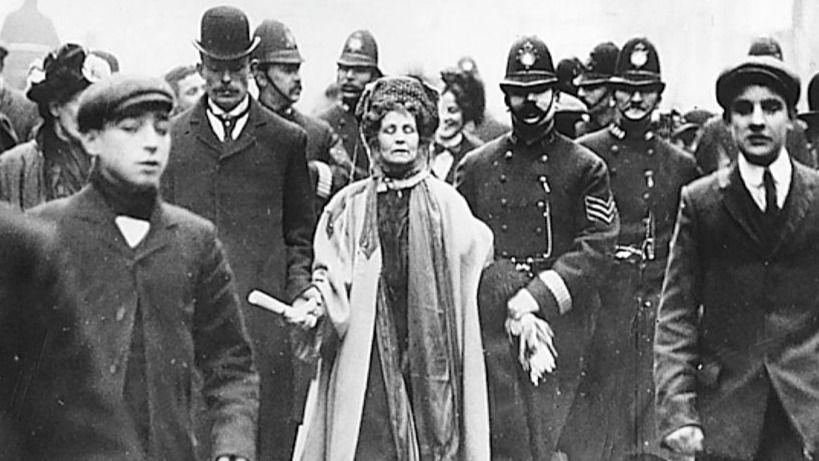
The WSPU was formed in 1903 when Emmeline Pankhurst and her daughters felt a more direct and confrontational approach was required to the efforts for women to be given the right to vote.
These campaigners were labelled "suffragettes" by the press. It was meant as an insult but the name stuck and was used by the members of the WSPU themselves.
Many of those at the forefront of the WSPU's campaign were arrested numerous times.