
Residents say they are "gobsmacked" after being told a long-running water leak may not be fixed until November.
They say the leak in Bourne, Lincolnshire, has led to water running at a "consistent" flow across a footpath by the A151 into a woodland for at least four months.
It has been reported by a number of local residents who have received different dates from Anglian Water for when it will be repaired.
Anglian Water said it prioritised leaks that "have the greatest impact on customers' water supplies" and result in the "highest water loss".
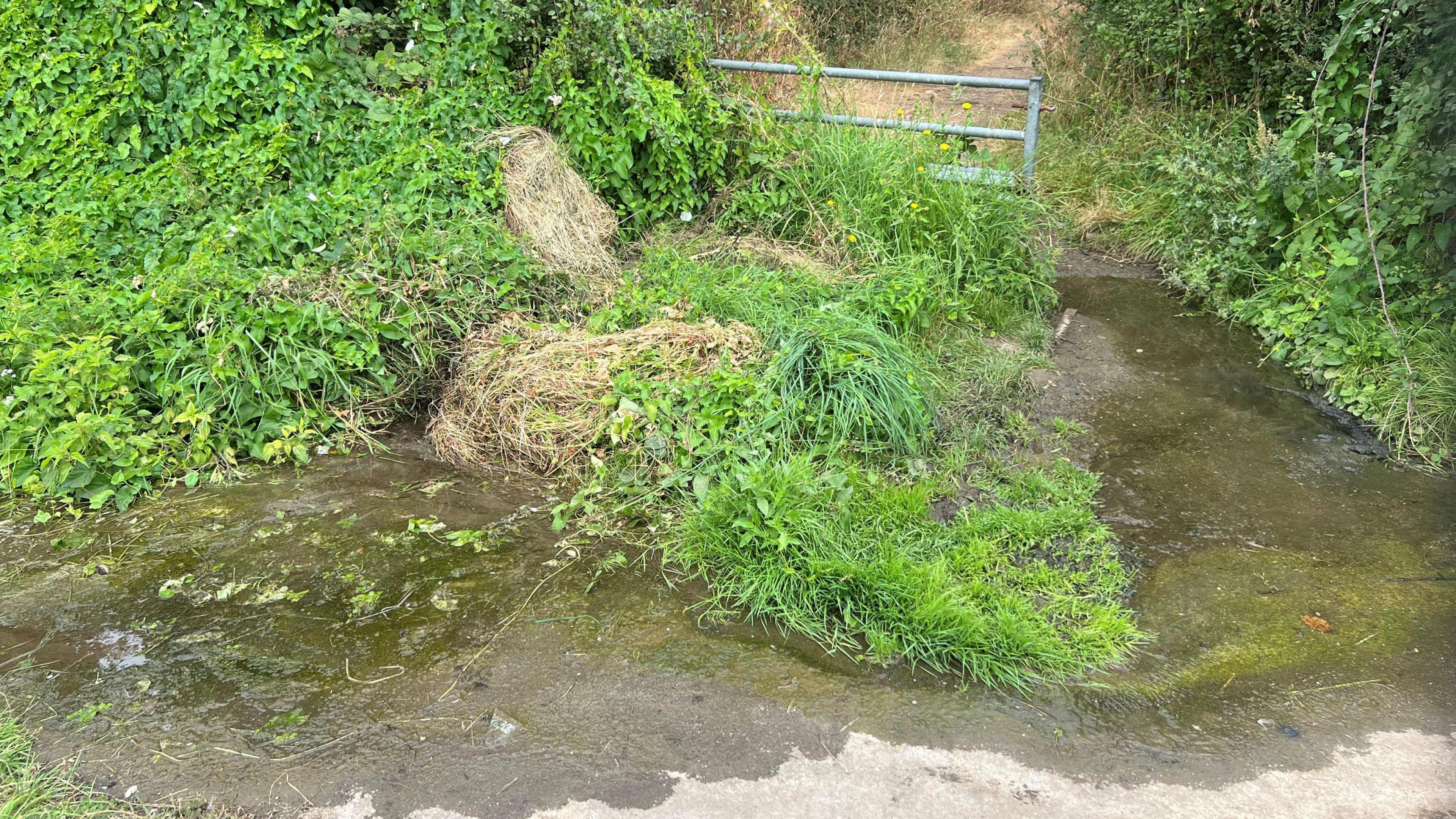
Mark Kelby lives in Bourne and said he had been aware of the leak for at least four months since he started walking through the woods.
He said the water had sometimes been so high it had come over the top of his walking boots.
Kelby said he was "gobsmacked" when he contacted Anglian water about the leak and was told it would not be fixed until November as the work needed to be done at night and the road may have to be closed.
"We're all under a hosepipe ban at the moment, we've got water shortages, and yet we're letting thousands of litres of water run away quite happily," he said.
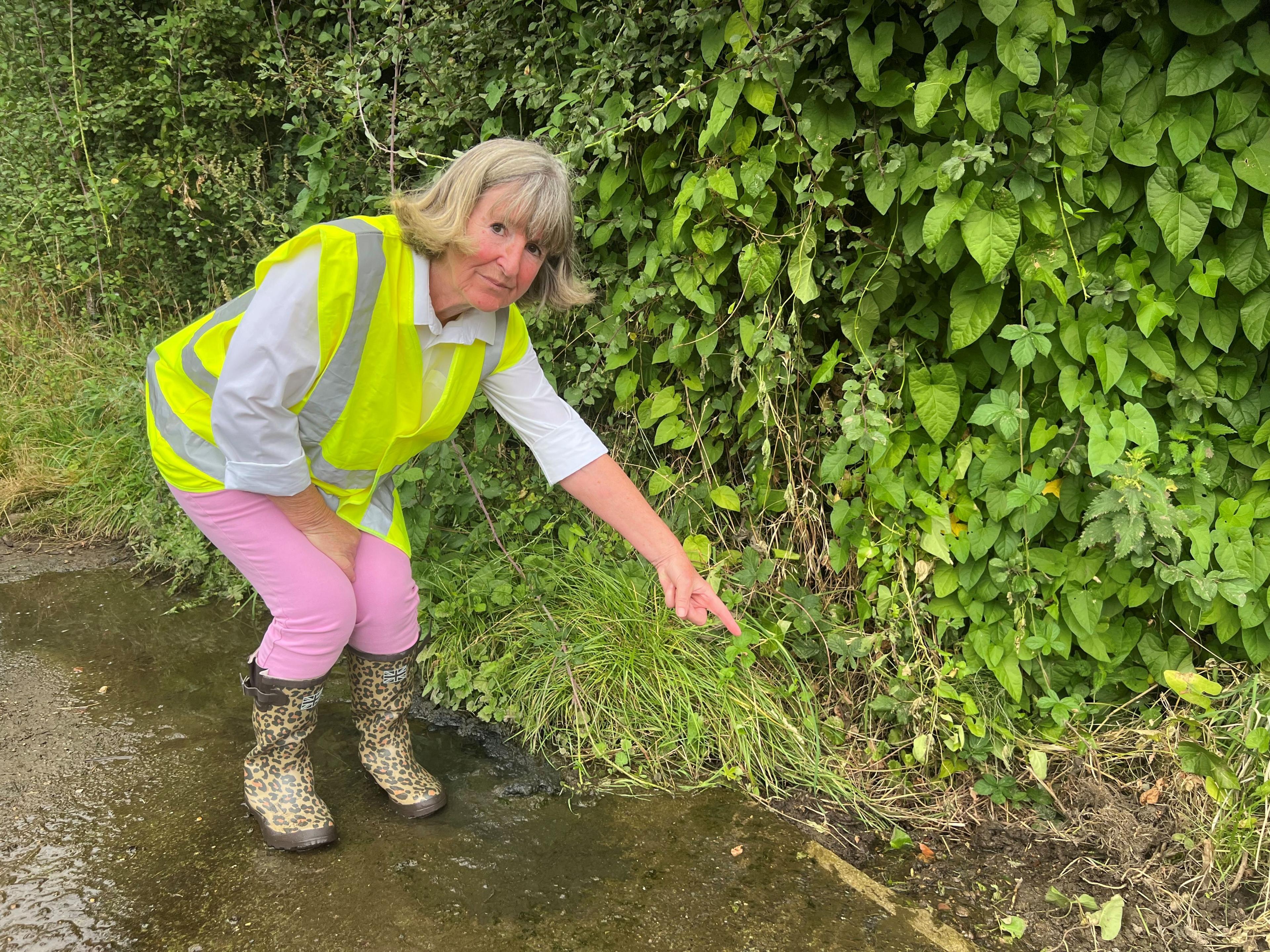
Sue Wooley, a Lincolnshire county councillor for Bourne North & Morton, said the "annoying thing" was that Anglian Water knew about the problem.
She said it was "unnecessary" and "unpleasant" for people to have to walk through the water as they entered the woods, especially as black sludge was building up there.
Wooley said residents had been given different dates on when the leak would be fixed, ranging from Wednesday 19 August to November.
"We're all trying to do our best by being very careful and conserving water, and Anglian Water don't seem to give a damn," she said.
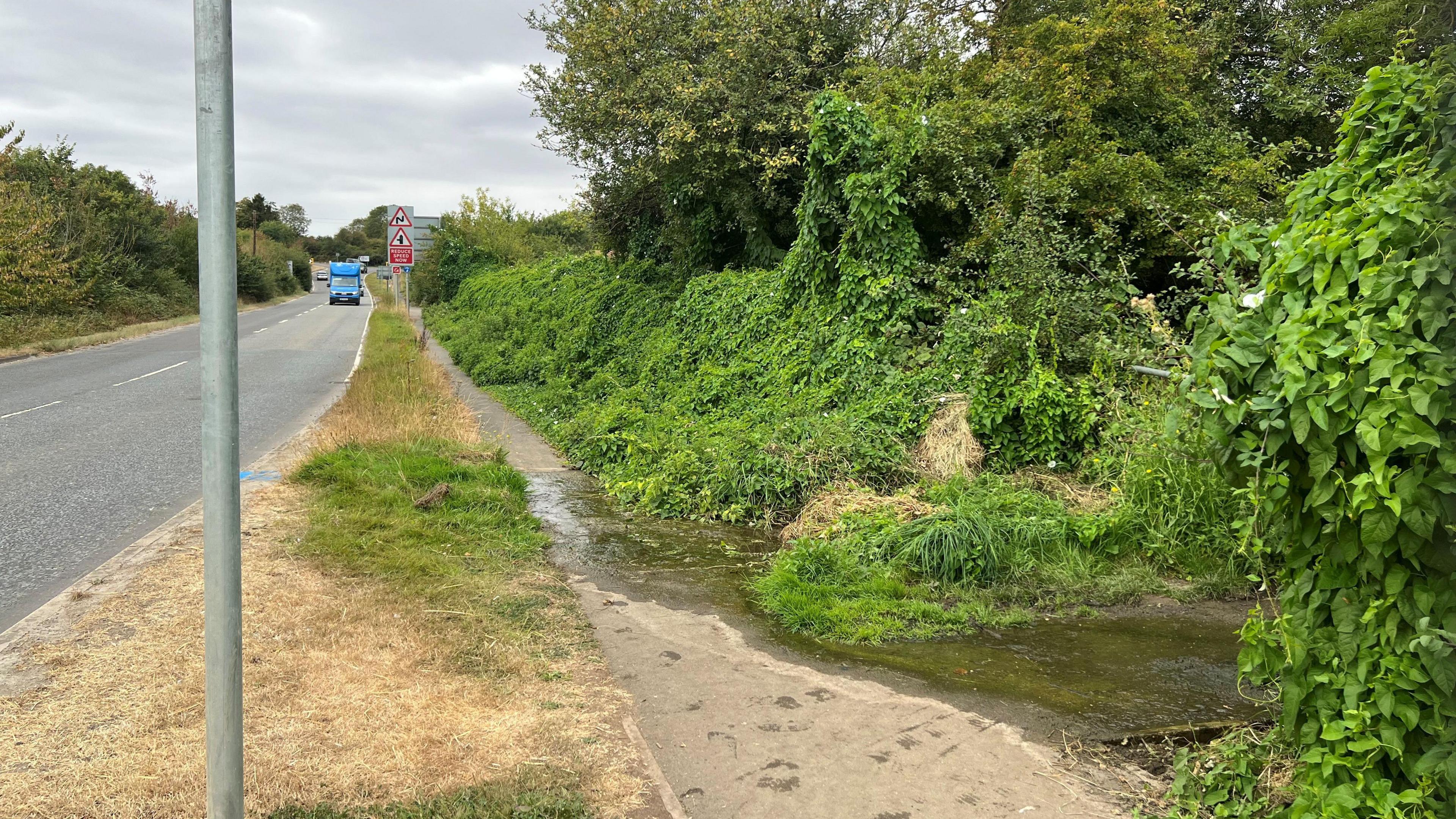
The BBC has asked Anglian Water for clarification on when the leak would be fixed.
The company said it had 245 people focused on finding and fixing leaks.
A spokesperson said: "Teams work around the clock to identify and repair leaks as quickly as possible, prioritising those that have the greatest impact on customers' water supplies and those resulting in the highest water loss."