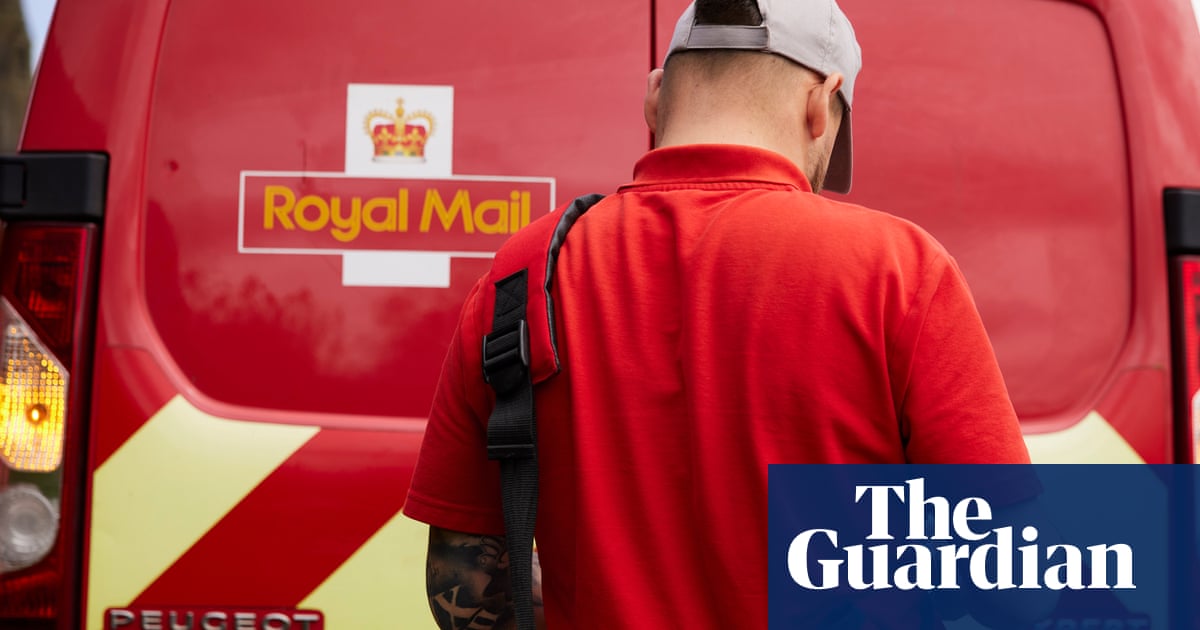
Royal Mail is to cut up to 2,500 jobs as the embattled company seeks to restructure its business amid intense competition and the continuing decline in letter deliveries.
The postal service, which has been fined a total of £37m since 2023 for missing delivery targets set by Ofcom, said the job cuts would focus on head office and "support function roles" with the restructure to be completed by the end of next year.
Pointing out that the volume of letter deliveries had declined more than 70% since their peak in the mid-00s, Royal Mail said the cuts would be achieved through "natural attrition" and a voluntary exit programme with no compulsory redundancies.
The company said there would be no reduction in operational frontline roles in delivery and processing, including the number of postal workers and drivers it employs. The cuts amount to less than 2% of Royal Mail's workforce of more than 131,000.
"We have been working hard to reduce costs and simplify processes across all areas of the business as we transform to win in a very competitive market," said Alistair Cochrane, the chief executive of Royal Mail. "These proposed changes remove duplication and allow us to invest further in the service we deliver for our customers.
"The proposed changes will not be easy, but they are an important part of building a stronger, simpler and future-ready Royal Mail for our customers and colleagues."
The cuts are the first to be made since the completion of the £3.6bn takeover of Royal Mail's parent company, International Distribution Services, by the Czech billionaire Daniel Křetínský's EP Group last year.
Royal Mail last made a big round of cuts in 2022 when it said it was looking to eliminate up to 10,000 roles, including 6,000 full-time frontline jobs.
Last week the company announced it was to hire 22,000 temporary workers – in roles including sorting, delivery and collection and HGV and MGV drivers – to cover the seasonal jump in mail volumes, including online purchases over Black Friday and Cyber Monday in November, and Christmas deliveries.
In June the postal regulator launched an investigation into Royal Mail for once again missing its annual delivery targets, with almost a quarter of first-class mail arriving late. Royal Mail has not hit its Ofcom-mandated delivery target for first-class post since 2017, or for second-class mail since 2020.
In April, Royal Mail faced criticism for raising the price of a first-class stamp by 10p, or 6%, to £1.80. The cost of a first-class stamp has more than doubled since 2020.
The cost of the second-class service rose by 4p, or 5%, to 91p. Royal Mail blamed the need for price increases on the "continued rise in the cost of delivery for every letter".
Last July, Ofcom gave IDS permission to loosen Royal Mail's universal service obligation, ending second-class post on Saturdays and reducing the service to alternate weekdays from Monday to Friday.
A decade ago Royal Mail was delivering 20bn letters a year, but that has shrunk to 6.7bn and could drop to 4bn within four years. Over the same timeframe the number of addresses it serves has risen by 4m.