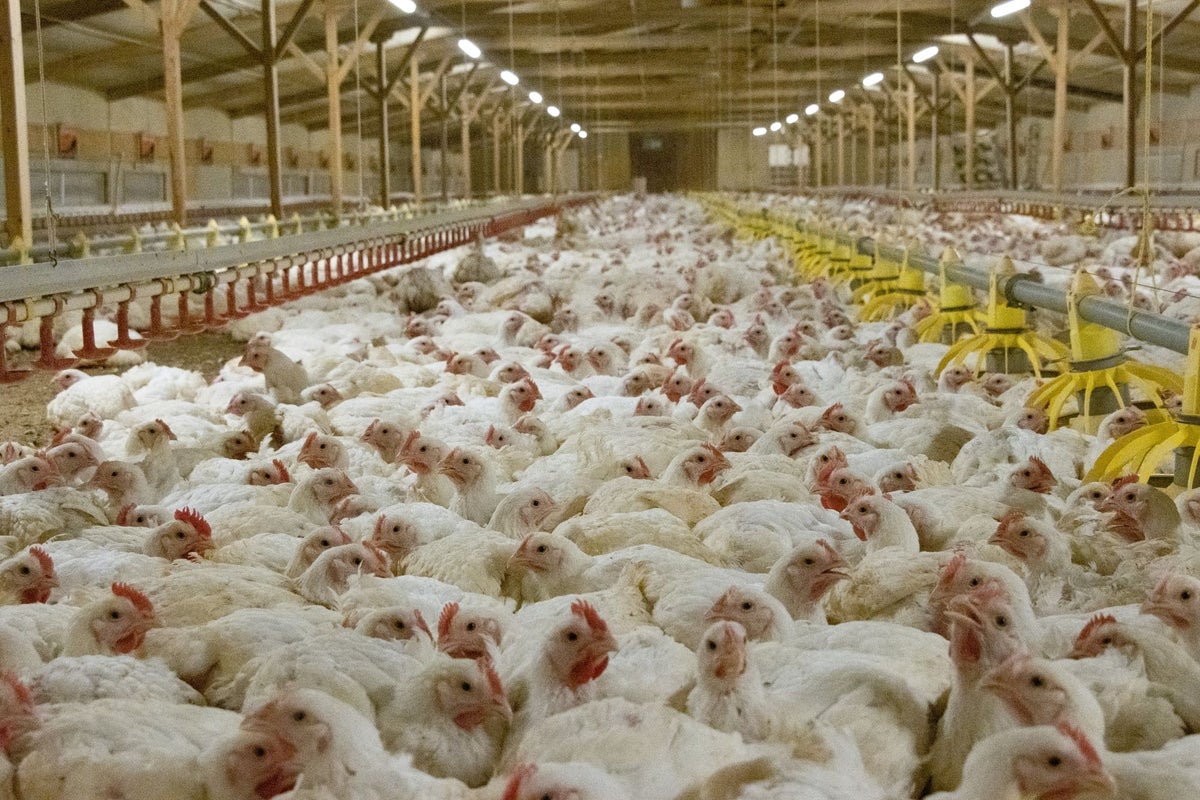
Higher-welfare chicken farming could be a “secret weapon” in curbing the UK’s most common cause of food poisoning, the RSPCA says, after a study linked factory-farmed birds to soaring rates of infection in people.
University of Oxford researchers last month revealed that the way in which most chickens are reared for meat in the UK increased the disease behind food poisoning more than 100-fold.
The scientists said industrial farming, and in particular densely populated chicken flocks, has allowed strains of a bacterium called campylobacter to spread widely in birds reared for meat.
Campylobacter is the most common bacterial cause of diarrhoea worldwide, causing more than 3.5 times as many gastroenteritis cases in the UK each year than all other monitored foodborne bacteria combined.
The RSPCA is calling on supermarkets, food companies and the government urgently to prioritise breeds that grow more slowly and to promote higher-welfare farming, to rein in the spread of the bacterium.
The animal-welfare charity says urgently switch to slower-growing chicken breeds will not only “drastically improve” animal welfare, but would also “offer a vital line of defence for public health” and reduce strain on the NHS caused by food poisoning cases.
Campylobacter is largely harmless to healthy adult chickens, but is a major infection risk for humans, causing severe stomach cramps, diarrhoea, fever, headache, nausea and vomiting.
The bacteria, which spreads via raw meat and raw and contaminated milk, can be killed by thoroughly cooking.
Most of the one billion-plus chickens bred for meat in the UK each year are “frankenchickens”, genetically engineered to put on weight so rapidly that their legs break under the strain and they suffer chronic pain, deformities and heart failure.
It’s been calculated that if human babies grew as quickly, they would weigh around 45 stone by two months old.
Evidence suggests that slower-growing chickens develop stronger immune systems, reducing the chances of bacteria such as campylobacter taking hold.
The researchers found the huge global expansion of chicken farming has created ideal conditions for the bacterium to spread, mix and adapt to survive.
As well as the Oxford study, research by the European Food Safety Authority has linked the practice of “thinning” – removing some chickens for early slaughter – to higher campylobacter rates because it causes distress and health risks for the remaining birds.
Charlotte Arthur, poultry welfare expert at the RSPCA said: “Evidence suggests more welfare-friendly poultry farming could be a secret weapon in efforts to reduce the spread of a bacteria that can be so dangerous to humans.
“Slower-growing chickens live longer, experience fewer welfare problems and may also be less susceptible to some of the biological processes that allow campylobacter to spread.”
The RSPCA says chicken with its Assured label takes at least eight days more to reach slaughter weight than standard supermarket birds.
“These birds don’t just experience better lives - evidence suggests they may be better equipped to cope with infections such as campylobacter,” Ms Arthur said.
“That’s why slower-growing breeds of chicken must be part of a serious conversation about reducing risk, and building resilience that doesn’t involve more antibiotics - keeping people healthier, safer, and reducing the strain on the nation’s doctors’ surgeries, pharmacies and the NHS.”
Rising rates of antimicrobial resistance, in which bacteria resist drugs designed to kill them, are making campylobacter infections increasingly hard to treat.
Since the 1960s, global chicken numbers have increased seven-fold to approximately 31 billion birds.
The government and British Retail consortium have been approached for comment.