Scorched London: Images from space reveal how record-breaking heatwaves have frazzled the capital
Exclusive: Satellite images show devastating impact of summer drought on capital’s green spaces
The full scale of the devastating impact of unprecedented heatwaves on London’s landscape is revealed today.
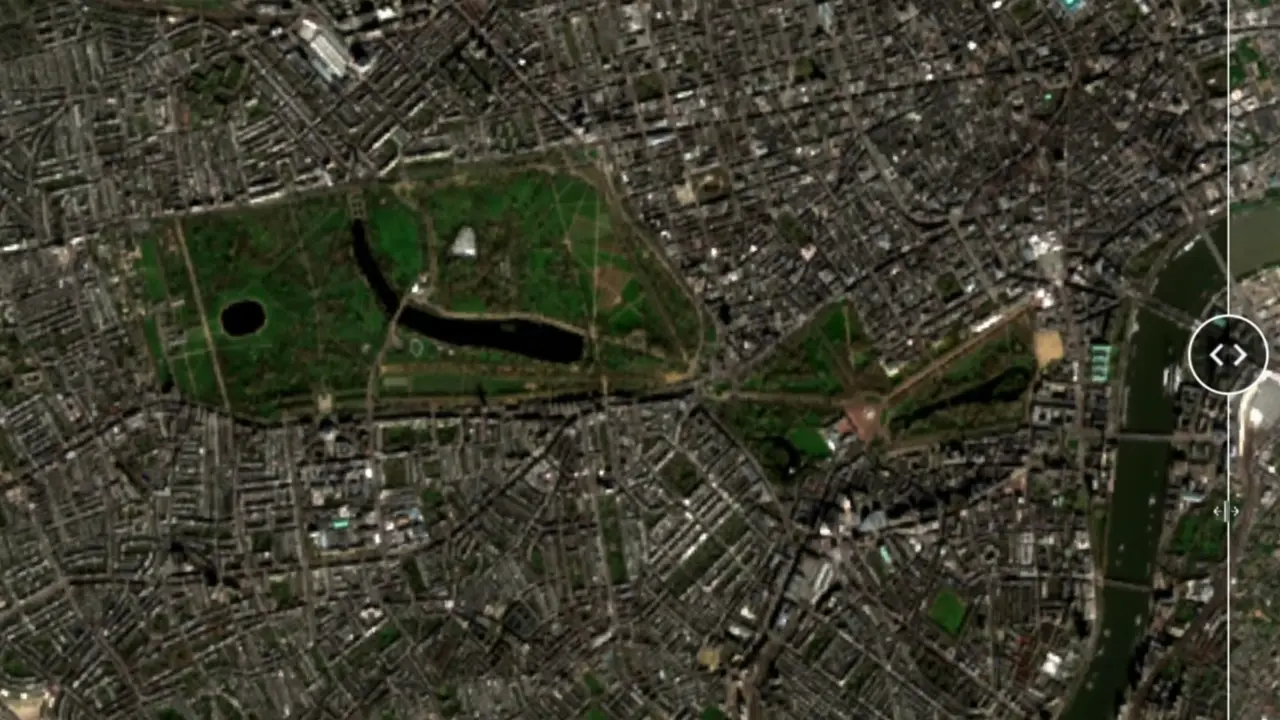
Exclusive satellite imagery prepared by geospatial analytics company Map Impact for The Standard shows how the capital’s parks, gardens and other green oases are being frazzled into parched lands.
Normally, London is one of the greenest capitals on earth, boasting “crown jewel” parks like no other city.
But across the drought-hit capital of nine million, the landscape has been ravaged by the relentless baking heat with temperatures forecast to hit 35C on Thursday in London.
The images from space lay bare the impact of virtually no rain for weeks and record temperatures, no more so than in Victoria Park, in Tower Hamlets, the capital’s oldest public park.


Its normally lush, green acres are now vast, straw-coloured areas.
The dramatic transformation has happened in just months.
The satellite snaps show how the park looked in March - before the global warming-fuelled extraordinary heat hit Britain - and then in July.
The “People’s Park”, as it has been known over the years, was opened in 1845 for the benefit of the East End working class, and sprawls across 86 hectares as part of a “green corridor” in the capital.
But the park, visited by more than nine million people a year, is now far from green.
Its remaining grass and other vegetation is set to further wilt in the “extreme” heat forecast to peak on Thursday.


The capital’s iconic Royal Parks are famous for their wildlife and floral diversity.
The Serpentine waters normally split two large green, grassy areas which make up Hyde Park and Kensington Gardens.
But both Royal parks have been hard hit by the scorching weather.
Even St James’s Park and Green Park, around Buckingham Palace, have been turned into “tinderboxes”.
Amid the high temperatures, the threat of wildfires has spiralled so significantly that Sir Sadiq Khan has urged Londoners to create fire breaks in their own gardens to protect their homes.


In south west London, Richmond Park, where hundreds of deer roam free, the acute risk of wildlifes is a particular danger given its flora.
Nina Moiseeva, Chief Scientist at Map Impact, said: “From space, London’s summer landscape has visibly shifted from green to brown.
“Greater London received just 0.2 mm of rain in July, while repeated heatwaves and exceptional sunshine drew moisture out of already dry soils.
“Grass is particularly quick to respond, once it can no longer replace the water lost through its leaves, growth slows or stops and many species enter dormancy, turning from green to straw-brown.”
She explained further: “Much of this grass is stressed rather than dead and may recover after sustained rainfall, but the speed and extent of the change reveal just how widespread the drought has become.”


Record-breaking heatwaves in May and June led to the deaths of more than 2,800 people in the country, including 1,000 in London, followed by further heatwaves in July.
Some 45 million people are in drought-stricken areas in London and other parts of Britain, and 27 million customers are under hosepipe bans, including in the capital, as rivers and reservoirs run low.
At the Palm House in Kew Gardens, south west London, visitors can experience the “depths of the rainforest”.
Inside the giant greenhouse-type structure, the air is “heavy and dense with lush vegetation”.
Outside in the gardens, the extreme weather of recent months, with tropical nights, has taken its toll.


Ms Moiseeva added: “London’s parks, now visibly brown after a hot, dry summer, are more than a cosmetic consequence of the weather.
“They are a clear reminder that drought is not a distant or purely rural problem.
“It is a location-specific risk to urban ecosystems, assets and communities, and one that we can now measure at the spatial scale needed to plan, prioritise and act.”
An amber warning for extreme heat has been issued by the Met Office for London and parts of the South East, East Midlands, East of England, West Midlands and South Yorkshire from 9am to midnight on Thursday as temperatures are to climb to 37C or 38C in some places.


As the heat rises, so does the risk of wildfires.
The London Fire Brigade has responded to hundreds of wildfires in recent months.
Joanne Smith, the LFB’s Deputy Assistant Commissioner for Control and Mobilising, said: “London presents one of the most challenging urban environments in the world for a fire and rescue service.
“Just under half of the capital is considered green space, but the risk is heightened because many of these areas sit close to homes and businesses.
“Fires in dry grass can spread rapidly, particularly in windy conditions, and can quickly threaten nearby properties, as well as infrastructure that the whole city relies upon.”

DAC Smith urged Londoners “to do their bit” to prevent wildfires during the hot weather by not having barbecues in open spaces or on balconies, including disposable barbecues, to dispose of cigarettes carefully, and to throw away rubbish, with sunshine on glass bottles or shards sometimes igniting blazes.
* Map Impact provides decision-grade nature and climate risk intelligence for resilience planning. More details can be found at Map Impact and its DroughtView product