

Scotland's 32 councils could be replaced by as few as six regional authorities, the government has suggested.
Under proposals for a new two-tier system, the regional bodies would focus on major issues such as education and economic growth.
Between 120 and 160 community authorities would also be created. They would be expected to contribute to local issues such as licensing and town centre improvements.
The reforms have been shared with Holyrood's committees and council umbrella body Cosla ahead of a public consultation.
The proposals suggest that the regional bodies would be given powers over larger planning decisions, education and economic development.
They would also oversee the delivery of key services such as waste management, cleaning and early learning.
The smaller community authorities would contribute to areas including local planning decisions, town centre regeneration, licensing and the historic environment.
Separate set-ups for Scotland's islands would also be required, according to the paper.
Councillors would be elected to the existing wards across Scotland and serve on both the local and regional authorities.
However, the document suggests the increased time commitment may require a boost in pay.
The proposals do not outline how the reforms would be financed.
A 'starting point' for reform
Scotland's current council set-up, with 32 local authorities, was introduced by the UK government in 1996.
Before then, the country had a two-tier system of nine regional councils and 53 district councils.
Deputy First Minister Jenny Gilruth described the proposals as a "starting point" for reform.
"We need to ensure investment is focused on frontline delivery, with the right staff in the right roles to empower communities and deliver real improvements in public services," she added.
"Existing local government responsibilities could also be extended, including enhanced roles in economic development and business support so that individual areas can reflect local strengths and ambitions."
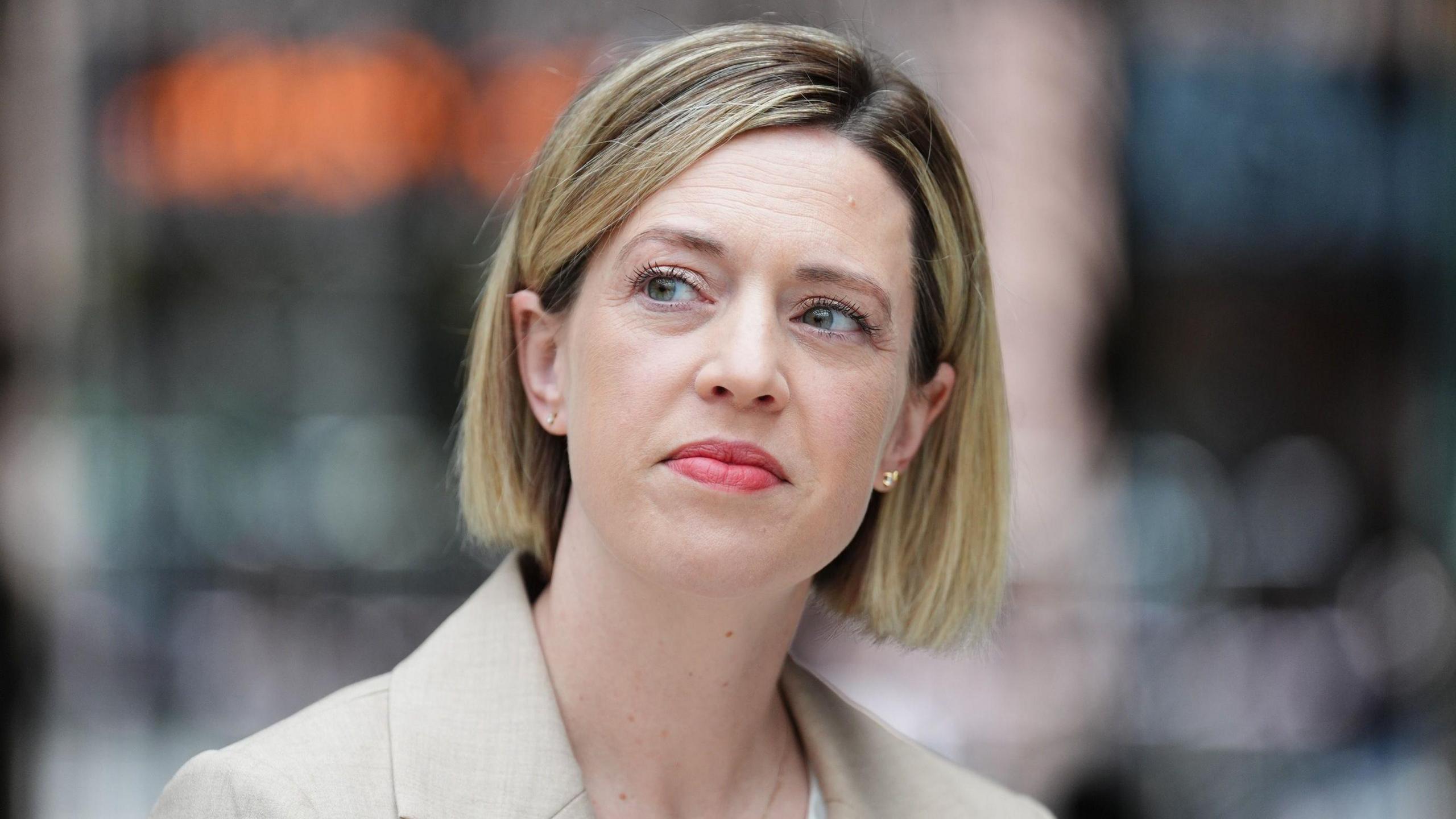
STUC General Secretary Roz Foyer said: "Whilst the Scottish government have the laudable ambition to strengthen local democracy, it's absolutely for the birds to think the sheer scale of this local government reform can be achieved without the initial and substantial investment required to bring about change in our communities.
"There is an argument that community authorities can improve decision making but only if the funding exists to deliver these services.
"The Scottish government must be clear that, in the short-term, this will cost money - not save it."
Scottish Labour local government spokesman Joe Fagan said: "The Scottish government must not blunder into another reorganisation.
"Any reforms must be made in partnership with local government and backed up with fair funding for local services."
Conservative spokesman Alexander Burnett MSP described the proposals as "half-baked", while LibDem MSP Morven-May MacCallum called for the government to set out evidence that the reforms could "lift Scottish education back up the international rankings, speed up planning, fix the potholes or ease the financial strain on local services".
The proposed reforms come as the government aims to cut public spending and improve efficiency.
Earlier this month, First Minister John Swinney announced plans to reduce the number of health boards in Scotland from 14 to two.
He described the reforms as "the most significant structural reform of our NHS in the devolution era".
Analysis: Bold plans, with limited detail
This is bigger and bolder than anything ministers have previously described.
It's presented as an outline for discussion rather than a pre-determined outcome. If implemented, it would be the most extensive shake-up of local government for 30 years.
When the SNP manifesto referred to reducing the number of public bodies, it was not explicit about councils. The first minister made clear that he wanted fewer of them in a Holyrood statement earlier this month.
The proposal is for a system of regional government whose councillors would also serve on "community authorities" that would make some decisions at a much more local level.
Ministers say they want to agree changes with local government and others within a few months - that's lightning speed for reforms of this sort.
Council leaders will meet for further discussions on Friday having previously expressed concern about potentially losing control of social care provision to the NHS.