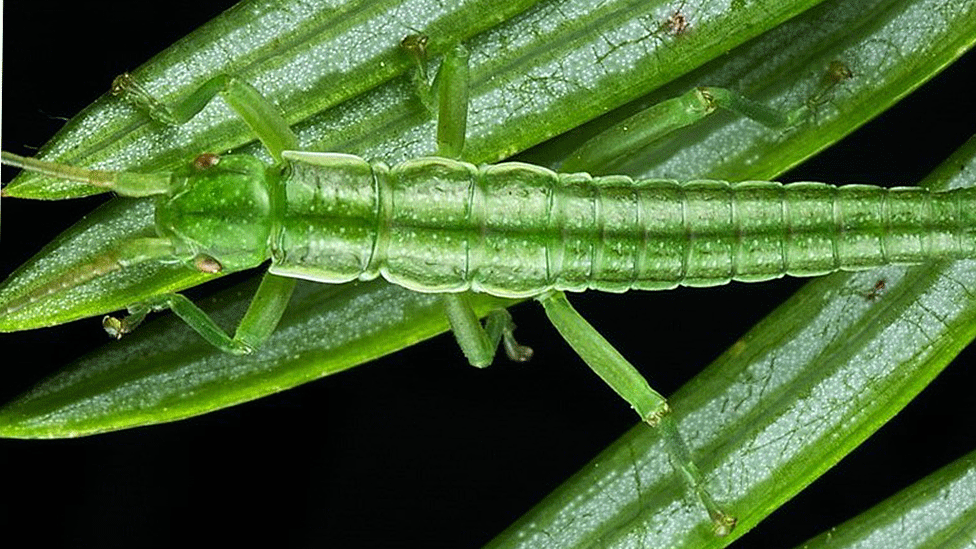
Asexual stick insects that have reproduced without male fertilisation for a million years have managed to retain a male-female gene-balancing mechanism, a study has found.
Experts at Bangor University, Gwynedd, looked at the genes of species of Timema, wingless stick insects in the US that reproduce when an embryo develops from an unfertilised egg, known as a virgin birth.
Scientists expected the system that has evolved for balancing gene expression on sex chromosomes would have eroded, saying the species was thought to have gone through the longest period of asexual reproduction of any insect.
But their study of rare males found this was not the case.
What is gene expression?
Genes are small sections of DNA found on chromosomes.
Most cells in a multicellular organism - a living thing made up of more than one cell - contain a complete set of chromosomes carrying all the genes needed for the organism to function.
But in any particular cell, only a very small fraction of these genes are ever expressed, as each cell has a certain task, meaning it only needs to express certain genes.
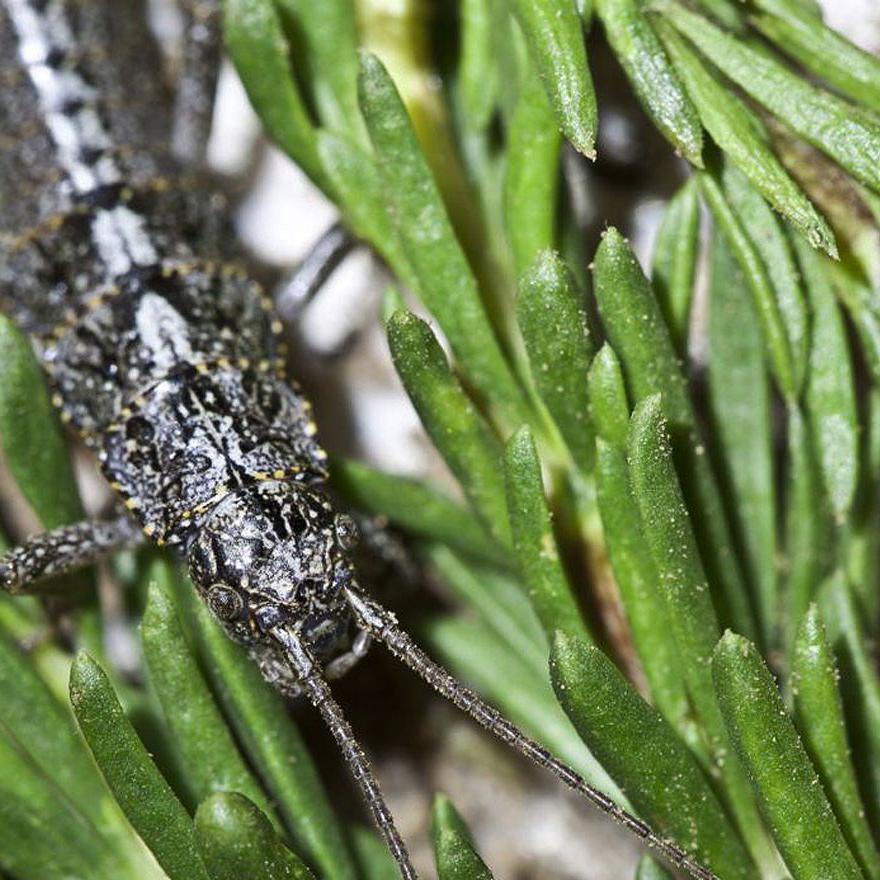
Dr Darren Parker, a lecturer in evolutionary biology, explained that parthenogenesis, reproduction without the need for male fertilisation, had occurred naturally in some animal species.
As males and females have a different number of X chromosomes - males have one (XY), and females have two (XX) - "gene expression needs to be balanced equally" between the sexes.
Species had evolved mechanisms known as dosage compensation "to do just this", he said.
But what happens if these mechanisms for equally sharing male and female genes are no longer needed?
"That's the question we set out to answer," said Parker.
"This is the precise situation found in asexually reproducing stick insects.
"Because the females reproduce without fertilisation from males, there is no need to equalise gene expression.
"By investigating gene expression in rare males, our study found that rather than decaying away as we expected, dosage compensation mechanisms remained fully functional despite not being needed for over a million years."
His report has been published in scientific journal the Proceedings of the National Academy of Sciences (PNAS).