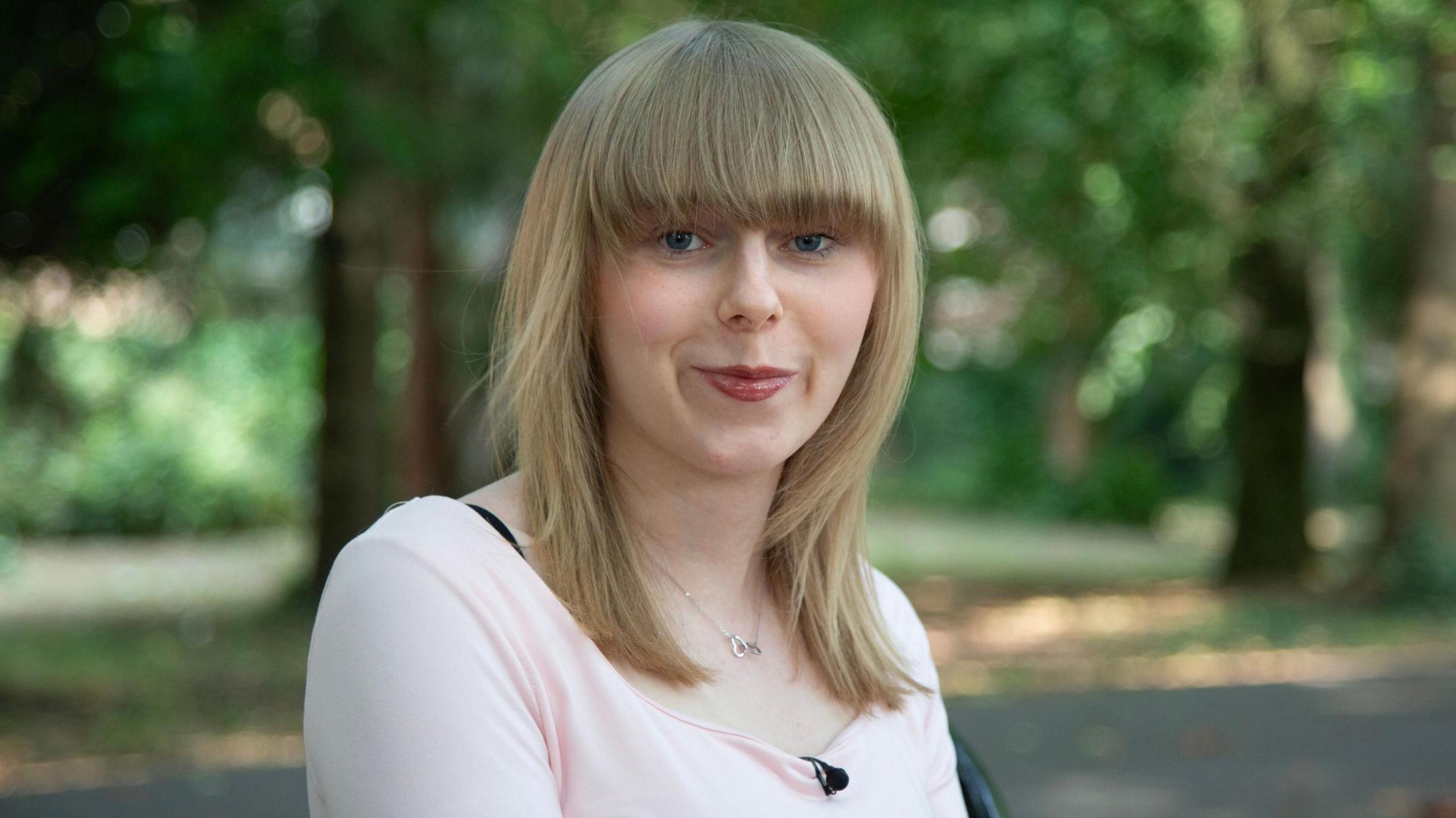
Something as innocuous as filling in a survey at school "changed the course" of Emily Mapley's life after her family was made homeless when she was 13.
Then, a UK-first survey by Upstream Cymru led to the support she needed.
Based on a project in Australia that led to a 40% reduction in youth homelessness, it reached young people who may not have come across the radar of support services before.
Now, six years on, charity Llamau is warning a lack of long-term government support means Wales risks falling behind the rest of the UK.

Emily, now 20, had a challenging start to her teenage years.
At the same time as being evicted from her home, she was navigating changes in her identity and coming out as transgender.
For 18 months, her family of seven - including her parents and young niece - lived in temporary accommodation, squeezed into just two rooms.
It was something she kept secret.
"I don't even know if the school knew. I don't want to say embarrassed, but I didn't want anyone to know because I was already getting bullied."
When Emily moved to St Illtyd's Catholic High School in Cardiff, she completed the short survey, developed for Llamau by Cardiff University, which asked about pupil's relationships, mental health and living situation.
An algorithm then assesses the answers to identify students at risk of becoming homeless.
What sets the programme apart is its ability to find young people who are at risk of homelessness who are not known to authorities.
In Australia, almost two-thirds of participants fitted that criteria.
"I probably just ticked all the boxes of what Llamau could help with and what Upstream could help with," said Emily who, at the time was struggling with severe depression.
Not wanting to go to school or go out, her support worker Russell helped her, and she started going out once or twice a week.
"We would just do fun stuff and he helped me get out of my shell," she said.
Upstream Cymru is a school-based intervention scheme based on Australia's Geelong project, which saw a 40% drop in youth homelessness.
Pupils who answer yes to certain questions automatically trigger a high-risk rating, such as whether they worry they might run away or be asked to leave home in the next year.
When pupils meet the criteria, project workers based at the school approach families to offer help in the form mediation, parenting support and financial guidance, among other things.
He supports children, often before they become homeless, instead of "firefighting" when they need more help.
"The whole premise of Upstream is fabulous as far as I'm concerned.
"Getting to these young people before they get to the stage where it's too late," he said.
He has seen a "massive turnaround" in Emily's life over the past three years.
Although Emily was already homeless, it was important to ensure she stayed in school and with her family.
Emily believes the support she received changed her life, so much so that in 2025 she met the Prince of Wales to talk about her experiences.
"Without Upstream, I would probably be a completely different person. I definitely wouldn't have finished college and I might not even have come out," she said.
From one school six years ago, Llamau now runs the project in 12 schools across south Wales and the valleys.
With more than half of homeless adults having experienced homelessness before turning 21, Yvonne Connolly, operational director at Llamau, said projects such as Upstream could have a generational impact.
She said: "What we really want to do is help families not get to the point where relationships break down beyond repair."
As well as being the first to introduce the project in the UK, the charity also helped other organisations establish Upstream across England, Scotland and Northern Ireland, and leads the UK steering group which won a Homelessness Excellence Award earlier this year.
In 2025 the UK government included Upstream England pilot projects in its national plan to end homelessness.
Llamau warned, despite being at the forefront, Wales could fall behind the rest of the UK as, without support, expanding outside south Wales and the valleys will be a long, slow process.
"What the danger here is that without that long-term funding commitment Wales could get left behind, despite Wales creating this," said Yvonne.
The charity also pointed out that preventing homelessness saves money.
Supporting young people early is far more cost-effective than responding to crises later, while also improving long-term outcomes.
Mediation can prevent family breakdown, a leading cause of youth homelessness, saving more than £27,000 per person in specialist accommodation costs.
The Welsh government said it was providing more than £3.7m this year through the youth support grant "to identify and support young people at risk of homelessness at the earliest possible stage".
It also said it was investing £3.5m in "innovative youth homelessness projects" including Housing First for Youth to help vulnerable young people "avoid or move on from homelessness".