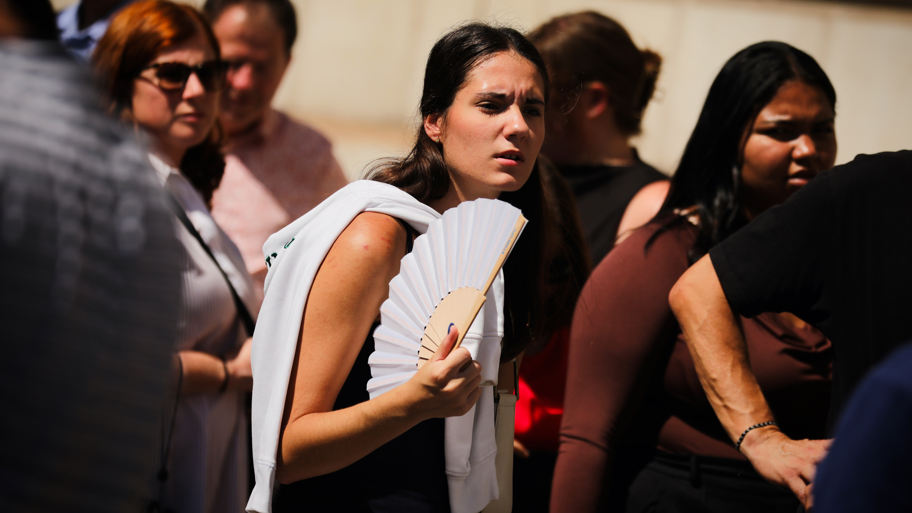
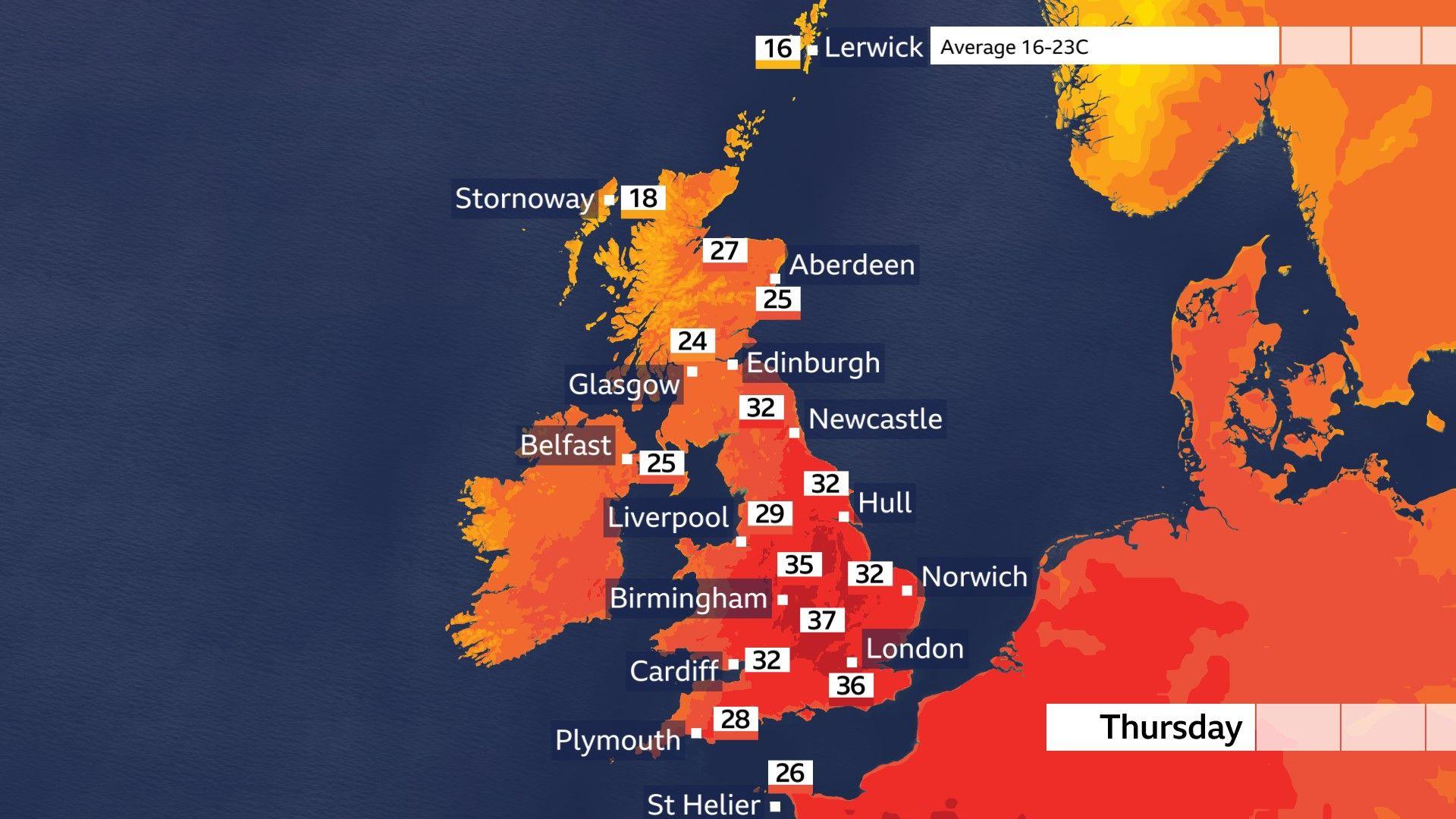
A rare amber weather warning for extreme heat will come into effect across a large swathe of the UK on Thursday, with temperatures set to soar as high as 38C (100F).
Thursday will mark the peak of the UK's fifth widespread heatwave this year, with temperatures to be in the mid-30s Celsius across most of the warning area.
Amber heat health alerts, which warn of significant impacts to health and social care services, are already in force for the entirety of England until 21:00 BST on Friday.
The searing heat could also lead to power cuts, rail and air travel delays, and cause serious health impacts such as dehydration and heat exhaustion.
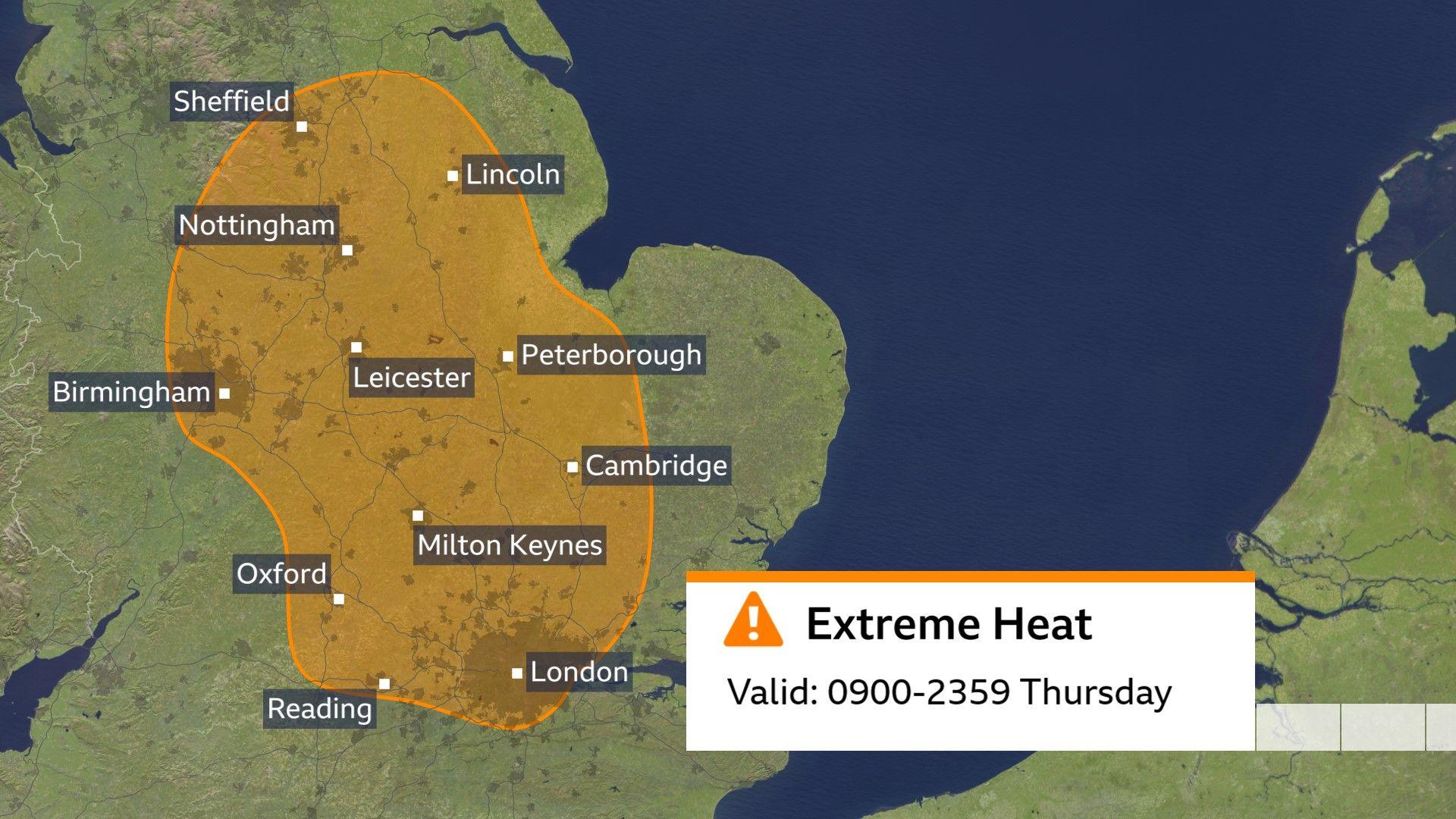
This warning comes into effect on Thursday from 09:00 BST until 23:59 BST across Eastern England, London and the south-east, the Midlands and parts of Yorkshire and Humber.
It will run alongside amber heat health alerts issued by the UK Health Security Agency across the entirety of England.
In effect until 21:00 BST on 14 August, these warn of significant impacts across health and social care services, including a rise in deaths, particularly among those aged 65 and over or with health conditions.
Adding to the risks associated with the heatwave, a few tropical nights - where temperatures fail to drop below 20C - are also on the cards as increasingly humid air spreads into western areas.
The cumulative effect of persistent heat by day and night can place additional stress on the body.
Fortunately, this heatwave is likely to be short-lived, lasting two or three days at most.
Temperatures will begin to fall away by the weekend, although at their lowest they will still be average or a little above average for mid-August.
More temperature records likely to fall
There are likely to be long-standing temperature records broken over the coming days, adding to a long list of records already set this year.
If temperatures reach 36C or higher, 2026 will become the first year on record to register four separate days at or above that threshold.
This will surpass the previous record of three days, which is currently shared by 1990, 2003, 2020 and 2026.
It is not out of the question that a few locations, including London, could touch 38C.
Should this happen, it would be the second time the UK hit 38C this summer - the highest reading so far this year - tied with Lingwood in Norfolk on 26 June.
It would also be tied for the hottest August day since 2003, when 38.5C was recorded.
As long as August temperatures remain average or above for the month as a whole, this summer will replace 2025 as the warmest on record.