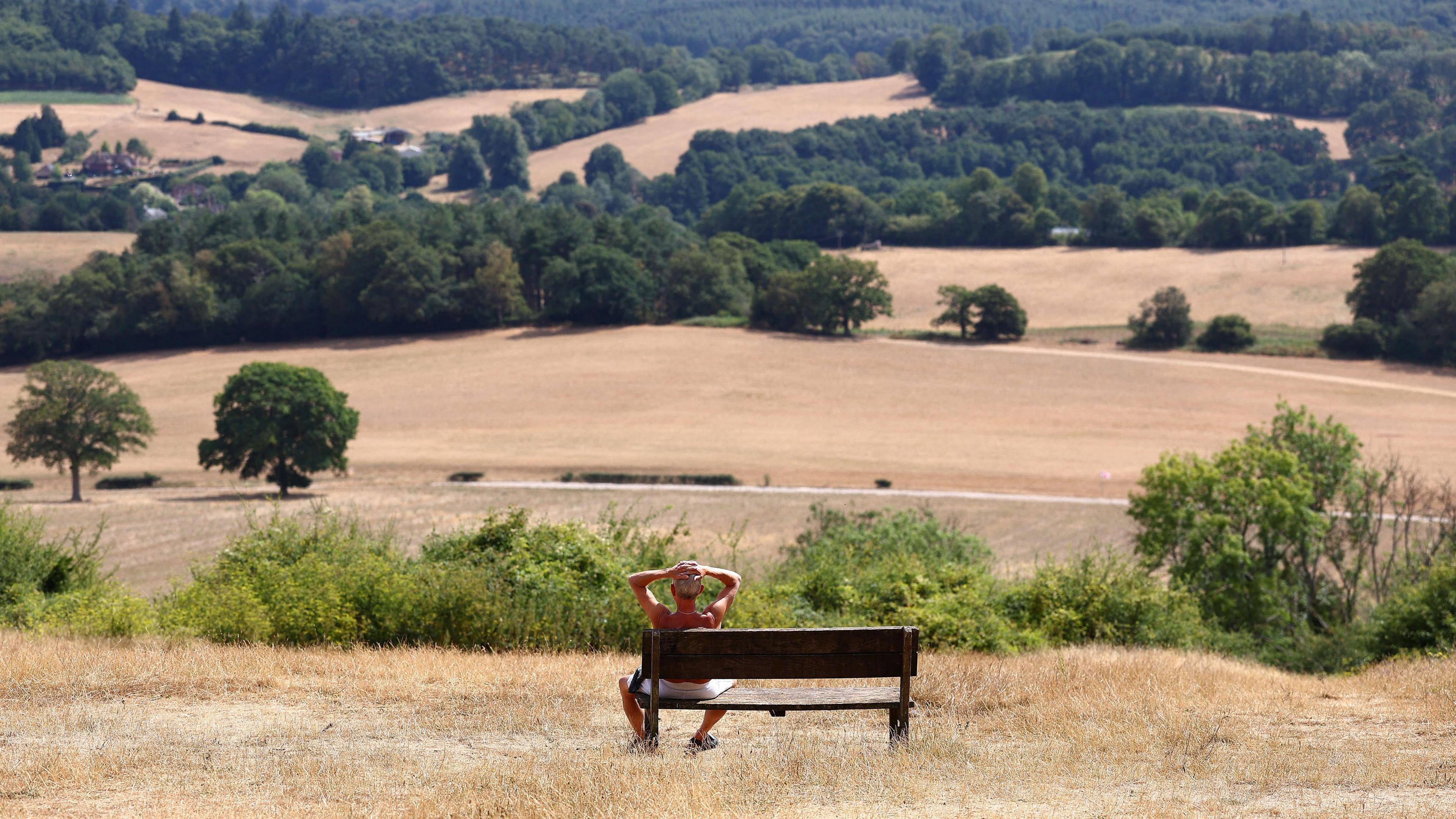
Temperatures in south-east England have topped 37C (98.6F) on what has become the hottest day of the year.
The Met Office said by midday on Thursday the temperature was provisionally recorded as 37.8C (100F) at Charlwood in Surrey. At Wisley, temperatures hit 37.2C (99F).
It reached 34C (93.2F) in Maidstone, Kent, and in Crawley, West Sussex, and was expected to in Uckfield, East Sussex.
At London's Kew Gardens, the Met Office said 38.1C was provisionally recorded, making it the hottest day of the year - beating the 38C recorded at Lingwood in Norfolk in June.
Since records began, only four days have been hotter than today in the UK - all in the 21st century. One was on 10 August 2003 when the temperature in Faversham, Kent, reached 38.5C.

Vikki Lewis, from South East Coast Ambulance Service, said crews have been under pressure as more people struggled in the heat.
"We've seen an increase in people reporting the heat exhaustion signs, feeling faint," she said.
"We've seen collapses and this has created an increase in demand for our service."
Charlwood councillor Lisa Scott said: "It is absolutely roasting. When you open the back door you are just hit by the heat."
She said walking outside was "like stepping off a plane in a tropical country".
"It is oppressive. The verges are brown and crispy. The trees are dying," she said.
"I am in bare feet and the floor is too hot to stand on."
She said the council was trying to create a cool hub, and it was "exhausting" trying to work.
It is the ninth day in 2026 where temperatures have reached above 35C, according to the Met Office. It has extended the year's record number of days at or above 35C (95F).
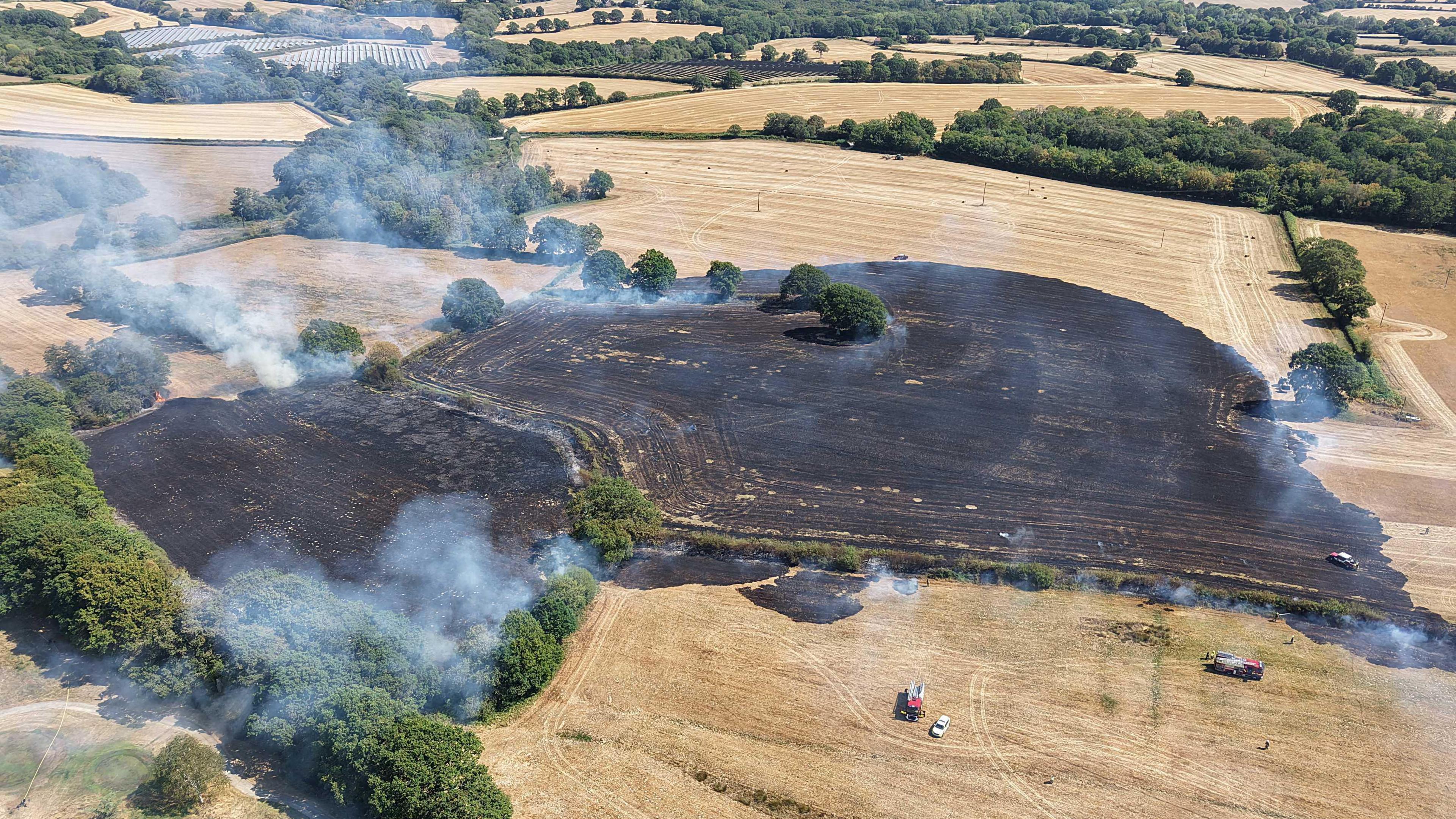
Just before 13:00 BST East Sussex firefighters were called to a blaze in a field after flames took hold of a patch of 50 sq m (538 sq ft) land near Ringmer.
The fire service said within an hour it had spread over two fields and a hedge, but by 14.40 crews was damping down hotspots.
In East Sussex at about 13.20 firefighters were called to Little Horsted where three fields and woodland were alight.
Matt Gamblen, West Sussex Fire and Rescue Service's wildfires tactical advisor, has urged people to take extra care to prevent fires during the hot weather, including by not leaving a vehicle engine running while parked on grass.
"Firefighters are really busy at the moment, we're getting multiple calls," he told BBC Radio Sussex.
"We've had over 1,000 calls in the UK now nationally that are for wildfires.
"That's on top of just our normal fires in the open [and] smaller fire activity as well, so it's been a really busy time for our firefighters across the UK."
It marks 38 days in a row that temperatures have hit 30C in the UK this year - the previous record was 34, set in 1995, he says.
Surrey is among multiple counties in England to be covered by a warning for extreme heat until 23:59.
The weather has also led to a lot of the country being declared as being officially in a drought, including all of the South East.
Frozen blood lollies
Adam Letts, a keeper at Howletts Wild Animal Park near Canterbury in Kent, said the western lowland gorillas at the site had been enjoying a dip in their splash pool and keeping cool with frozen fruit.
Courtney Mansfield, the site's head of elephants, said the animals she cared for were used to this level of heat and explained they could drink up to 200 litres (44 gallons) of water every day.
Keeper April Hall said the park's European grey wolves were not so comfortable with the heat, so would often find shade or paddle in their stream.
"They also enjoy the blood lollies we give them which are made up of the frozen blood of the meat we give them," she added.
The Met Office said 2026's summer is on course to be the UK's hottest since records began, with only average conditions needed for the rest of August to surpass the record, which was set in 2025.
Prof Liz Bentley, chief executive of the Royal Meteorological Society, said the heatwave in 1976 was a "once in a generation" summer, but "now that kind of summer is happening much more frequently".
Bentley explained the country was "moving into a new norm with warmer, wetter winters, and hotter, drier summers".
She has urged people to stay in the shade as the heat in the direct sunlight could reach 60C (140F).
Follow BBC Sussex on Facebook, X, and Instagram and listen to BBC Radio Sussex on Sounds. Send your story ideas to southeasttoday@bbc.co.uk or WhatsApp us on 08081 002250.