n the early hours of 7 September, a convoy of heavily armed police swept through the sleeping streets of central Brussels towards the Haren district, on the city's north-eastern outskirts. They made their way to 22 Avenue du Bourget, a militarised bunker-like complex that was the former headquarters of Nato.
The modernist complex, with its austere and functional architecture, was hastily built in 1967 and houses the Justitia courtroom, where Belgium's federal trials are now held. It was here that the perpetrators and accomplices of the 2015 Paris terrorist attacks and the 2016 Brussels attacks were tried in 2022.
Last month, officers armed with assault rifles patrolled the building's wide corridors, protecting those involved in this decade's most high-profile trial: the Bressers-Carvalho case.
For a month, judges and a legion of lawyers shared the main courtroom with journalists and the public on one side of a large armoured-glass partition. On the other side were the defendants, 31 in number, flanked by officers with their faces masked to protect them from possible reprisals. It was a scene more typical of countries ravaged by mafias.
During the lengthy hearings throughout the month, two among the many defendants stood out. The first was Flor Bressers, a 40-year-old Belgian born in Lommel, a town of 35,000 in the province of Limburg. Bressers has an unusual profile for criminal circles. A criminology graduate of the Free University of Brussels (VUB), he was often known to his peers as "the professor" or "the academic".
Yet his most commonly used nickname contradicts the image of a refined and scrupulous man: Bressers is best known as "the Finger cutter".
Arrested in 2022 at a wine tasting with his wife in a penthouse of the luxury Renaissance Zurich Tower Hotel, Bressers has been facing charges of kidnapping, unlawful detention, extortion involving firearms, and leading a criminal organisation.
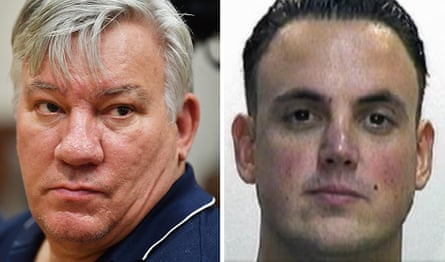
The other key figure alleged to be in the criminal organisation is a 68-year-old Brazilian: Sérgio Roberto de Carvalho. In a joint operation involving Interpol, Europol, the Brazilian federal police and the US Drug Enforcement Administration (DEA), Carvalho was arrested on 21 June 2022 at a luxury hotel overlooking the Danube in the Hungarian capital, Budapest.
Based in Mato Grosso do Sul, a Brazilian state in the tri-border region of Brazil, Argentina and Paraguay, which is one of the continent's centres of organised crime, Carvalho became known in his own country by the nickname "Major", from his rank when he was a military police officer, a past life in which he blended corruption and crime. In Europe, his moniker was more revealing: "the Brazilian Escobar".
Together, the Finger cutter and the Brazilian Escobar are the main defendants in a Belgian courtroom bristling with security as the international cocaine trafficking network between Latin America and Europe is put under the spotlight.
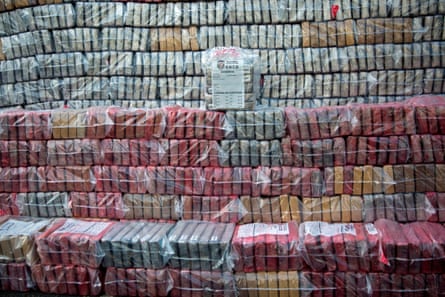
Bressers and Carvalho are alleged to have been behind an organisation suspected of transporting up to 45 tonnes of cocaine to Europe.
Prosecutors said they led a lawless multinational operation that moved hundreds of millions of dollars through front companies, one of which, the Antwerp water treatment firm Kriva Rochem, has given the case its alternative name.
The money – allegedly laundered through cryptocurrencies, financial markets and property – financed the complex logistics involved in transporting cocaine produced in Peru and Bolivia along illegal, dusty routes in Brazil, before crossing the Atlantic and being distributed in an unknown number of countries in Europe and beyond.
ressers had been on Europol's list of most wanted fugitives since 2021. According to the agency's notice, he was wanted for kidnapping and unlawful deprivation of liberty, extortion involving a firearm and participation in a criminal organisation.
An earlier case from 2010, in which he was eventually acquitted in 2015 for lack of evidence, alleged that he had ordered a settling of scores, in which the victim had a finger cut off with pruning shears – giving rise to Bressers' nickname.
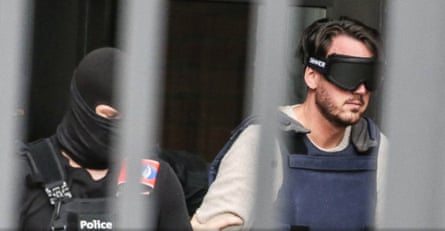
In 2020, five years later, he was convicted in relation to another revenge case: kidnapping a Dutch drug dealer who was beaten, threatened with death and cut with a razor blade after being blamed for a missing cocaine shipment. Bressers then became a fugitive, spending two years on the run.
Bressers also appeared as a suspect in at least one other violent case, this time in Guyana, involving the death of a rice wholesaler in the South American country whose seized consignment contained cocaine. His death is believed to have been a cover-up to prevent the gang's network being dismantled. That case also never went to trial.
Bressers' partner, Carvalho, is perhaps better known in Europe than in Brazil. According to Brazilian court documents, he led the group that acquired dozens of tonnes of cocaine produced in Peru and Bolivia and transported it through the Brazilian midwest to the ports of Paranaguá and Natal, from where the drugs were shipped to Europe.
Born in 1958 in Ibiporã, in southern Brazil's Paraná state, Carvalho grew up in Mato Grosso do Sul and became engaged in criminal activity while a police officer in the state. First sentenced to 15 years in prison for drug trafficking in 1998, he was not dismissed from the police until 2010. Rather than continue running his operations from Latin America, the Brazilian Escobar moved to Europe, first hiding in Portugal and then in Spain.
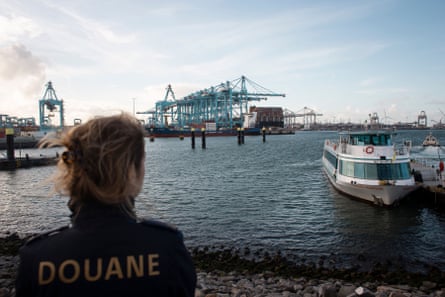
There, according to Spanish police, he took up residence in a €2m mansion in Marbella on the Costa del Sol, using the identity of Paul Wouter, a wealthy Surinamese citizen. From this base in Spain, a known hub of international cocaine trafficking, prosecutors say he coordinated, between 2017 and 2020, an organised crime network spanning Portugal and Spain, specialising in drug smuggling through ports such as Setúbal, near Lisbon, and Leixões in northern Portugal, and through Lisbon airport, as well as the ports of Rotterdam and Antwerp.
Portuguese police suspected that Carvalho had links to the (PCC, or First Capital Command), Brazil's leading criminal organisation.
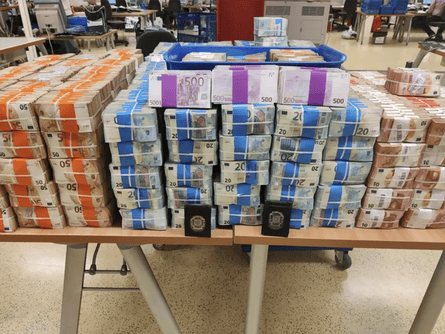
Carvalho was cornered – but not arrested – in November 2020 in coordinated raids involving more than 1,000 police officers police from Portugal, Spain, Belgium, the Netherlands, Romania and the United Arab Emirates, as well as Europol. The operation led to 45 arrests and the seizure of more than €13m (£11m) in cash, 70 luxury cars, 37 aircraft and 136 properties.
The court heard that Carvalho is said to have staged his own death in the same year by obtaining a death certificate for Wouter, who was allegedly the victim of Covid-related complications.
He then moved to Budapest, where he was arrested in 2022 while using the identity of Guillermo Díaz Flores, a Mexican national. Carvalho is alleged to have used at least 10 false identities before being detained in Budapest. Extradited to Belgium in June 2023, he was sent to a high-security prison.
n court, he was reunited with the Finger cutter, his alleged accomplice, as they faced charges of orchestrating a transnational criminal organisation. In his trial evidence, Bressers did not admit any of the charges and claimed to be the victim of a media witch-hunt. "I have a strong feeling that all of this was orchestrated by the authorities," he says.
Bresser's defence team is contesting the admissibility of the evidence and has requested the case be dismissed. When approached, Bressers' lead solicitor, Hans Rieder, had not commented by the time of publication. During the trial, the defence accused the press of "painting an absolutely monstrous picture of our client".
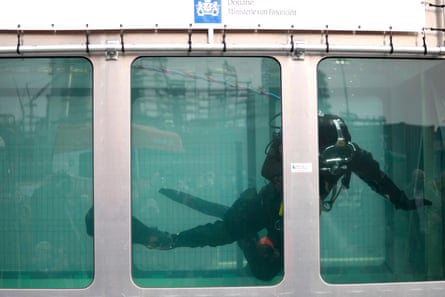
Carvalho, who did not attend all of the proceedings due to health problems, maintained his innocence and claimed to be the victim of persecution by the Brazilian federal authorities. "I have been in prison for five years and nobody is listening to me," he said at the hearing. "It was a namesake who committed these crimes, not me."
Carvalho's lawyers, Frédéric Thiebaut and Renaat Landuyt, were approached for comment but did not respond. The Belgian federal prosecutor handling the case also declined to comment.
The trial hearings wrapped up on 9 October, with a verdict anticipated on 15 December. Bressers could receive up to 20 years in prison, while Carvalho could be handed up to 15 years.
ver the past decade, cases such as the Bressers-Carvalho one have multiplied. During this period, cells of Latin American drug-trafficking groups have been identified by national police forces, Europol and intelligence services in Portugal, Spain, France, Belgium, the Netherlands, Germany, Italy, the Nordic countries, eastern Europe and the Balkans, as well as north Africa.
These criminal offshoots have become embedded in Europe through "brokers" or members of drug cartels that "provide specialised services related to cocaine production in Europe, including extracting cocaine from various carrier materials or the processing of trafficked coca paste", according to Europol's Andy Kraag, head of its serious and organised crime centre.
"Latin American criminals are heavily involved in this. We see the presence of Latin American criminals in Europe growing, their activities becoming more and more relevant.
"It used to be the other way around – it's a two-way street now. We already saw, for decades, European high-level criminals embedded in Latin America, settling down there. And now you see more and more Latin American criminals permanently or semi-permanently active in Europe too," Kraag says.
High-level sources across Europe and Latin America indicate that these groups are expanding their operations and influence in the real and digital economies, fuelled by cryptocurrencies, gambling companies, and the financial and property sectors.
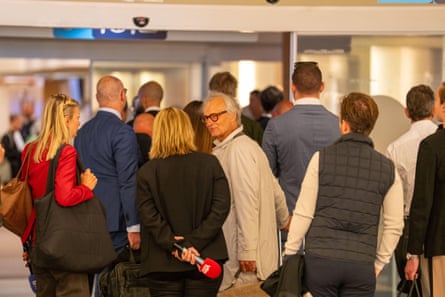
According to Juan Gabriel Tokatlian, a professor of international relations at Universidad Di Tella in Buenos Aires, and an expert on Latin American organised crime, the "war on drugs", as waged in Colombia – where he lived for 20 years – made cartels more resilient and dynamic, which explains their ability to adapt and expand internationally.
"Europe has become, in recent years, a place where drug consumption has increased in particular. If you look at the UN reports, it is an important market – in the 1980s, particularly as regards cocaine, it was not relevant," he says.
"In that context of European demand and an erratic anti-drug policy that militarises but then coexists, we find a series of situations that end up empowering organised crime," says Tokatlian.
Like Carvalho, dozens of alleged leaders of criminal organisations such as the PCC, Tren de Aragua, the Sinaloa cartel, Clan del Golfo or Los Lobos are being held in prisons across Europe, wanted by national police forces or Europol, or listed on Interpol's red list of most wanted individuals.
They are sought for links to trafficking cocaine to Europe, trafficking arms and synthetic drugs to Latin America, and ties to European organisations in the Balkans or the Italian 'Ndrangheta mafia.
Gabriel Feltran, a sociologist at Sciences Po university in Paris and director of research at the French National Centre for Scientific Research (CNRS), say groups such as the PCC or Sinaloa are partnering with European crime organisations such as those in Albania or the 'Ndrangheta in "joint ventures".
He says they buy coca directly from Latin American producers and are capable of delivering directly at the end – so drug ownership no longer passes from hand to hand along the chain.
It is what Feltran calls the "platformisation" of organised crime, in which, like multinational digital platforms such as Amazon, Google and Meta, the cartels integrate their infrastructure and economic models with the aim of controlling the entire drug-trafficking chain, from production deep in Latin America to sale on the streets of Europe.
It means that everything from communications, payments, precursors (chemicals needed to manufacture drugs) and laboratories to logistics is concentrated at the top, with carriers and local operators often unwittingly hired as paid service providers, such as Uber drivers.
Feltran says that, before this platformisation, trafficking was based on routes and several intermediaries who were drug owners in each step of the chain. Now, he says, such "joint ventures get together at the top, buy directly from the producer and deliver directly at the end. They no longer go through intermediaries."
"Ownership of the drug no longer changes hands. They concentrate everything, optimise a lot and grow very quickly. The more people use their services, the more dependent they become – that's a network effect."