is proudly backing an extraordinary world record attempt that could help save thousands of lives and is taking place in London next month.
The initiative from the Central London Alliance (CLA) is aiming to bring thousands of people together on Tuesday 22 and Wednesday 23 September to set a new Guinness World Record for the most people in a CPR relay.
Schools, local businesses, residents, and visitors are invited to take part to help the CLA smash its ambitious target of 4,000 participants, setting a new world record while raising awareness of how you can intervene during cardiac arrest and save a life.
Cardiovascular disease is responsible for around one in four deaths in the UK, with someone suffering a cardiac arrest every three minutes. Fewer than one in 10 people survive an out-of-hospital cardiac arrest. However, if CPR is started by a bystander within the first two minutes, a person's chance of survival increases dramatically, with significantly improved outcomes and a much greater likelihood of avoiding permanent brain injury.
Sharing how a quick-thinking gym owner who knew CPR saved his life, 41-year-old father-to-be Chris Wall said he feels “lucky and blessed” to have been around people who knew how to perform the procedure when he needed it.
He had collapsed mid-class at Catalyst Training in Cirencester, Gloucestershire, in June 2025, but owner Robin Oakley, 39, performed CPR and used a defibrillator, proving crucial in his survival.
“I would not be here today if I wasn’t in that gym class,” Chris said. “I’m just super grateful that I was there and the guys knew what they were doing.”
For CLA Director Nadia Perrier, the campaign is also deeply personal. Four years ago, her husband, Michael, who spent more than 14 years as professional footballer, suffered a sudden cardiac arrest. Despite his exceptional fitness, he was almost pronounced dead at the scene – but his life was saved because one bystander knew how to perform CPR.
"Four years ago, our lives changed forever,” Ms Perrier said. “Michael was a professional athlete, fit and healthy, yet he suffered a sudden cardiac arrest. We were incredibly fortunate that one of his team mates knew CPR. Their quick actions didn't just save Michael's life - they saved my family.”
She added: “I don't think anyone should underestimate what knowing CPR can mean. You may never expect to need those skills, but one day you could be the person standing next to someone you love, a colleague, a stranger or a child, when they desperately need you to know what to do.
“Through this world record attempt, we want to inspire thousands more people to learn and have the confidence to perform CPR. If every participant leaves knowing how to respond in an emergency, the impact of these two days could be felt for generations."
A study also found women are less likely to receive CPR from strangers than men especially in the case of emergencies in a public area.
Businesses, schools, community groups and individuals are all encouraged to for the event, which takes place on 22 and 23 September at Tower Suites by Blue Orchid Hospitality in London.
How to conduct CPR
• Assess the situation. In order to check whether or not a person is in need of CPR, the first thing you need to do is to gently shake their shoulders while simultaneously asking if they’re alright. You also need to be aware of your surroundings, as you may be in an environment that’s putting you and the unresponsive individual in danger.
• Check they’re breathing. If a person has suffered a cardiac arrest, then they will either not be breathing normally or not be breathing at all. To check whether they're breathing, keep an eye on their chest to see if you can spot any movement while keeping their head tilted back. Listen intently to see if you can hear their breath, and place your face near their mouth to see if you can feel any breath on your cheek.
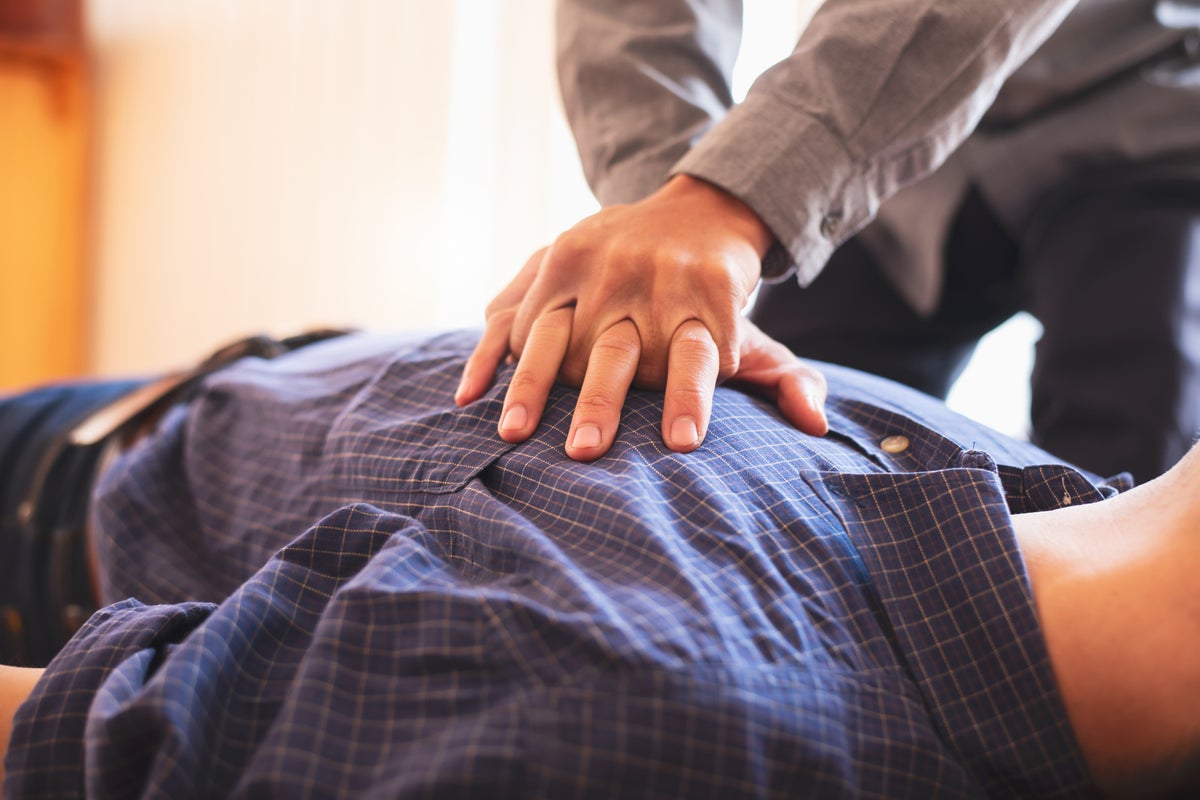
• Perform chest compressions. Kneel beside the unconscious individual with your knees level with their chest. Place the heel of one of your hands on the centre of their chest, and your other hand on top and interlocking your fingers. Make sure that your shoulders are above your hands before pressing down hard on their chest, straightening your arms and using your entire body weight. The BHF recommends trying to push down by at least five to six centimetres, before releasing and pushing down again. The organisation states that you should aim to give 30 chest compressions at a speed of 100 to 120 chest compressions per minute, which is around two per second.
• Rescue breaths. After carrying out 30 chest compressions, you’ll need to give two rescue breaths if the individual is showing no signs of breathing. Open their airway by placing one hand on their forehead and two fingers under their chin. Then, gently tilt their head back while lifting their chin at the same time. Pinch the soft part of their nose closed, inhale as normal, then, place your mouth on top of theirs and breathe out. Once you’ve done this once, remove your mouth from theirs and carry out the same process again.
• . Keep repeating the chest compressions and rescue breaths until an ambulance arrives or until the person starts regaining consciousness or breathing properly.