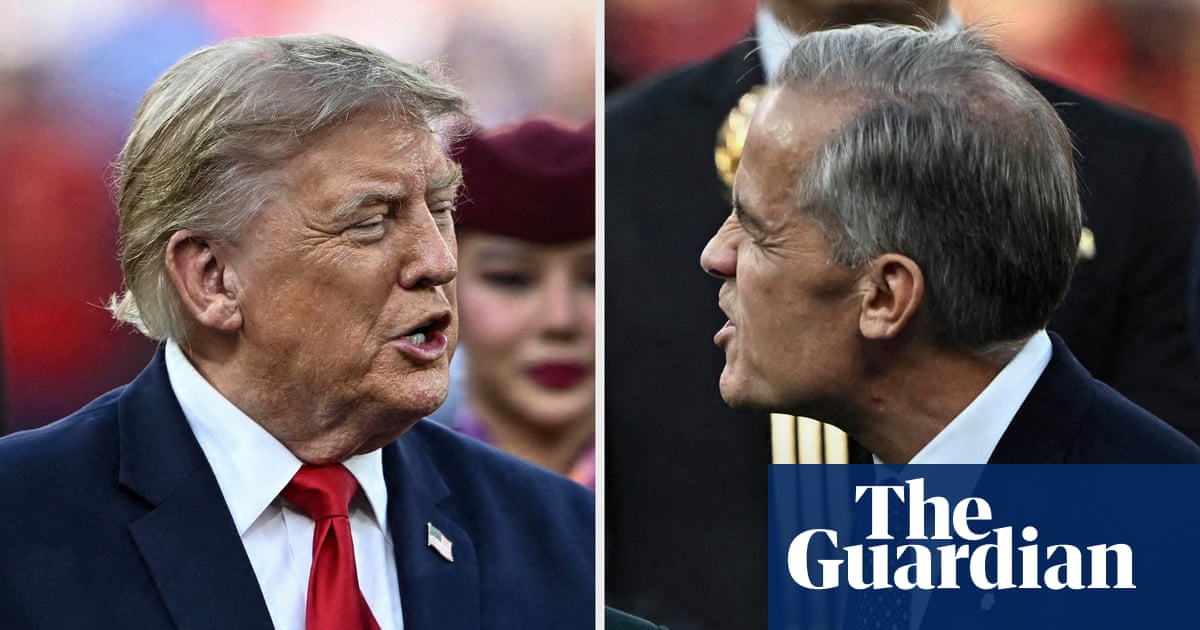
The calamitous collapse of trade negotiations between Canada and the United States is a warning to nations worldwide that pursuing any kind of dialogue with the current US administration is doomed at the outset, according to observers who say this recent episode indicates seeking a fair deal is futile.
Andrea Lawlor, an associate professor of political science at McMaster University in Ontario, said: "No matter the closeness of the historical relationship, the American administration has signalled that it now prioritises its interests above those of some sort of global economic coordination or harmony.
"It feels like these talks 'failed'. However, I'm not sure there was really a success to be had."
The two countries are now in a deepening trade war after weeks of urgent talks fell apart shortly before the 12am EST (5am BST) deadline on Saturday, when the US imposed 50% tariffs on $20bn (£14.6bn) worth of Canadian goods.
A defiant Mark Carney said on Saturday that he had rejected the deal because of last-minute US demands that would have undermined Canada's sovereignty. The Canadian prime minister said: "They asked too much and they offered too little … you're at war when you're attacked, and we got attacked." He promised to match US tariffs "dollar for dollar".
Donald Trump had initially announced the tariffs on 20 July,saying Canada had unfairly discriminated against American businesses.
The core example provided by the White House is Canada's bans on the sale of US alcohol in eight of its 10 provinces and all three territories. The removal of US spirits, wine and beer from shelves came into effect after Trump's first round of tariffs, slapped on Canada in early 2025.
The breakdown of talks came as a shock. Trump had claimed on Tuesday that a three-day extension would be applied to the tariff deadline, as an agreement was all but signed. On Wednesday, he told reporters that a "very fair deal for both" sides had been ironed out.
But as details of the agreement began to leak to Canadian media, there was growing alarm that Carney and his negotiators were conceding too much in exchange for lower tariffs on steel, aluminium and cars.
The premier of Manitoba, Wab Kinew, and his Nova Scotia counterpart, Tim Houston, confirmed this week that Carney had asked the provinces to return US alcohol to shelves in order to seal the trade deal.
Kinew told reporters he believed Canada "should fight" Trump instead, and that "you can't get a good deal with a bad person". He encouraged Canadians to avoid buying US alcohol, even if the premiers agreed to put it back on shelves.
Fears of capitulating to Trump also emerged in a high-level briefing call held by Canada's ambassador to the US, Mark Wiseman, with the Canada-US trade council.
Sources told the Canadian Broadcasting Corporation that Canada's former chief trade negotiator Steve Verheul had warned in the call that concessions now would only lead to further demands from the Americans down the road.
JD Vance the US vice-president, was also recorded at a private event, seemingly mocking Carney for standing down on "a lot of issues" as the trade negotiations were occurring.
Instead, Carney took the dramatic decision to bring his negotiators home to Ottawa, with no further meetings planned – and to launch a barrage of criticism against Trump, who in turn accused Canada of wanting "the benefits of being a state, without being one".
Goods covered by the swingeing US import taxes include everything from anoraks to Christmas ornaments.
Lawlor suggested Canada would soon be back at the negotiating table, given the likely economic impact of the tariffs. But she said any negotiation with the Trump administration should be understood as prone to disintegrate at a moment's notice.
She said: "We are very much in a state of constant flux, where even where negotiations do produce agreements, these should not be viewed as eternally binding."