"I definitely don't think it is cringe," says Laura Budds, a vintage furniture dealer based in Norfolk. "But I do think we have reached the peak, and we're on the descent." Budds is talking about mid-century modern furniture, which has recently come under fire from younger generations for being – like so many things, including trainer socks and high-waisted jeans – a deeply millennial aesthetic. As the Wall Street Journal declared: "Midcentury modern design has met the fate of pumpkin spice lattes, cocktails in mason jars, no-show socks, leggings and other aspects of millennial culture: it has become cringey."
Budds, 44, is resigned to the fact that she is a "mid-century millennial". She's even made a career out of it: she sells furniture and vintage clothes at Williams & Parfitt, a modern antiques centre in Wymondham, Norfolk. But she says she has had to diversify in recent years to cater to changing tastes among younger customers, who are moving away from the "wall-to-wall mid-century" look beloved by the generation above them. She says of gen Z: "I don't think they are so bound by the eras or designers – they just buy what they like. They aren't afraid of older antiques and will have a bit of whimsy or taxidermy."
The term "mid-century modern" was originally coined to refer to architecture and design that became popular from the 1940s to the 1970s, largely in the US, Brazil and Europe. Famed for its clean lines and simplicity, the style had visual forebears in the Bauhaus movement and classic Scandinavian design, along with the philosophy of beautiful yet functional furniture for the masses that spread to the US, UK and beyond in the postwar era. British-made items include Ercol and Robin Day chairs and G Plan teak sideboards, all of which are still coveted. (Anglepoise's timeless industrial lighting, too, was associated with the aesthetic.)
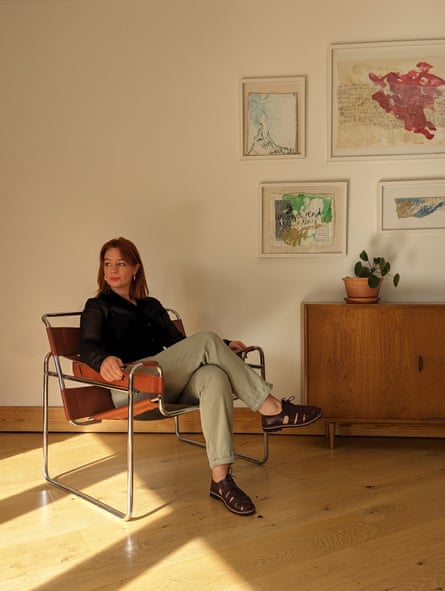
The book Mid-Century Modern: Furniture of the 1950s, written by Cara Greenberg and published in 1984, is often seen as being responsible for popularising the phrase. Today, she says, the term has "become meaningless, applied to everything from museum-quality material to made-in-China repros on eBay".
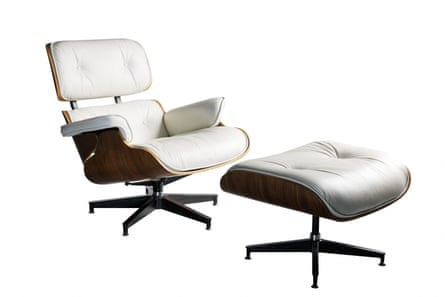
Greenberg lives in Brooklyn, New York. Her first mid-century purchase was an Eames plywood lounge chair bought at a street market in NYC in the 1970s, which she still owns. These days, she is more interested in a comfy sofa: "not a mid-century modern speciality", she says, given the aesthetic's tendency for furniture to be fairly upright and firm, often designed with polite conversation in mind rather than slouching and scrolling.
But, Greenberg says, she will still defend the best of it "as the most innovative and stylish furniture America ever came up with": Charles and Ray Eames, the husband and wife duo who revolutionised design with multipurpose chairs; George Nelson's industrial looks for the furniture company Herman Miller; Eero Saarinen's Tulip chair for Knoll. Since then, she says, "there have been many cycles of revival, including the reissue and mass marketing of 'best of' classics by the original companies in the 1990s".
Affordability has always been a cornerstone of mid-century design. "The philosophy of modernism and mid-century design, when it first started, was accessibility," says Keith Stephenson, who lives in Camberwell, south-east London with his partner, Mark Hampshire. Together they run the design and homewares company Mini Moderns and co-authored the 2019 book Mid-Century Modern Living: The Mini Moderns Guide to Pattern and Style. "It was never supposed to be an elitist thing," he says. "It was about bringing good design at a good price to as many people as possible. Reaching more people with good design is never a bad thing."
It is also ideal for smaller spaces, which is one of the reasons Hampshire thinks it has "endured many a cycle of trends" to become "the endlessly go-to period of design". The postwar period was "the first time that designers considered function and aesthetics together – so furniture was designed to solve a specific problem as well as to fulfil a function. The results of this level of considered design have, in many cases, proved hard to beat, thus becoming the template for subsequent designs."
He gives an example: "If you look at a classic mid-century style sofa, it is on legs, so you can see the floor underneath it – and that makes a place feel much bigger, because you can read the room around the piece of furniture. There's room to breathe. All of those things are classic interior design tricks to make a place look and feel more spacious."
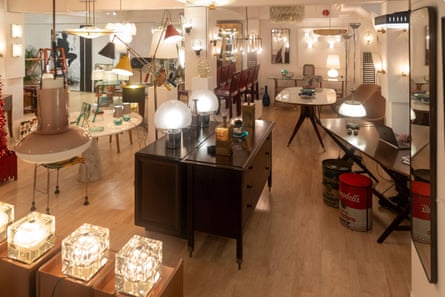
Mid-century modern's design quality and price point made it irresistible to millennials who were starting to live independently in the 2010s. It fitted with the vintage aesthetic of the time and there were still bargains to be found. Even as late as 2019, says Budd, "you could find sideboards at auction for £50. Now you're lucky to get one for less than £300-£400." A lot of British mid-century modern has been shipped abroad in recent years, to Europe and as far as Japan, where consumers have cottoned on to British brands such as Ercol, G Plan and McIntosh. This has pushed prices up and "made it a bit too elitist. Only certain people can afford the really good quality stuff now," says Budd.
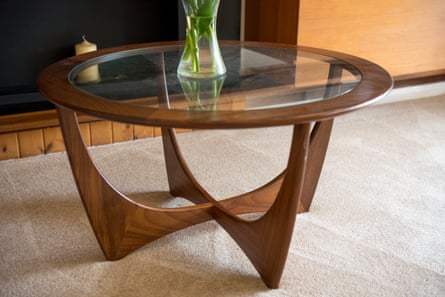
The interior designer Natasha Landers has lived in her home in Walthamstow, east London, for 26 years. Her mid-century bookcase cost £30 when she bought it, and her £50 coffee table would now sell for £200. "It's not as accessible as it was when I first started collecting," she says. Still, she's reluctant to write off the whole aesthetic just because it has been widely used. "Good design doesn't have to become bad design because it is popular," says Landers. "There is something slightly snobbish about deciding something is no longer cool simply because more people can enjoy it. What I do have a problem with is when everyone's houses look the same."
The proliferation of millennial style on the go-to interior design sources Pinterest and Instagram has inevitably meant that the high street and large webstores have capitalised on the trend. New furniture clearly inspired by classic mid-century modern pieces can now be found everywhere from Marks & Spencer and Dunelm to H&M and Temu.
"That craze for buying a full set of mid-century tables, sofas and lighting is definitely gone," says Carina Harford, an interior designer from west London. "It had a paint-by-numbers experience to it that might have felt safe to its devotees but began to feel too commonplace." The climate impact of "fast furniture" is also a consideration. "The imitation mid-century furniture that was coming out a lot in the last five or so years really irked me," says Harford. "Stop buying new things if you don't need them."
It is this desire to avoid having identikit homes that is fuelling the mid-century modern cringe. "I really don't want to have the same things as everyone else," says Sheree Millington, a copywriter based in Margate, who is renovating her Victorian terrace. Lucy Hayes, a writer and director in east London, agrees. "I like a mix of styles and ages, and things that don't feel rooted to a particular decade or era. I want my home to feel like it exists now rather than as a time capsule."
Millington thinks a more quintessentially English style is coming back in, "whether that is cottagecore, or more like an English townhouse, with lots of mismatched things, more pattern, more print". She is noticing chrome – a staple of 1990s homeware that has since fallen out of favour – becoming more popular again, too.
Harford's home is kitted out with secondhand treasures spanning many different eras and styles: "It's all just sort of mushed together, and I think it works." Most of it was bought from auctions and cost about £100 or less. Highlights include a Victorian fold-out card table (bought for £110), lighting from a shuttered billiards hall (£40), a 1940s Anglo-Indian table (£30) and a set of 1980s stools (£90 for four). Although bidding can seem more complicated than buying new online for next day delivery, you quickly get the hang of it, she says, and the result is, "something much more special and unique".