A turning point in Donald Trump's second term will soon arrive. On 3 November, voters across the US will decide whether to keep the president's Republican allies in control of Congress, or return Democrats to the majority.
Many indicators of voter sentiment suggest the Democrats are favored to take back control of the House of Representatives, and potentially the Senate. Winning either would be a significant victory for the party and give it the power to block Trump's legislative agenda and more aggressively investigate his administration.
These charts and maps reveal where the battle for Congress will be fought.
The 2026 midterms offer Democrats the chance to win the Senate, and in turn the ability to put a serious check on Trump's agenda – including blocking any new appointments to the supreme court or his cabinet.
Republicans currently hold a majority with 53 seats out of 100, while the Democrats and their allies hold the remaining 47.
Thirty-five seats are on the ballot this November. Senators serve six-year terms, with a third facing voters at each two-year election cycle.
But in practice, the battle for the Senate is being fought across a very small map.
The Cook Political Report, a prominent US election forecaster, currently lists seven seats as tossups: Alaska, Iowa, Maine, Michigan, New Hampshire, Ohio and Texas.
A further two – North Carolina and Kansas – are leaning Democrat and Republican respectively.
Democrats must win at least four seats that are held by Republicans to gain a majority.
At the start of 2026, Republicans appeared well positioned in the battle for the Senate, with many seats rated by Cook as solid for the party and a host of others currently held by Democrats as tossups.
But as Trump's approval ratings fell over the course of the year amid discontent with the Iran war and rising gas prices, Cook shifted several races in Democrats' direction, as did other major forecasters.
A key example of this is Georgia, which is now rated as a likely win for the Democrats.
In a further sign of the momentum behind Democrats, Texas, a longstanding Republican stronghold, is considered to be in play this year.
Recent polls show that the party's candidate is ahead by a razor-thin margin.


Texas offers Democrats the opportunity for a historic victory.
For decades the state has voted red, and no Democrat has won a Senate race since 1988.
It has been similar in elections for the White House, too. The last time Texans voted for a Democratic president was in the era of Jimmy Carter in the 1970s.
In 2024, Trump won 56% of the vote to Kamala Harris's 42%.
Running for this seat is state representative James Talarico.
Focusing on wealth inequality, he has called for billionaires to pay higher taxes.
"It's time to start flipping tables," is Talarico's campaign slogan.
The Republican nominee, state attorney general Ken Paxton, has highlighted his close relationship with Trump.
The president endorsed Paxton in a video filmed in the Oval Office, in which he praised his work "defend[ing] our southern border from the Obama and Biden invasions".
"Thank you very much, President Trump. We won't let you down," Paxton replied.
Talarico's focus on billionaires is echoed in the campaign for another Senate tossup currently held by a retiring Democrat: Michigan.
Going up against Republican Mike Rogers is Abdul El-Sayed, a progressive Democrat who has been endorsed by figures like Harris and Bernie Sanders.
The race is neck-and-neck but El-Sayed is currently polling slightly ahead.


Michigan is a swing state at the presidential level, but Democrats have a long history of victories to the Senate, while no Republican has won a seat since 1994.
Trump has repeatedly broken through there. He won Michigan in 2016 and 2024, but lost the state to Joe Biden in 2020.
Galvanising El-Sayed's campaign is his call for Medicare for All.
The former public health official calls for expanding the program for elderly and disabled people to every American.
He recently sparred with Fox News anchor Jesse Watters over the costs of such an expansion.
Polling suggests close to half of Michigan voters support the idea, though a sizeable number remain opposed.
Iowa may also prove to be a big test of Democratic fortunes.
The state has grown very Republican since it twice backed Barack Obama, and hasn't elected a Democratic senator since 2008.
This year, polls indicate Democrats may have a chance at winning its Senate seat.


Republican Ashley Hinson is neck-and-neck with her Democratic rival Josh Turek, a change from previous Senate races in Iowa.
And presidential elections show there is precedent for a blue upset in Iowa.
Iowa's population is far more concentrated in the countryside compared to states currently represented by Democratic senators, so victory would represent a major expansion of the party's coalition.
Republicans nonetheless dominate the US's rural areas. Most of the 14 states where Cook considers the Republican candidate sure to win are rural.
Hinson has been attempting to keep the party's agricultural base on side by championing the year-round sale of gasoline that contains a higher concentration of biofuel, which could both lower prices at the pump and financially boost farmers.
Turek, her opponent, is a two-time Paralympic gold medalist in wheelchair basketball. Recently, he released a campaign video where he shoots hoops with Barack Obama, the last Democratic president to win Iowa.
As well as these key Senate races, the US House is up for grabs. It, too, is currently controlled by Republicans.
Every seat is up for election, as members only serve two-year terms.
Overshadowing House elections is the unprecedented level of politically motivated redistricting seen in the run-up to the 2026 midterms.
After Trump set off a redistricting war last year, nine states have redrawn congressional boundaries, some to benefit Democrats, others Republicans. Analysis suggests that Republicans will gain more seats overall.
This redistricting has been subject to several legal challenges. A Democratic gerrymander in Virginia was struck down by the state supreme court, and the US supreme court rejected a Republican attempt in Missouri.
Yet the redistricting has not dashed Democratic hopes of taking the House.
The Cook Report rates more than 40 races as competitive.
Winning around half would hand Democrats a majority.
In New York City's exurbs, Republican Mike Lawler hopes to win a third term representing his swing district by turning voters against democratic socialist mayor Zohran Mamdani.
"Socialism, communism and Marxism have no place in New York City and no place in America," said Lawler, a top target of Democrats.

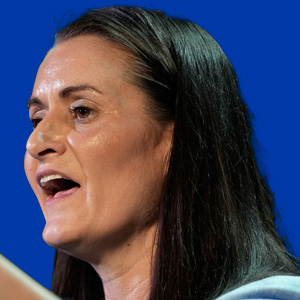
One of nearly two dozen Democrats in districts Trump won in 2024, Marcy Kaptur has represented northwestern Ohio since 1983, the longest-ever tenure for a woman in Congress.
Newly redrawn boundaries have increased her district's Republican lean, making her re-election bid an important test of whether voters are still willing to split their tickets between parties.


The One Big Beautiful Bill is a major issue in this California district.
The Republican incumbent David Valadao voted for the Trump-backed measure, which extends tax cuts for wealthy people and corporations while slashing the Medicaid program for poor and disabled people. His constituents have some of the highest Medicaid enrollment rates in the country.


It's possible whichever party wins the House achieves only a single-digit majority of seats, as Republicans have had for the past four years. But there's also a chance that this year will see a "blue wave" of wins by Democratic candidates even in districts that Trump won by wide margins in 2024.
Either way, history favors the party out of power in the midterms, particularly in the battle for the House. All recent presidents have lost control of a chamber in midterm elections, including Trump, in the 2018 election.
Polling shows there has been a nationwide shift towards the Democrats in the run-up to the midterms, even in states Republicans have dominated for decades.
Many recent surveys of the generic ballot, a key indicator of voters' intent in congressional elections, give the Democrats an edge ranging from the high single digits to the low double digits.
The events of this year – notably the Iran war and its impact on inflation – have undoubtedly changed the race, and much of the advantage seems to have swung towards the Democrats.
Across all key races, Democratic candidates have been campaigning on affordability, at a time when the Trump administration's actions in the Middle East have pushed up prices, particularly for gasoline and diesel.
It is a reflection of just how concerned US voters are about the economy, rating it as the most important issue in surveys, far ahead of immigration, healthcare or civil rights.
Meanwhile, Trump's personal ratings have also fallen, with Reuters/Ipsos finding only 32% of US adults now approve of his job performance.
That is worse than his previous low of 34%, recorded by Gallup at the end of his first term in 2021 after the January 6 attack on the US Capitol.
The 2026 midterms may be another brutal reckoning for the US president – the question is whether punishment from voters will lead him to change course.