
Nurses whose complaints about a transgender colleague using their female-only changing room led to a tribunal are seeking £400,000 in legal costs from hospital bosses.
Employment judges previously ruled Darlington Memorial Hospital chiefs had "violated the dignity" of female nurses by allowing a colleague - a biological male who identified as a woman - to use the single-sex changing area.
At a fresh hearing in Newcastle, the nurse's legal team said the trust had persevered with a "hopeless" defence and had failed to engage with bids to reach a settlement.
Lawyers for County Durham and Darlington NHS Foundation Trust said it had been reasonable to defend the case.
They added the nurses had been "unsuccessful" with parts of their claim.
The three-person tribunal panel said they would make a decision at a future date.
The trust's Transitioning in the Workplace policy allowed a person to use the single-sex space that conformed with their chosen identity, while anyone who objected could change elsewhere, the employment tribunal, held in 2025, heard.
Female nurses first made complaints in 2023 about a transgender woman using the changing room, but they felt bosses dismissed them as "trouble-makers" and "bigots", the tribunal had heard.
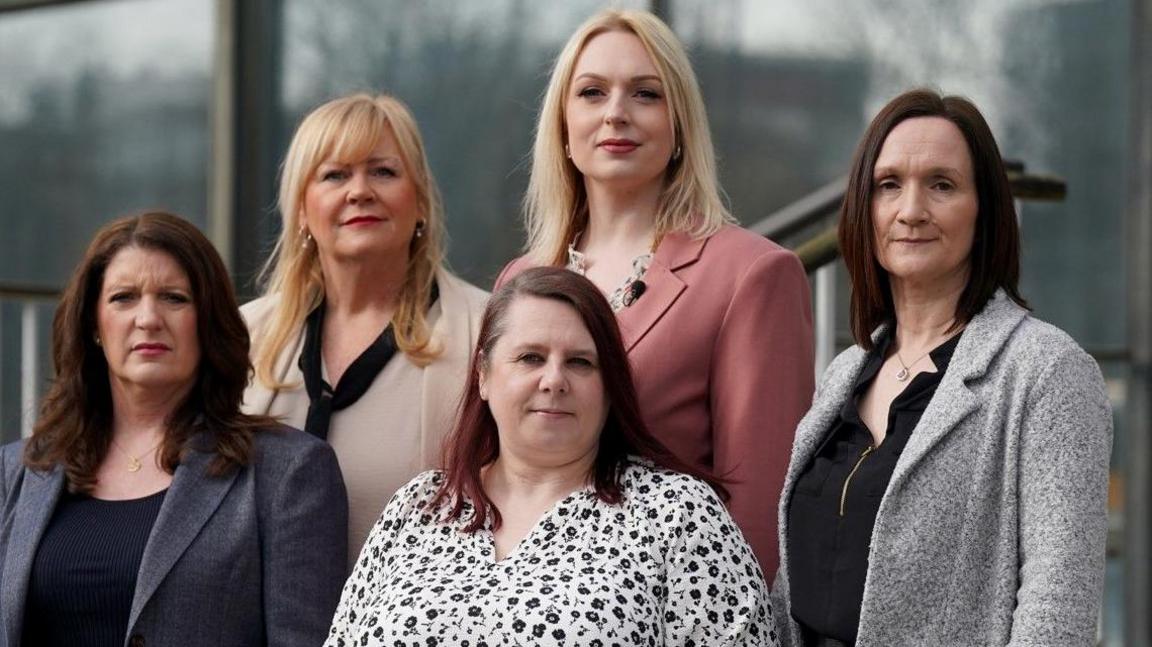
The tribunal panel concluded the trust harassed and discriminated against the nurses by requiring them to share a female-only changing room with a "biological male trans woman" and then not taking their concerns seriously.
The judgement said the policy had an "admirable and noble purpose" but had the effect of "violating the dignity" of the nurses and "creating for them a hostile, humiliating and degrading environment".
The tribunal rejected complaints about the alleged conduct of their transgender colleague and the nurses being victimised.
The nurses, who are supported by Christian Concern, sought 90% of their £443,000 costs from the trust to reflect the number of findings in their favour and because the trust should have known it had "no prospect of success".
Their barrister, Niazi Fetto KC, told the latest hearing the trust had had various opportunities to compromise but chose to proceed with its "hopeless" defence of the policy.
He said it should have been "crystal clear" since April 2025, when the Supreme Court handed down its decision in the case brought by For Women Scotland, that the word "sex" meant "biological sex".

The trust also failed to engage in "meaningful negotiations" with the nurses, while within the trust itself "there were questions being asked and pressure brought to bear, which ought to have led to a different attitude", Fetto KC said.
He said the Royal College of Nursing had told the trust it needed to comply with workplace regulations, while in 2024 a governor who asked the trust what steps were being taken to reach a "satisfactory compromise" with the nurses was "fobbed off".
Fetto KC said the trust should also have known the alternative changing room eventually provided for the nurses was "far too small" and "inadequate for its purpose", as well as breaching fire regulations.
Had the trust acknowledged the "weakness" of its policy, made "suitable concessions" or "engaged seriously" with the nurses, the employment tribunal would have been avoided, Fetto KC said.
He said it was unfair for the nurses to pay the cost for the trust's "unreasonable attitude" and "pursuit of unmeritorious points".

Simon Cheetham KC, representing the trust, said an order to pay costs was "very much the exception rather than the rule" and the panel had to consider the trust's actions to have been "unreasonable".
He said the tribunal had dismissed a large number of the nurses' complaints, including multiple allegations of harassment and victimisation.
Much of the tribunal's time was spent examining issues which were "inextricably linked" to the nurses' case and for which they were ultimately "unsuccessful", Cheetham KC said.
In their "robust" judgement, members of the tribunal panel gave "no criticism" of the trust in its "conduct defending this claim", Cheetham KC said, with there being "no finding to suggest the trust acted unreasonably" or had "no reasonable prospect of success".
Cheetham KC also said the Supreme Court ruling was put forward as a "light-bulb" moment but it was not reasonable to argue the trust should have pre-empted the decision and, even after its publication, there were "still arguments about the proportionality" of inclusive policies.
He also said the trust was "keen to enter negotiations" with the nurses and had asked them to provide figures for damages they were seeking.
The trust previously said it regretted any distress caused and agreed to pay £187,000 in damages to the nurses, while it was also previously revealed it had spent about £603,000 on its own legal costs.
Get in touch
Do you have a story suggestion for BBC Tees?