Extreme heat and ongoing droughts are putting Britain at risk of its “worst food security crisis in decades”, analysts have warned.
The knock-on impact of five heatwaves and prolonged dry conditions could destroy farmer’s harvests, leading to food shortages later this year and increasing reliance on foreign imports, according to analysts from the investment bank Shore Capital.
It comes as nearly three quarters of England has been plunged into drought following the country’s driest July on record. The Environment Agency (EA) said 71.3 per cent of England is experiencing “flash drought”, which develops very quickly because of a combination of very low rainfall and high temperatures.
The National Farmers Union (NFU) warned the situation is “increasingly concerning” and that dairy farmers are already using winter feed because grass has stopped growing.
Speaking to , Shore Capital’s Akhil Patel and Clive Black said the recent extreme weather could ruin homegrown supplies and potentially drive up animal feed costs, leading to greater costs on consumers.
“The UK has not been so close to a food security challenge for many decades,” they said.
Around 27 million people are currently living with restrictions on water use as rivers and reservoirs run low.
NFU Deputy President Paul Tompkins said: “With no meaningful rain forecast in the coming weeks, the situation facing farmers and growers is increasingly concerning.
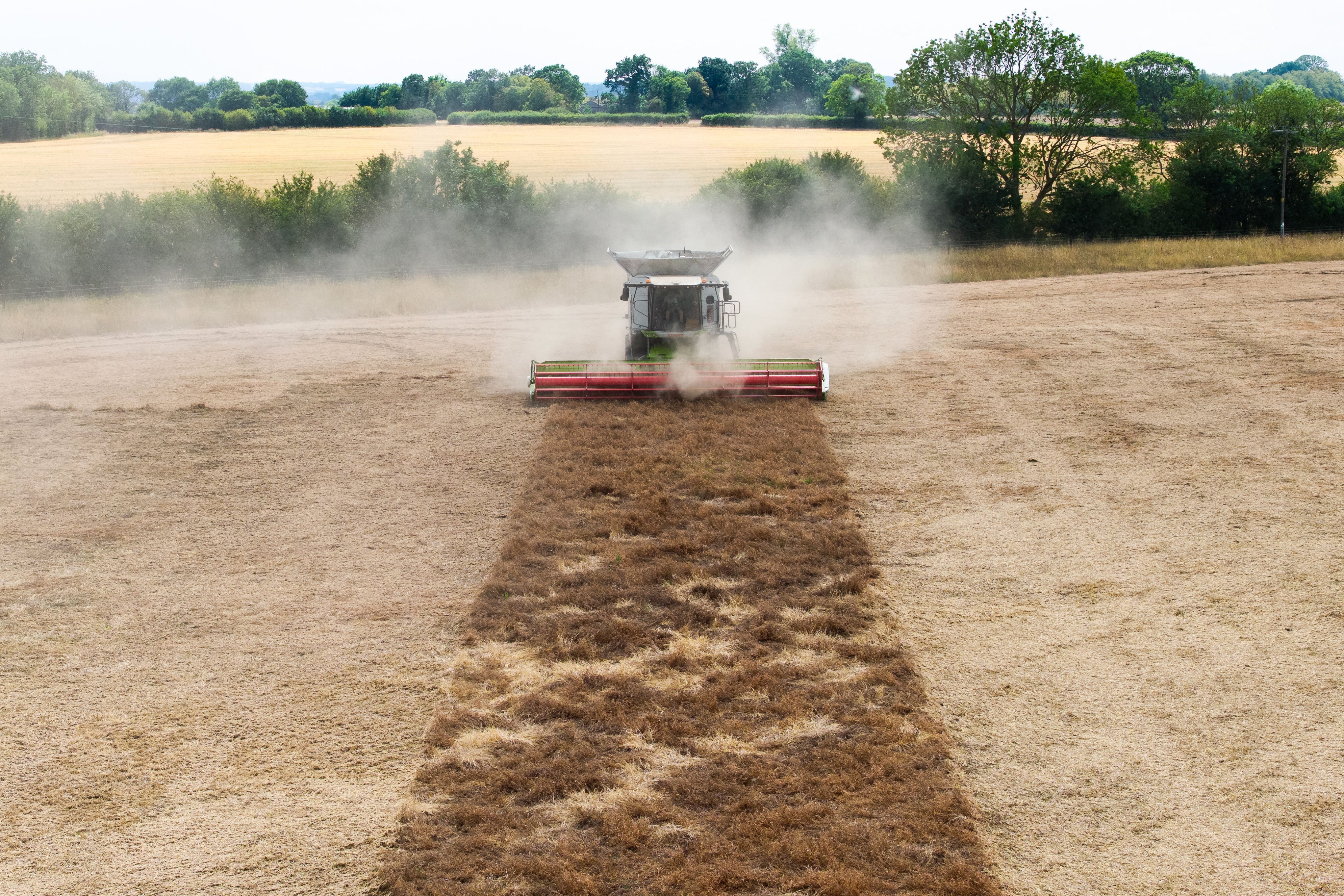
“Many farmers have completed the earliest harvest on record, with poor yields in key crops reported in some areas of the country. Livestock and dairy farmers are already using winter feed because grass has stopped growing, while growers are working hard to keep fruit and vegetables watered, but many are struggling to access the water they need.“
He added that to help farmers in the short-term, the union is calling for a risk register for vulnerable businesses and a more responsive abstraction licensing system.
In the longer term, he said a “consistent and positive” planning approach to reservoirs, further rounds of the Water Management Grant and targeted investment in climate adaptation will be “vital to build farming's resilience to extreme weather.”
“Water plays a crucial role in food security and the resilience of our nation. By treating water for food as a strategic priority, government can work with farmers to protect crops, livestock businesses and the UK’s long-term food security.”
On Monday, the chair of the House of Commons’ Environment, Food and Rural Affairs Committee, Alistair Carmichael, has said consumers can expect to see the impact of this summer’s record-breaking weather in six to 12 months, as growers have warned that this year’s barley and wheat yield is expected to be lower than previous years.
“The problems for farmers today will be the problems for consumers in six or 12 months’ time because you see massively decreased yield for wheat and for barley,” said Mr Carmichael, the Liberal Democrat MP for Orkney and Shetland, on BBC Radio 4’s .
“And you’re seeing increasingly sort of concerned noises coming from vegetable producers as well.”
He suggested that shoppers may not be able to rely on imports to buy cheaper food because of the extreme heat throughout Europe.
“We can’t look to some of the alternative markets that we might have done in continental Europe in recent years because they are experiencing the same problems that we are,” he said.
“If you decrease the supply but you maintain the demand, then you’re going to pick the price up, so we will be seeing further food price inflation shocks for everybody come the later part of the year.”
Analysis from the Energy and Climate Intelligence Unit (ECIU) last week estimated that the hot and dry conditions that have plagued spring and summer could cut the country’s cereals and oilseed harvest by 2.5 million tonnes compared to earlier projections.