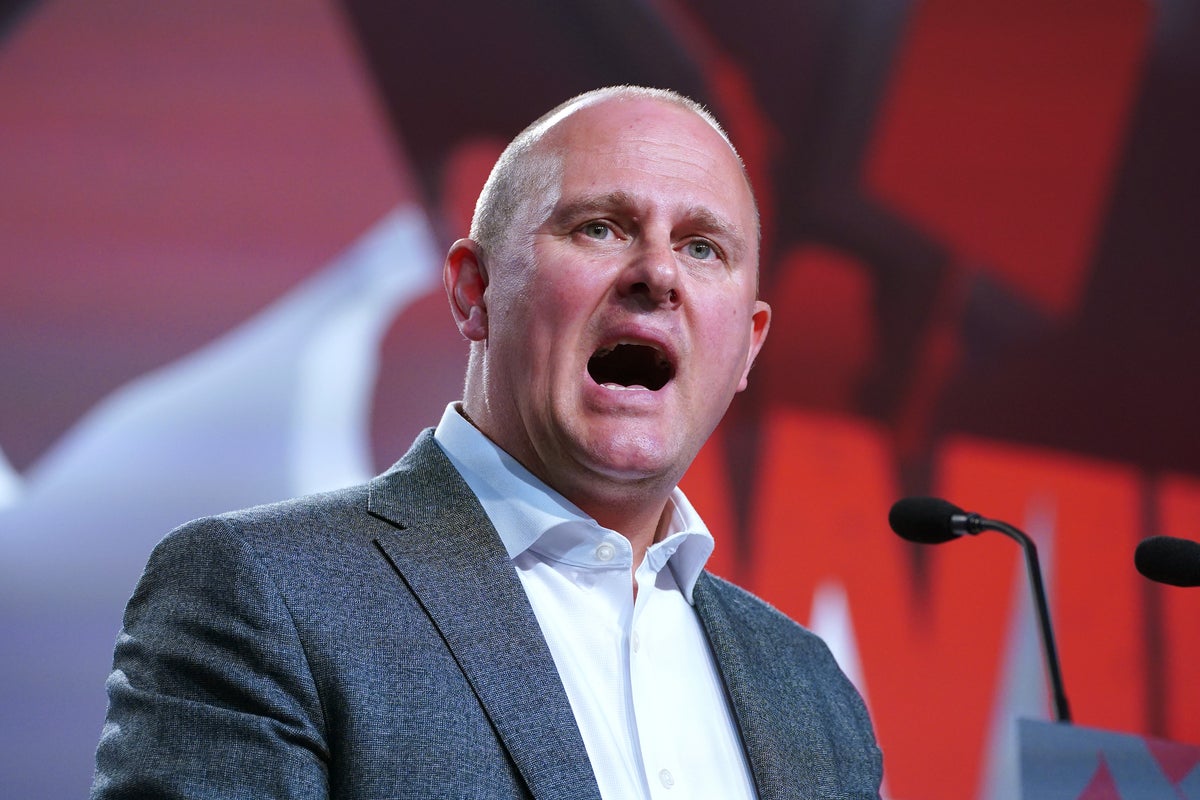
Britain’s most powerful union leader has told Andy Burnham that the “time is now” for a new agreement to develop closer ties between the UK and the EU, warning that “we're all paying the price for that bad Brexit deal” agreed under the Conservatives.
With a difficult Budget looming, Russia waging war on Ukraine and Donald Trump’s tariffs creating uncertainty for workers, the prime minister “has got to” use a key UK-EU summit later this year to strike a new deal with the bloc, Paul Nowak, the general secretary of the TUC said.
The Labour leader has said he wants to be bolder than his predecessor in building relations with the bloc, but he has also said he will honour Sir Keir Starmer’s Brexit ‘red lines’, which rule out rejoining the customs union and single market or allowing free movement of people.
A new poll released earlier this week found that most of the public (56 per cent) would support him going beyond Labour’s red lines.
In an interview with ahead of TUC Congress, which opens in Brighton on Sunday, Mr Nowak urged the PM to strike a deal with the EU that would help ease the economic costs of Brexit.
“If you are serious about growing the UK economy, you've got to be serious about recouping some of that lost economic growth,” he said, accusing the Tories of a Brexit deal designed to appease the backbenches of their party rather than serve the UK’s economic interests.
He added: “I think he's got to use that summit to build the closest possible economic and political relationship with Europe. It makes sense. They're our largest trading partner, our most important market, and I think it's important that we try and repair some of the damage done by the Tories' absolutely disastrous Brexit deal.
We are campaigning to rebuild Britain's relationship with Europe. Join us
“I think that's even more important when you look at the uncertainty that's been introduced on the other side of the Atlantic, where you literally don't know if Donald Trump is going to wake up one morning and slap tariffs on a part of the UK manufacturing base or industry that would have an impact on jobs.”
He added: “I think the time is now because, whichever way you cut it, everybody should be worried. If you think ahead to the Budget, everybody should be concerned about the rising cost of public sector borrowing. If you are having to spend money on interest payments, debt payments, then an impact on the amount you can spend on schools and hospitals.”
He said the TUC were keen for the government to explore the potential for sectoral deals, including in the pharmaceutical industry and other key sectors, and in potentially finding a way to access ‘Made in Europe’ “in a way that still allows us to deliver the prime minister's agenda around reindustrialisation in Britain and UK procurements. There are balances here, but actually we don't want to be locked out of ‘Made in Europe’. I think that would be a problem”.
He added: “But it's also about just the political relationship because we are literally living in a dangerous, volatile world… in an insecure world, I think that it is important we have the closest possible relationship with our European neighbours. That does not mean rerunning the referendum, and it doesn't mean rejoining the European Union.”
“We want a growing economy… It's up to 8% of our GDP knocked off because of Brexit. If you are serious about growing the UK economy, you've got to be serious about recouping some of that lost economic growth that came because the Tories absolutely had a Brexit deal that was designed to appease the backbenches of the Tory Party rather than was in the best economic interests of the United Kingdom, and we got lumbered with it.
“We're all paying the price for that bad deal. And you know, every year that goes on where we don't have a better working relationship with Europe, we pay the economic price.
He said he did not think the public wanted another referendum on EU membership.
But, he said, “I think the public are absolutely in the market saying, "Hang about, yeah, we want our kids to be able to live and study in Europe. That would be a good thing. Yes, we want the price of goods and supermarkets to be lower’, and partly they've been driven up by that Brexit premium that that we're paying. “
A government spokesperson said: "We are building an ambitious, close relationship with the EU that will strengthen our economy and unlock good growth in every postcode."
What you will get by joining:
- A dedicated community: We are fully committed to the long haul, consistently campaigning to secure the absolute best deal for Britain within Europe.
- Free weekly newsletter: Every Wednesday, political editor David Maddox and political correspondent Millie Cooke will be in your inbox with exclusive reporting, analysis and insight on the biggest developments shaping relations between Britain and Europe. Each week, they will explain what’s happened, what it means, and what the key political figures, experts and decision-makers are saying about it.
- Essential continental updates: Stay informed with regular briefings on the biggest developments in European politics and the specific policies that could pave the way for closer EU relations.
There are even more benefits if you subscribe for just £1 for seven months
- Exclusive content: Get the highest quality analysis, opinion and debate from political experts across the UK and Europe by subscribing to our premium service.
- The Brexit Effect: You'll get exclusive access to extracts from Anthony Seldon’s major new book, The Brexit Effect, offering an unparalleled analysis of the 10 years since the referendum.
- Inform the debate: Receive exclusive invitations to live events, webinars, expert Q&As and podcast recordings.