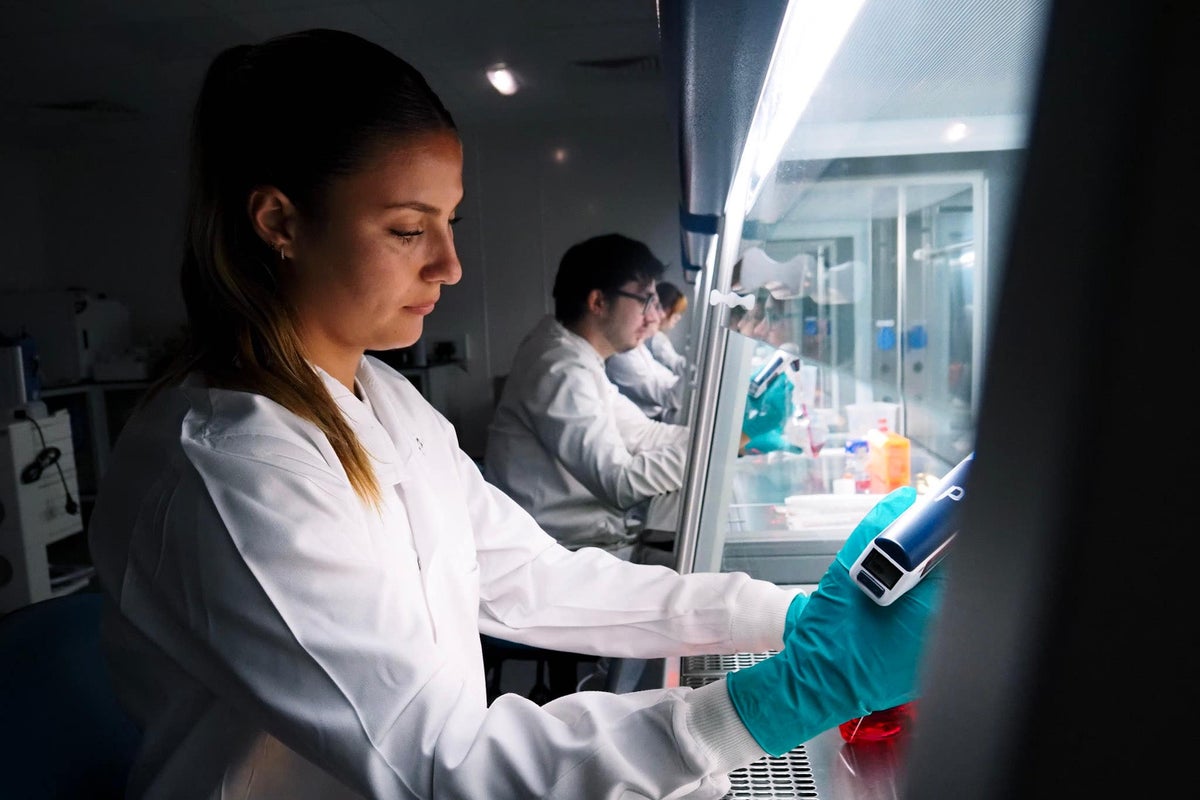
A UK university has opened a new government-funded laboratory to help train the next generation of biomedical scientists to work in the NHS and life sciences sector.
The £2.5 million facility at the University of Essex, which includes a dedicated cancer diagnostics laboratory, was funded by the Office for Students.
The investment aims to strengthen training in subjects critical to the UK’s future workforce.
The Bioscience Skills Training and Research Laboratory (BioSTAR-Lab) aims to give students hands-on experience with equipment and techniques used in modern healthcare and life sciences laboratories.
Students studying biomedical science, biotechnology, cancer biology and related degrees will use the laboratories to carry out their research projects.
The facility also includes specialist microbiology and molecular biology laboratories where students will analyse tissue samples, study infectious diseases and use molecular techniques.
Professor Terry McGenity, head of the School of Life Sciences, said: “Here at Essex, we are dedicated to providing a rounded education that is inspired by our world-leading research, which equips our students with the understanding, skills and experience they need to launch their careers in nationally important sectors.
“Hands-on, lab-based research projects provide a transformative experience for our final-year undergraduates and masters students.
“They allow all our students to become part of the research process by carrying out their project alongside experts, where they apply what they’ve learned, and develop critical understanding of a particular area, as well as new technical and analytical skills.
“This new facility will place us at the forefront of training students to be skilled and versatile critical thinkers, who will be ready to work in the NHS and life-sciences sectors.”
The university said the investment comes at a time of growing demand for skilled life scientists, with more than 300,000 people already employed in the sector in the UK.
The lab’s opening comes as the University of Essex launches its first undergraduate biotechnology degree, reflecting growing demand for graduates in a sector that develops vaccines, medicines and diagnostic technologies.
Professor Silke Paulmann, executive dean of the Faculty of Science and Health, said the lab “brings together education, research and real-world application, creating opportunities for students to develop the expertise that will drive future advances in diagnostics, treatments and public health”.
“It will help strengthen the talent pipeline that underpins innovation, economic growth and better health outcomes for communities across the UK,” she said.