The US military has launched a deadly strike on a vessel in the Pacific Ocean, killing two people accused of drug trafficking.
On Monday, US Southern Command (SouthCom) announced it "executed a lethal kinetic strike on a low-profile vessel operating along established narco-trafficking routes in the Eastern Pacific".
"Confirmed intelligence revealed the vessel's active involvement in narco-trafficking. The operation killed two narco-terrorists," SouthCom added.
Southern Command did not provide evidence for the vessel's alleged involvement in drug trafficking.
In a statement on the strikes, Francis L Donovan, SouthCom's commander general, said: "We are committed to imposing total systemic friction on narco-terrorists – disrupting their operations, dismantling their leadership and eliminating cartel terror across the region."
"This operation is a powerful demonstration of our lethal precision, overwhelming capability, and absolute resolve to protect the US homeland," Donovan added.
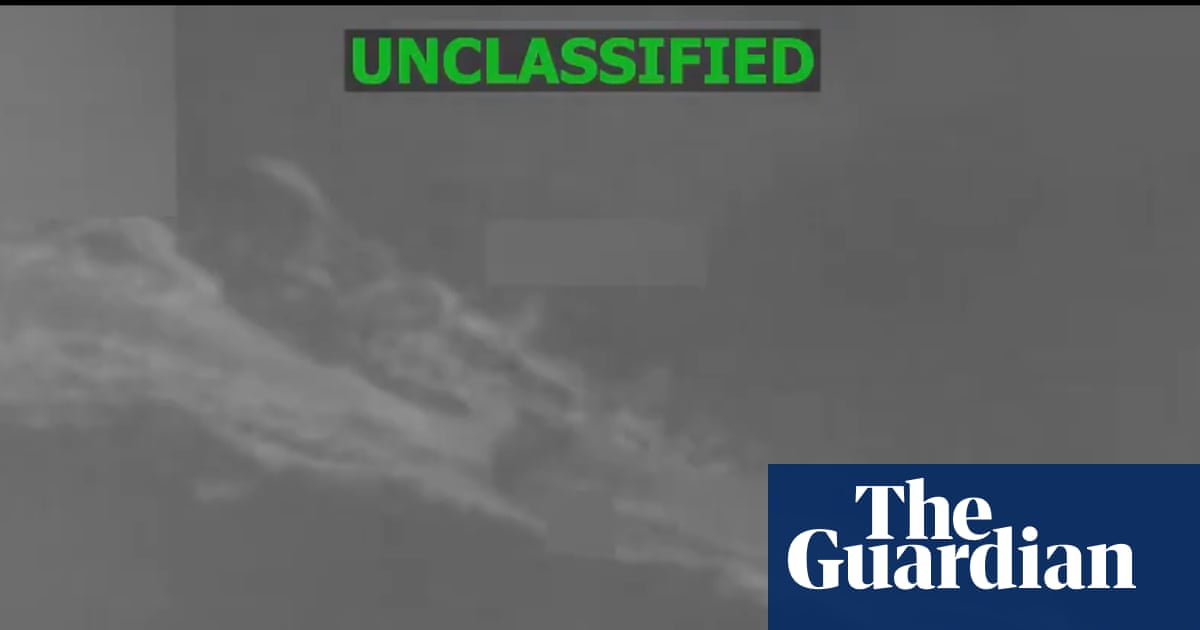
A pixelated black-and-white video posted to SouthCom's X account on Monday showed a vessel moving through the water before it was struck by an explosion that produced a large flash of light.
Monday's strike marks the latest in a series of US military strikes since the Donald Trump administration launched what it described as a campaign targeting "narco-terrorists" smuggling drugs into the US, despite numerous reports indicating that the strikes have done little to stem the flow of drugs into the country.
It brings the overall death toll to 223 people killed in 67 strikes during the nearly year-long US campaign of bombing alleged drug boats off Latin America's Caribbean coast and in the eastern Pacific Ocean. US Southern Command says the campaign has resulted in the destruction of 64 speedboats, three "low-profile" ships and a semisubmersible craft.
The latest strike comes as the Trump administration pursues deals with allied nations to extend its offensive to land across multiple Latin American countries. Defense Secretary Pete Hegseth said during a visit to Panama this month that Colombia, Guatemala and Honduras had agreed to allow the US to carry out joint military operations against criminal groups on their soil. Guatemala denied reaching such a deal.
Ecuador launched similar missions with the US in March.
US Southern Command said in a separate statement on Monday that there have been more than 20 search and rescue efforts overall, almost all of which were unsuccessful.
According to data compiled from the command's social media posts, the strikes have generated 28 survivors with only three people ever being rescued – one person during a strike in March who was transferred to the Costa Rican Coast Guard, and two wounded people who were later repatriated to their home countries of Ecuador and Colombia.
The very first strike in September 2025 left two survivors who were killed in a second, follow-up strike. When that became public, it drew concern from some lawmakers and those who study military law. The White House insisted it was done "in self-defense" to ensure the boat was destroyed and in accordance with armed conflict laws.
Despite the defense department framing the strikes as attacks against "narco-terrorism", it has provided little evidence on whether the vessels were actually transporting drugs. The attacks have been condemned as extrajudicial killings by the United Nations and other humanitarian organizations.
According to a 2020 report by the US Drug Enforcement Administration, 74% of the cocaine reaching the US arrived through the Pacific while only 8% came from fast boats from the Caribbean.
Critics have questioned the overall legality of the boat strikes as well as their effectiveness, in part because the fentanyl behind many fatal overdoses is typically trafficked to the US over land from Mexico, where it is produced with chemicals imported from China and India.
The Pentagon's watchdog said in May that it plans to look into whether the US military followed an established targeting framework when carrying out the strikes. However, the evaluation is focused specifically on what's known as the six-phase Joint Targeting Cycle and not on the legality of the strikes, the inspector general's office said.
Meanwhile, an investigation by the Latin American Center for Investigative Journalism (Clip) this year identified 13 previously unidentified victims of US vessel attacks. All came from impoverished communities across Latin America and the Caribbean and several were fishers with no indication of involvement in the drug trade, it found.
"There are communities where they stopped fishing for several weeks – and if they do that, people go hungry – because they were terrified of being bombed," María Teresa Ronderos, Clip director, said at the time of the report's release.
Other families continue to grieve as they seek answers about their relatives killed in US airstrikes.
"If the boat was carrying so much cocaine and then exploded and caught fire, where is the evidence? Where is the cocaine? That is what I want to know. I know Ricky. He was a fisherman. That was his life," Titus, the brother of Ricky Joseph, one of the 13 people identified in the CLIP investigation, said in June from the Carribean island of St Lucia.