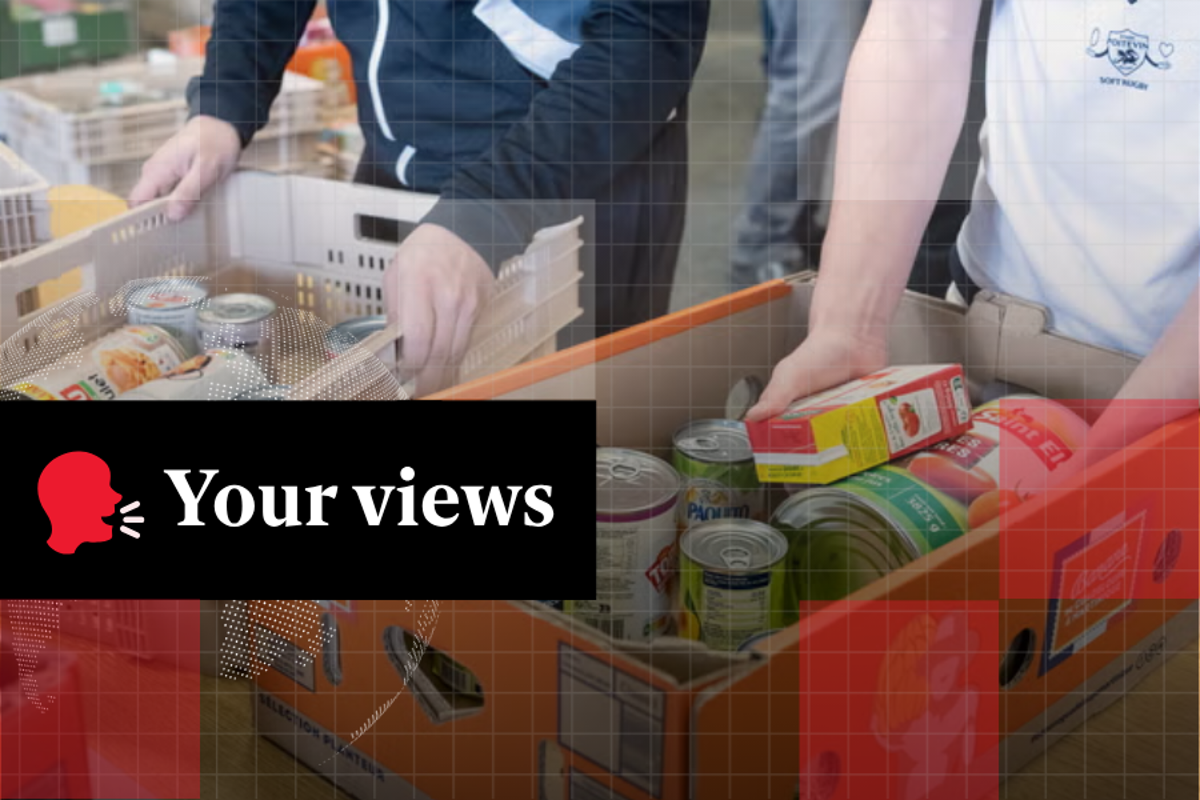
he government is preparing to tell Britons to stock up on tinned food and bottled water, as ministers step up planning for extreme weather and potential attacks on the UK’s infrastructure.
According to reports, Andy Burnham’s government is accelerating work on its “war book” alongside a social media campaign urging households to build up basic domestic resilience.
The advice comes against a backdrop of heightened tension with Russia over Britain’s support for Ukraine, as well as a summer of heatwaves that has left farmers warning of the worst food security crisis in decades.
For many readers, though, the advice was nothing new. Dozens described habits many had already adopted – stocking up on tinned goods, running solar-powered freezers, growing their own veg – driven less by the cost of living.
Here’s what you had to say:
There’s a difference between prepping and taking precautions
Some of this advice is very sensible. When they announced the Covid lockdown we went to the chemist and bought an extra month’s supply of our regular medication (many prescription meds can be bought in Spain, especially if it’s normally on your prescription). It turned out to be a necessity, as we were very ill with Covid, and that, plus lockdown, meant we would have struggled. So this is a habit we have maintained – you need to check regularly for use-by dates.
We keep a supply of bottled water, two or three weeks’ worth. We have a stocked store room, including tinned fruit and veg in case a trip to the greengrocer is a problem. We do a “big shop” online once every three weeks or so and stock up on dry goods, paper goods and meat, which goes in the freezers. We have a water “deposito” that holds about a week’s supply.
None of this would see us through an end-of-world scenario, and I’m not sure I would want it to. But it does protect us from short-term issues like the big power cut here in Spain last year, water supply issues, shop shortages and just our own inability to go out.
Our friend used to laugh at our storeroom and call it “the nuclear bunker”. He messaged us during Covid saying, “everyone needs a nuclear bunker.”
There is a big difference between “prepping” for major disasters and taking precautions against things that could, and in fact have, happened.
Most of us do this already, just less methodically
Most people do this anyway; it’s just a matter of being a bit more methodical about it. A couple of packs of pasta, tins of tuna and some tinned vegetables on permanent rotation in a cupboard.
It makes sense to make people aware that any system of support from any government will have finite resources, and people need to get in a mindset that we all may have to rely on ourselves a bit more when the chips are down.
Hybrid attacks aim to make Britain ungovernable
Hybrid attacks (cyber, arson, sabotage) aim to cause maximum chaos to make countries ungovernable. Whether or not this aim is achieved depends on the resilience of the population. A well prepared population can absorb the impact, hence the attack will fail to accomplish its aims. If the population is unprepared, the disruption is massive, society is at risk of collapsing, the economic and financial cost is huge, and the impact is felt for years. Bottom line: defence and deterrence is no longer a matter of the military only, it’s a matter of every citizen, and we all have to step up to the plate and do our share.
I’ve been a prepper for more than 40 years
I’m well ahead. I’ve lived as a prepper for over 40 years. I have a large store of food. It used to be called a pantry back in the day. A few tinned things, lots of dry goods and a freezer full, and the means to power the freezer even if there’s a power cut. I grow lots of my own stuff, then spend hours preserving it all.
I have fresh meat still running about outside and fresh eggs too.
Some of my habits rubbed off onto my son, who is also a prepper.
Mine started when I lived very rural and there were no guarantees I’d be able to get out of the village in bad weather.
Don’t panic
Don’t panic, Mr Mainwaring! My allotment has filled the freezer and we have multitudes of jars full of produce – just add flour, pasta, rice, corned beef, beans and veg oil plus water!
Britain needs to prioritise farming over rewilding
The first act is to stop all the rewilding projects. Remove control of all farmland from the NT, RSPB etc and get producing our own food. Make farming a priority and stop any housing estate building on grade 1 or 2 land. 30 years ago we laughed about climate change. It is for real and we need to get ahead with increasing staple food production to become as self-sufficient as possible.
Civil unrest feels almost inevitable
Call me paranoid, but the conflicts around the world are already collapsing economies. UK involvement in Ukraine is no joke. An attack from Russia is not out of the question.
That seems to be the real warning in all of this, without saying it out loud.
Civil unrest feels almost inevitable at this point.
Already doing this because of the cost of living crisis
Have already been doing just this to help re the cost of living crisis, rising bills and basic essentials and any further problems with the DWP.
Struggling families deserve the same reassurance
Perhaps our generous government will help supply foodbanks with supplies to help out the poor and the needy – UK families and pensioners struggling to get by could do with that reassurance too.
Some of the comments have been edited for this article for brevity and clarity.
Want to share your views? Simply click ‘log in’ or ‘register’ in the top right corner to sign in or sign up. Once registered, you can comment on the day’s top stories for a chance to have your opinions showcased.
Want your voice to stand out? Independent Premium subscribers enjoy priority for featured comments. Subscribe here.
Make sure you adhere to our community guidelines, which can be found here. For a full guide on how to comment, click here.