his week, I had the great honour of delivering the Claudia Jones memorial lecture, hosted by the UK National Union of Journalists. It is partly inspired by the Long Wave and the extraordinary response it continues to receive from readers. As the newsletter turns two, I reflect, in the abridged version of the lecture below, on the importance of making space in an embattled political climate.
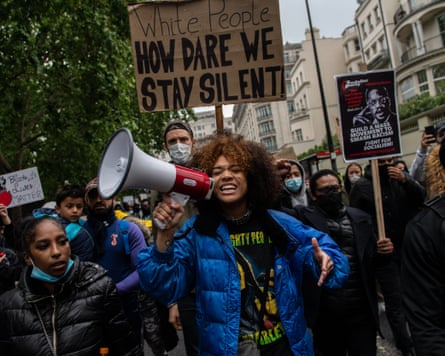
It feels like a particularly difficult time to say anything with much certainty. We stand today in the shadow of the Black Lives Matter Movement – as well as the wreckage brought about by neoliberalism, the rise of the far right, and ongoing culture wars. In the last decade, several moments have swelled with possibility and then melted away – not quite into nothing, but certainly, less than we would like. Where do we go from here?
It feels to me, as someone who began writing as a columnist and journalist proper less than a decade ago, that I broadly could always tell what my marching orders were – who the antagonist was. In Britain, a Conservative government enacted large-scale cuts to public services, and the police and Security Service institutionalised Islamophobic and anti-Black policies such as the Prevent duty and stop and search. It was a hostile environment that meted out treatment so cruel that I am still haunted by some of the stories I heard from victims I met while reporting on it. And it was a broader political culture that refused to acknowledge that institutional racism existed. Things were said to us, and about us, while we lived an entirely different reality. The sense was of a particular sort of psychological agony, one which powered much of my writing.
I remember when the lies began, after what appeared to be giant breakthroughs in 2020. There were always lies but these had a different quality – a coordinated feel. The Daily Mail would print something, and then Tory ministers would run with it, conveying outrage and dismay at the special treatment Black people were supposedly demanding and receiving. Then, the airwaves and social media would hum with discourse and debate for days in the aftermath. One particular episode comes to mind: when the BBC shortened its Last Night of the Proms broadcast due to Covid-related precautions, and the rightwing media claimed Land of Hope and Glory was cancelled because of the BLM movement. Even then-prime minister Boris Johnson joined the condemnation.
What happened after 2020?
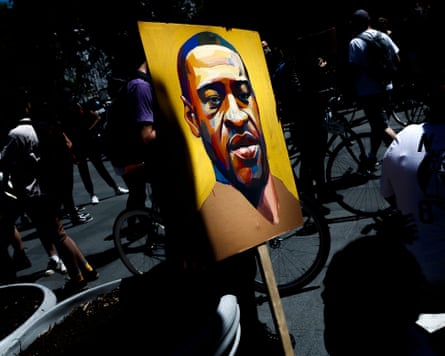
After the death of George Floyd, similar stories followed. Trying to correct and counter media coverage, rightwing myths, and mainstream discourse about race became like playing whack-a-mole. The right and those influenced by them worked together to produce a blanketting account of Blackness. If you challenged or complained, you were labelled as entitled, and addicted to a victimhood that the government had disproved once and for all in the form of an official report. Even if you said or did nothing, stories would be made up about you for sport.
The progressives were the most infuriating of all. Posting black squares and taking the knee when the cost was low and reward was high, but then retreating to the pompous and disingenuous argument of "going high" in the face of Black vilification because culture wars aren't "salient" to voters. They were pretty salient to Black people. I experienced this time as one of almost physical savaging.
In hindsight, I see we were rapidly boxed in, with no room for manoeuvre. I felt a sinking realisation in my work: every objection I wrote or spoke was happily gobbled up by the very ecosystem it fought. Journalism regarding Black concerns and public figures became a matter not of reporting and opinion, but instant recruitment into a war. Our opponents were a disparate bunch, but were the product of a majority white establishment that just did not want to listen to the experiences of Black people, to the facts about disproportionate policing and racial profiling, and vastly unequal maternal health, unemployment, education and income. It felt like a trap. In responding to this climate, our orientation was not towards each other, even though it felt like we were defending each other. We needed to turn away from white-facing discourse and into Black-facing and intra-communal discourse. A step back became necessary. What was journalism for?
How can multi-faceted Blackness take up space?
In 2024, we began publishing the Long Wave. I have learned a lot in the past two years, but the main lesson is just how much more distinctive the Black experience is, even more than I thought or intuited, because no other people were enslaved, traded and removed from their lands in such numbers and over such a long time. The Black diaspora is among the largest and most sprawling of them all, connected by similar histories that often shock myself and the team with the specificity of practices, ways of living and challenges on entirely different continents. Whether it was in common linguistic heritage, musical influences, resistance politics, and in one particularly bewildering report, shared mystical pre-Abrahamic practices.
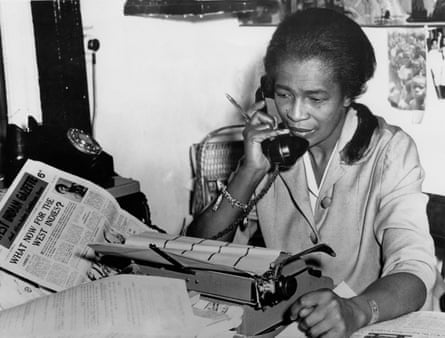
Diaspora is not a people scattered from a homeland, but a homeland that has travelled with the people and remains, in different forms, still within them. It makes space for a multifaceted form of Blackness, which can incorporate co-existing identities. For me, these identities have included being Sudanese, from a certain tribe, and Muslim. Following that, I have found other ways of self-defining – African, pan-African, and Black. I have found that Black can mean belonging to part of something bigger. Acknowledging this follows the legacy of Claudia Jones herself, who inspired this speech. Jones's journalistic endeavours at the West Indian Gazette supported anti-racism in the UK, but also fostered dialogue between West Indians and international freedom movements. And in establishing the precursor to Notting Hill Carnival, she also galvanised a form of Black culture that insists on its endurance on its own terms.
In these forms of thinking, writing, organising and community-building, we might find that space for manoeuvre. That breathing space as a Black British journalist, and a Black Briton who gives a damn. That space to be Black and care and write about racism – because it is simply a fact of one's life. That space to do so without being limited by it and defined by it. And that space to be confident and ambitious and global with our own stories, without having to worry about how this looks to "them". This feels all the more pressing to me as a Black journalist who is also Muslim and Arab. None of this will change the media or the environment we live in, but it will help us navigate it without being subsumed by it.
This is the process of identifying with a diaspora, and actively seeking ways in which we can re-connect with it. It is also a process of divesting from the particular, and embracing something more whole. To think in different strategies and approaches to surfacing Black life beyond its treatment by white majorities and hegemonic histories. To understand that wherever we feel kettled in, suffocated and disempowered, so much exists beyond the reach of the online troll or rightwing columnist. There is history, literature, political activism, carnivals, music, travel and, wherever we stand – community and gathering in the spirit of what Claudia Jones created. There are also vast opportunities for journalism that reports the diaspora not simply as an addendum to a western white experience. What is journalism for? For me, it is to exist on your own terms.
To receive the complete version of The Long Wave in your inbox every Wednesday,please subscribe here.
Next week, the Long Wave marks its second anniversary. What, to you, is the most memorable edition of the Long Wave? Perhaps there was a piece you deeply related to, or one that drew your attention to a shared diaspora experience?
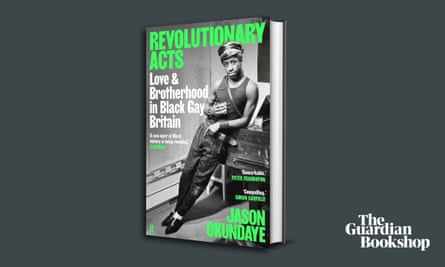
Send us your name, location, your chosen edition, and 3-5 sentences explaining why. Our favourite responses will receive a copy of former Long Wave editor Jason Okundaye's book Revolutionary Acts: Love and Brotherhood in Black Gay Britain – part of the Guardian bookshop's Black History Month collection. They may also be published in next week's anniversary edition of the Long Wave.
Entries should be submitted to thelongwave@theguardian.com by 9am on Monday 26 October.
Diaspora discusses
Last week, Long Wave editor Micha Frazer-Carroll shared her experience of attending a Jamaican Patois class, and the barriers to Caribbean diasporans learning Creole languages. Here's what readers thought:
Living in Scotland, I rarely speak patios, but I enjoy hearing it and sharing a few words. Its etymology is what fascinates me. I cried when I learned that , our word for eat, comes from the Fulani word, , meaning to eat. Also is plural for "you" in Yoruba. I cried because it brought home all those lost voices, words from home, and people displaced against their will.
Pauline Brown, based in Glasgow, Scotland
I grew up also surrounded by Indo-Guyanese English Patois. My grandmother's Patois included many Bihari, Sanskrit, West African and Indigenous Arawak terms. I remember speaking on my first day of kindergarten and my teacher being quite confused. My grandmother died a few years ago and when she was admitted to hospital the staff did not know what language she spoke. Her doctor very rudely joked: "we thought she was from another planet and that she was speaking some Martian language." I feel that she could've lived many more years had there not been a perceived language barrier during her care.
Rajendra Kapila Basdeo, based in Montréal, Québec, Canada
I'm a Jamaican living in Canada, but I go to Jamaica every year. In Canada, the Jamaican language is much more recognised, taught at the university, translated into the New Testament and celebrated thanks to the work of many people. I write poetry in Jamaican (the term that marks it as a language as opposed to a dialect). I think we have come some way away from the stigma. You should hear my Canadian born 10-year-old grandson speak it as his mother practices with him and teaches him the grammar!
Jennifer Walcott, based in Toronto, Canada
I am pleased to know someone is teaching Jamaican Patwa, but I did not agree with parts of this newsletter's description. I doubt that anyone would overstand for "skin" or for "skyalp" (the usual pronunciation). For me, when I returned from England speaking "the Queen's English" I learned Patois by being in and around Patois speakers. It blended into my language and musical rhythm until it is completely a part of how I now speak. However, may the students press on. Learning more languages is always good for everyone.
Barbara Blake-Hannah, based in Kingston, Jamaica
As someone born and raised in Jamaica, I've never even thought about how Jamaicans born and raised abroad may feel about speaking Patois. This newsletter was enlightening and opened my eyes to how they suffer a pain that I cannot understand, and instead of teasing them about how they sound when they try to speak like a native Jamaican, I need to give them grace and help them with their Patois. I'll make sure to tell my friends as well.
David P.A. Mullings, based in the US and Jamaica