It was a curious way of conducting negotiations. Ahead of the 2025 climate summit, in the Amazonian port of Belém last year, the Brazilian hosts had taken off the table the issue that most had assumed would be at its heart: concrete plans from each country laying out exactly what they would be doing to cut their greenhouse gas emissions.
Brazil was insisting, instead, that these plans – the bedrock of the Paris agreement – were the business of national governments and not up for negotiation. "In that case, it will be a very short Cop," one seasoned global south negotiator told the Guardian shortly before, reflecting a widespread unease. "There is nothing to negotiate."
"They have decided that there is no appetite for negotiation, with the US out of Paris," said another developing country diplomat. "Countries won't engage."
The summit ended with a deal, although few loved it. But, as the faultlines from the Brazilian decision deepen going into this year's summit, it is clear that the Paris agreement, and climate action around the world, has reached an impasse.
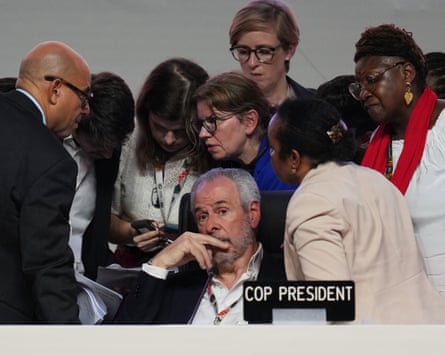
And it is not just Cop insiders who are worried. For many outside the vast white air-conditioned conference halls, the question, as this year's summit begins, will be: what is the point?
Those same governments have pledged year after year since the Paris agreement was signed in 2015 – and entered into force a year later – to limit global heating to 1.5C above preindustrial levels. Yet temperatures for two years have exceeded that threshold, and the UN revealed a few weeks ago that its most optimistic estimate was now for about 1.7 to 1.8C of heating.
There could be no clearer evidence that the Paris agreement, on the face of it, has failed. It is impossible not to wonder whether the Cop process itself is just not fit for purpose.
The charge sheet against Paris is long, with the central issue being the failure to achieve its goal. Beyond that immediate failure, the negotiation processes are endlessly convoluted and cause their own problems. It took more than five years just to negotiate the Paris "rulebook" under which the treaty is interpreted and put into effect.
The convention that all resolutions must pass by consensus has given bad actors free rein. Donald Trump's allies – in Saudi Arabia, Russia, Venezuela and some other petrostates – frequently veto measures and obstruct progress.
It took more than 30 years of negotiation since the UN framework convention on climate change was signed in 1992 for fossil fuels even to be addressed directly. This was atCop28 in Dubai in 2023, where countries agreed for the first time to "transition away from fossil fuels" but failed to set a timeframe or any policies to back up the resolution.
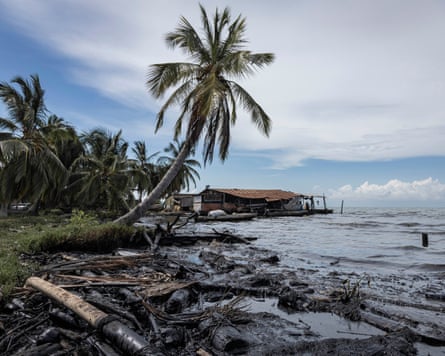
The US, the world's biggest economy and responsible for about one in every eight tonnes of carbon dioxide emitted today, has withdrawn from Paris under President Trump.
Even parts of the developed world which support the process have mostly failed to come up with convincing plans: Australia, co-host of Cop31, has set no end to fossil fuel exports; its fellow co-host Turkey plans to increase its carbon output. The UK is opening a gasfield and mulling a new oilfield, Germany has dropped its electric vehicle sales targets and scrapped a renewable heating law. Meanwhile, most rich countries are reducing their contributions to climate finance for the poor.
Most of all, the slow pace of the Paris timetable might have seemed fine in 2015, when temperatures were rising at 0.2C a decade. Today, the rate of rise is 0.4C a decade and still accelerating.
"The structures of Cops and Paris are labyrinthine, bureaucratic, and ultimately dispiriting," said Paul Bledsoe, a former Clinton White House climate adviser, now with the American University. "It may be time to streamline them to focus more deliberately on national emissions reduction goals."
As ordinary people watch these failures outside and inside the process, some are losing faith. The Paris agreement was a sensation, celebrated around the world. In the years since, the aura of Cop has faded, as meetings seem to disintegrate into arguments over wording and compromise.
"A lot of the commitments, the promises that were made, just turned out to be a bunch of hot air," said Juan Carlos Monterrey, former climate envoy for Panama, now chief executive of the Vanglabs consultancy. "Under that measure, we have failed."
Johan Rockström, director of the Potsdam Institute for Climate Impact Research, said: "The fact that global warming is accelerating, that we inevitably will be breaching the 1.5C limit within three to five years, that tipping points are coming closer fast, that Earth's resilience is showing worrying signs of decline, and that we still allow ourselves to follow a global path that will take us to a catastrophic 2.6C-3C, and that this is allowed to happen within the framework of the Paris agreement, cannot be considered as anything but a global failure."
But, like most involved in international climate efforts, both refuse to concede that Paris is done for. "On the other hand," said Rockström, "Paris is all we have. And we know that the global climate crisis can only, in the end, be solved if all countries in the world simultaneously move away from planet-damaging heat injection."
Monterrey agrees. The most important fact about the Paris agreement, and the Cop process, he says, is that they exist. "Paris is our moral compass. It has told us where we should go. The speed of travel is not what it needs to be, but Paris has set the direction."
A messy compromise
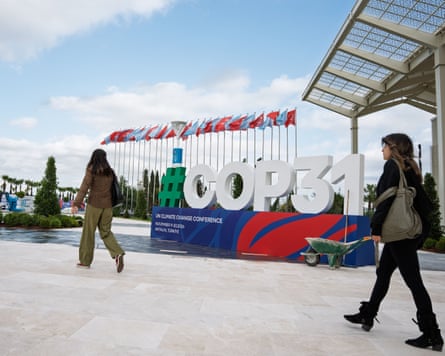
This year's Cop is the first to have a split presidency and host. Being held in Turkey but presided over by Australia, Cop31 is a messy compromise between two countries whose other chief point of commonality is an admiration for coal.
Unexpectedly, however, the skies are a little brighter over this year's meeting than anyone might have expected. Brazil has decisively re-elected Luiz Inácio Lula da Silva who has already overseen the biggest reductions in deforestation for decades.
The US midterms delivered a drubbing for the right, while in Serbia and Hungary this year democracy has won out over authoritarianism. Though the far right is still on the march across much of Europe, and autocrats still rule in most of the countries with the biggest fossil fuel industries and highest emissions, the replacement or weakening of anti-climate authoritarians by pro-climate parties is a positive sign. Globally, a large majority of people support climate action.

Action beyond the framework of Cop is marching on. After the failure of last year's Cop30 in Brazil to provide a strong statement on phasing out fossil fuels, a group of nearly 60 countries held an alternative meeting in Colombia in April and agreed to draw up their own national roadmaps for the "transition away from fossil fuels".
Three major countries have so far done so: France, Germany and the Netherlands. Bledsoe wants to use this model for more side agreements on the "super pollutants" such as methane, refrigerant chemicals called HFCs, ground-level ozone, nitrous oxide and black carbon, or soot.
Cutting methane by 40% could alone hold down temperatures by about 0.3C in the next decade, and deeper cuts beyond that could yield a 0.5C decrease by 2100.
"Paris was never intended to do all the hard work itself," Bledsoe said. "We need to use the G7, the G20 and other forums too, and we need to elevate the climate to the level of national security concern, and see it as an economic threat."
While the failures of Paris might seem obvious, its "moral compass" has also translated into greater success in the real world than many people realise.
"The solar panels on my roof and the BYD Dolphin [electric car] my neighbour drives are exhibit one and exhibit two of Paris's success," said Claudio Angelo, of the Observatório do Clima thinktank. "Will Paris prevent overshoot of 1.5C? No way. Will it prevent 2C of warming? Unlikely. But the transformation it has triggered can't be exaggerated."
Perhaps the clinching argument lies in China, the world's biggest emitter of greenhouse gases and second-largest economy.
"China is taking multilateral climate efforts more seriously than many other countries, and certainly more seriously than it did a few years ago," said Li Shuo, director of the China climate hub at the Asia Society Policy Institute. "The reason is simple: its economic stakes have grown enormously. If the world abandons decarbonisation, where will China sell its solar panels and electric vehicles?"
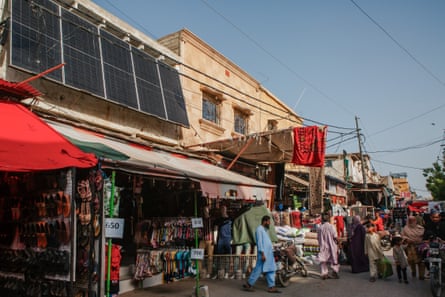
And, stung by high fossil fuel prices, many developing-country consumers are grasping clean technology without waiting for assistance. In Pakistan, plagued by blackouts and grid supply issues, rooftop solar panels have taken off, now making up about a quarter of electricity use in the country. Similarly, drivers in Vietnam are increasingly opting for cheap electric vehicles from China, which now make up more than 40% of its car sales.
Meanwhile, the conference hosts themselves, from unpromising beginnings, have brought forward one of the biggest new ideas in the last decade for putting the world on track to lower emissions – changing fuel sources for cars and heating to electricity. The electricity should be from clean sources where possible – but its efficiency means that even if the energy source is fossil-based, it still uses less power.
Jan Rosenow, professor of energy and climate policy at Oxford University, estimates that the superior efficiency of electricity over fossil fuels will mean that the world's total final energy use can be halved by switching to electric for everything – meaning we need to generate a lot less, too.
If countries can agree a target at Cop31 of deriving 35% of final energy use from electricity by 2035, up from 23% today, that would be a major boost to decarbonisation efforts. Adair Turner, former chair of the UK's climate change committee and now co-chair of the Energy Transitions Commission thinktank, said: "Electrification is the single most important thing you have to do [to reach net zero emissions]."
Cops provide a place where countries can come together to share experiences, to seek advice, to find support and fellowship. "That's very valuable," said Ilana Seid, ambassador of Palau and chair of the Pacific Small Island Developing States. And in a world in which the bulk of current and future emissions, and fossil fuel production, comes from non-democracies or authoritarian states, Cops also provides one of the few forums where they can be held to account.
That "societal pressure" is crucial, said Seid. "We small islands and vulnerable nations are on the frontline. For us, this is existential. We are all very committed to Paris."
After all, despite all the doubts, the power of a decision at Cop should not be underestimated. While "coalitions of the willing" are a "good thing" according to Nick Stern, the economist, the universality of the Paris agreement and Cops give them a unique authority.
Sue Biniaz, a former US climate negotiator, said: "Any time you have a consensus decision, it sends a signal to investors, to people who finance things, and to countries. I think that's true these days with the geopolitics of the world – if something can be agreed by the whole world, it's impactful."
Cop31 may bring progress on electrification, on climate finance and on the transition that countries, rich and poor, need to make to a low-carbon world. But we already know that whatever the summit produces, it will not be enough.
However flawed yet substantive they are, Cops last only a fortnight, while efforts to tackle the climate crisis will require such wholesale transformation of our economies and societies that they should top governments' agendas all year.
"Imagine you have lost your loved one without having their bodies to bring back home. Lost livelihood where you spent your whole life to accumulate those assets. We faced a horrific situation," said Sujeeta Mathema, executive director of ActionAid Nepal, who was quickly on the scene to help people after the catastrophic glacier collapse there.
"It feels like living with grief, fear and uncertainty about the future. The devastation is not just physical; it is deeply emotional and psychological."
People are traumatised, she says, and deeply feel the injustice of how the climate crisis is created by the rich while hurting the most vulnerable. But Cop can still be a place of hope, Mathema adds.
"Cop is an important space for us to raise our voice, clearly putting our agenda. Cop can help prevent such disasters if the commitments come off paper and are put into action."