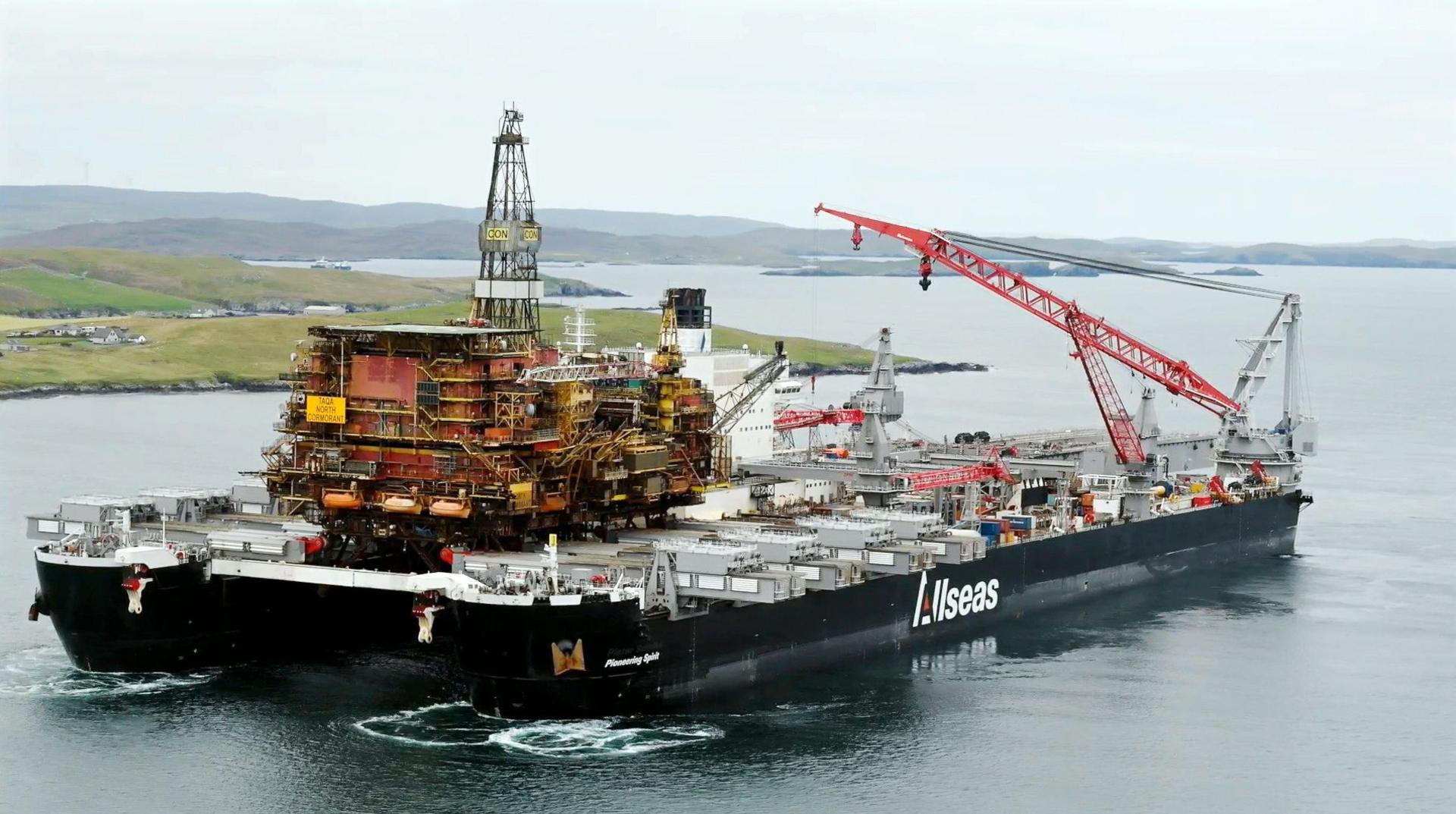
The world's largest lifting vessel has arrived in Shetland carrying a giant North Sea oil platform to be broken up.
Allseas's Pioneering Spirit is 1253ft (382m) long and 407ft (124m) wide, with a 5,000 tonne crane for lifting the topsides of platforms.
The twin-hull vessel arrived in Lerwick Harbour early on Saturday morning with the North Cormorant platform on its deck.
The platform was then placed on a barge to be brought ashore to the quayside at Dales Voe to be decommissioned.
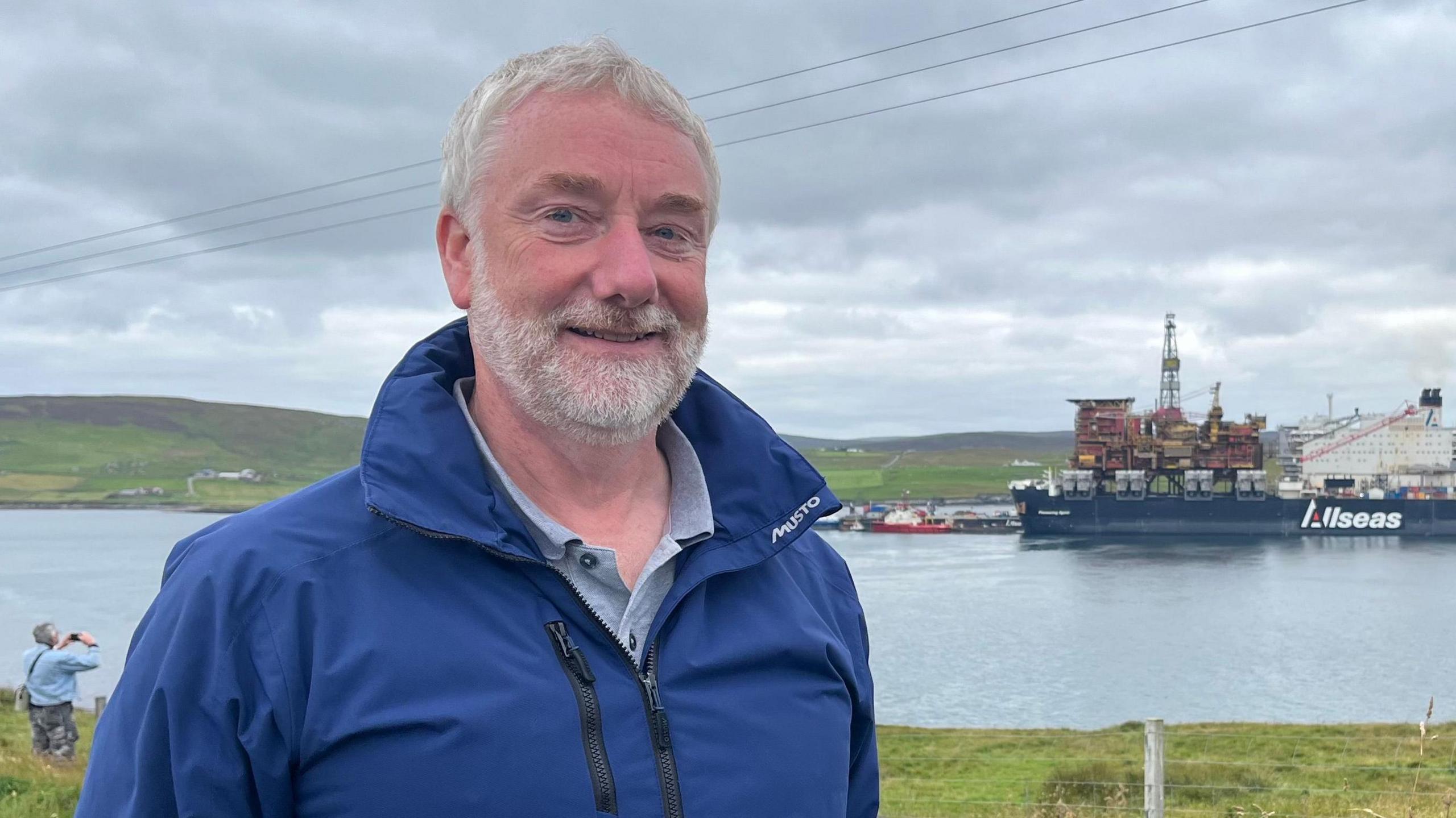
Deputy Chairman of Lerwick Port Authority, Colin Nicolson, said North Cormorant was the largest platform ever to come into Lerwick.
He said it was emotional moment watching it come ashore, as he worked on board as a technician from 1987 until 1995.
"I had eight good years on there and met many good people and made lifelong friends on there," he said.
"One of my tasks was gas testing. There's very few places I haven't been on board, including the top of the drilling derrick and the tip of the flare stack.
"I was also part of the emergency response team, basically a fireman and advanced first aider."
North Cormorant was installed in 1981 with production starting in February 1982.
Over its 42 year history it produced 467 million barrels of oil, which was piped ashore via the Brent pipeline to the Sullom Voe terminal in Shetland.
Nicolson said its decommissioning was "a bonus" for the harbour and the supply chain in Shetland.
He added: "Seeing it arriving is tinged with a wee bit of sadness, old memories it brings with that.
"But also quite a rewarding thing to see Lerwick Port has once again got a significant piece of decommissioning work."
Brown and Mason Group, which is decommissioning the platform, said it expects to recycle up to 97% of the steel and materials on board.
It will take between 12 to 18 months to break up. The company is employing about 30 people on the project.
This is the third major platform decommissioning project for Lerwick harbour.
With plans to build a deep water quay on the horizon, the port authority is hoping it can secure more decommissioning work as production declines in the North Sea oil and gas industry.