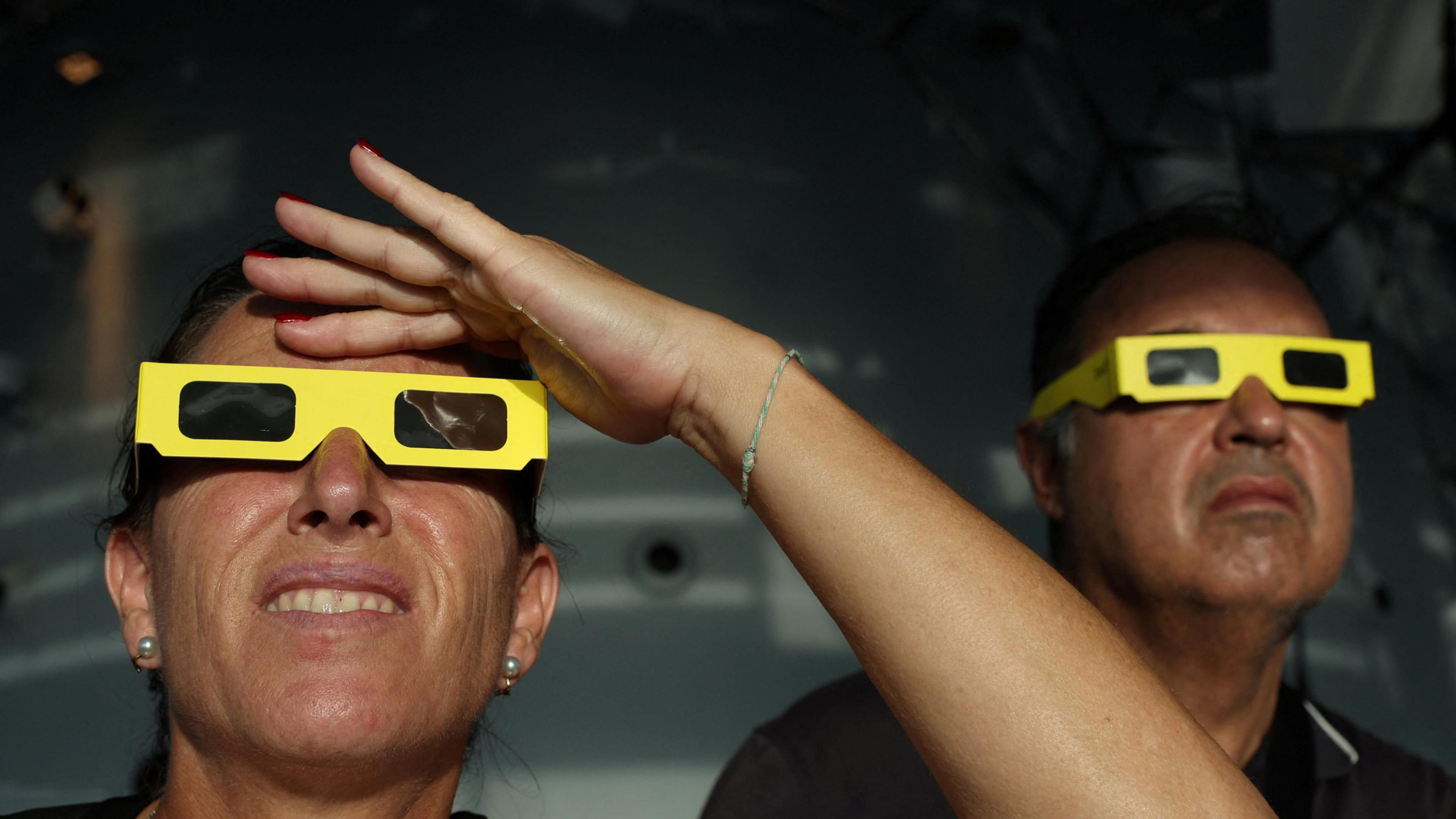
Millions of us were treated to a stunning spectacle on Wednesday during mainland Europe's first total solar eclipse for more than 25 years.
And for some in the UK, it was a race against time to find a pair of eye-protecting eclipse glasses as shortages grew.
If you did manage to grab some, you might be asking - what do I do with them now?
"Eclipse glasses are a great example of our single-use culture," says Dr Renee Tonkin, the founder of Science Owl, an environmental education organisation focused on waste.
"Particularly because they're difficult to recycle due to their mixed materials."
According to Recycle Now, which advises on appropriate places to recycle items, the glasses are not wholly recyclable in your household waste.
It says you can recycle the cardboard frames so long as you separate them from the lenses, which are harder to recycle.
So here are three things you can do with those retina-saving spectacles.
Save them for the 'eclipse of the century'
In 2027, parts of the world will be treated to a total solar eclipse - described by some as the "eclipse of the century" because of how long it will be visible for.
A total solar eclipse means the Moon's disk will completely cover the Sun - and it is expected to last for six minutes and 23 seconds, the longest on land since 1991.
We won't see a longer solar eclipse from land until 2114.
So, you might consider keeping your eclipse glasses to protect your eyes if you're planning a trip to watch next year's spectacle.
It takes place on 2 August 2027 and will be visible from southern Spain, in cities such as Malaga, as well as northern Africa and the Arabian peninsula.
Viewing in northern Africa is likely to be particularly good as few clouds are in the sky at that time of year.
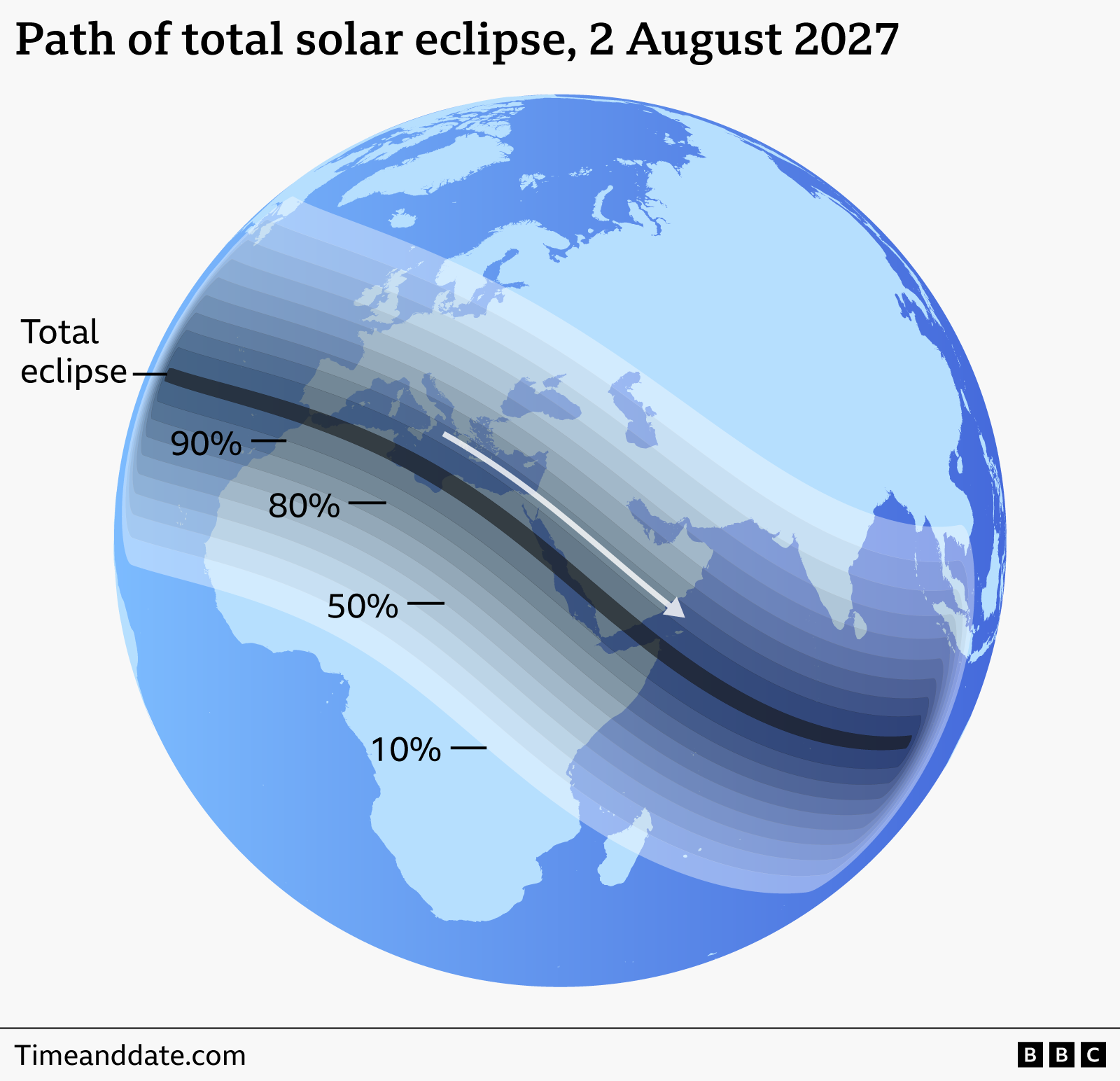
The length of the totality on land will make next year's eclipse remarkable, says Dr Ed Bloomer, an astronomer at the Royal Observatory Greenwich.
"However, it's not going to be the eclipse of our century for us here in the UK because it's not going to trouble us at all," he added.
That said, he points out there will be more eclipses in the UK over the coming years - including the next partial solar eclipse in January 2028 - so you can always keep your glasses until then.
"The glasses that you get now - ones that are made to the correct ISO [safety certification] standard - are made slightly differently than older glasses," he says. "So you can keep them for longer periods."
Though he says you must keep them in a safe place to ensure the coating on the lenses isn't torn, worn or damaged, as that would make them unsafe to use again.
Donate them to others
If you can't travel to see next year's spectacle or don't want to keep your solar glasses for future partial eclipses in the UK, then you might consider donating them to others.
"Ask local schools, libraries or after-school science clubs whether they might like them," Dr Tonkin told BBC News's Your Voice.
"Passing items on to someone who will use them more than you is a really simple way to extend the life of something that might otherwise be thrown away."
Dr Bloomer adds: "Local astronomical societies might often take eclipse glasses in so that they have a bunch to give out to people at future events."
The Federation of Astronomical Societies has about 200 affiliated members and a searchable list on its website.
Repurpose them for a new hobby
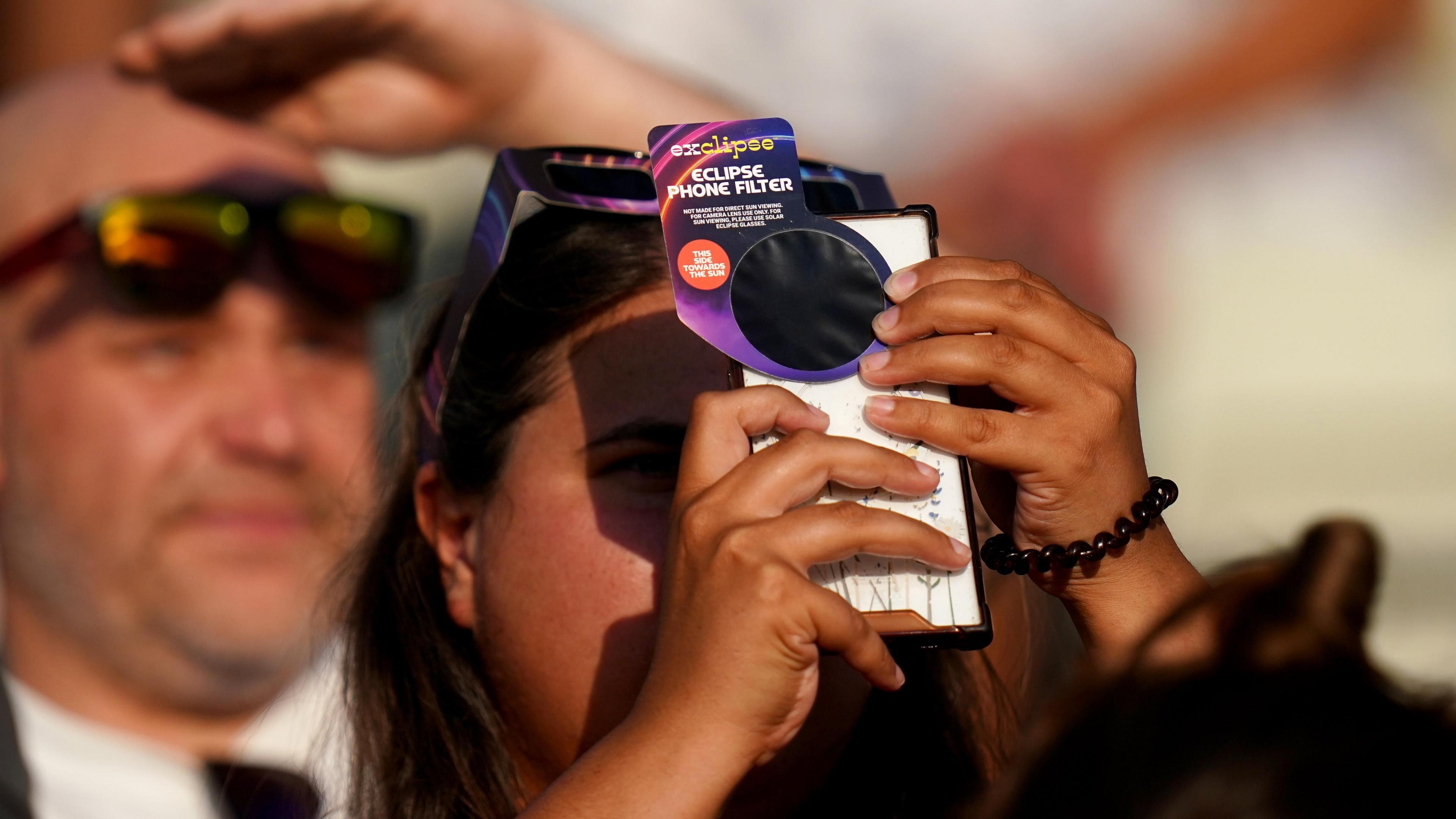
With the technological abilities of modern cameras, including those on your phone, you can take good pictures of eclipses and other solar activity like sunspots, which look like dark patches on the Sun's surface.
"Cut out a square of the solar filter material [from your glasses] and mount the square over your phone's camera lens," suggests Dr Tonkin, whose Science Owl group has a challenge for children to make useful things from waste like eclipse glasses.
Dr Bloomer says "significant sunspot activity" is visible with solar filtering but that you need magnification when viewing with the naked eye.
He cautions that photographers should be wary of prolonged exposure to the Sun's UV rays.
And another thing to bear in mind - taking pictures and videos of the Sun with your phone can also damage its sensors, according to Nasa's guidance.

Get our flagship newsletter with all the headlines you need to start the day. Sign up here.