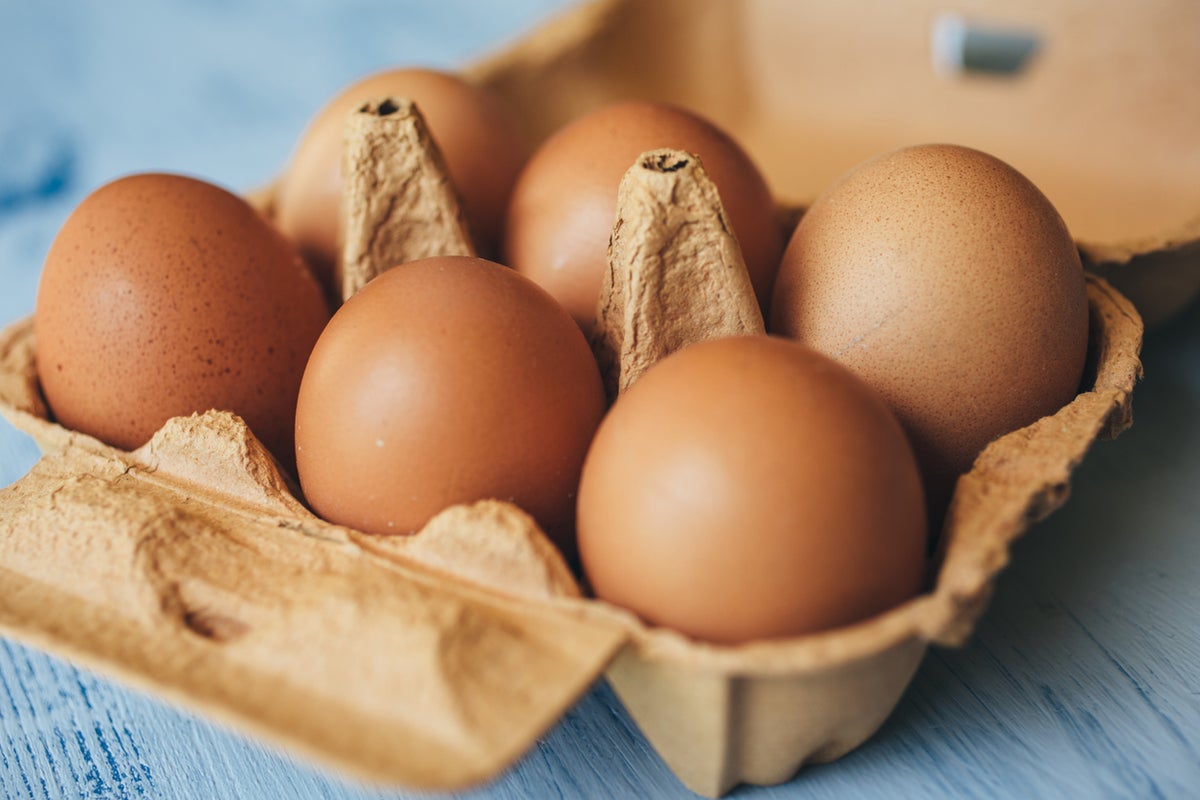
Vulnerable people in the UK have been warned not to eat runny eggs due to a developing salmonella outbreak.
The Food Standards Agency (FSA) has said that under fives, over 65s, pregnant women and people with health conditions should avoid under-cooked or runny eggs when eating out.
Freshly made products that may contain uncooked eggs, such as mayonnaise, souffle and hollandaise sauce, should also be avoided, the agency said.
One person has died and 200 have fallen ill during the UK-wide salmonella outbreak, according to the UK Health Security Agency (UKHSA), ranging in age from under one to 90 years old.
This has been linked to people eating imported eggs, the agency says, as it investigates the outbreak.
FSA chief scientific adviser Ian Young said: “If people are eating out or consuming eggs or egg-containing products from cafes and restaurants, then for those people in particular who are young, elderly, pregnant or vulnerable, it’s important to make sure that any eggs or egg products that you consume in those settings have been very well cooked.”
The expert added that it is fine for people to buy British eggs from supermarkets, as the chickens that produce them are vaccinated against common strains of salmonella.
“There is no link to those eggs to this current outbreak,” he told the BBCdescribing it as “unusually large and rapidly increasing”.
“People need to be careful,” he added.
Early investigations suggest that the rising number of salmonella food poisoning cases is linked to people eating eggs in restaurants and cafes that had imported eggs from abroad.
The majority of the 200-plus cases in the UK are across England.
An update from the UKHSA on Tuesday said: “Extensive epidemiological and food chain investigations are ongoing to identify the source and origin of the contamination responsible for illness.”
Through interviews with 114 people currently infected, it said it found “five food businesses where two or more independent cases reported attending in the week prior to symptom onset. These food businesses link 24 cases in total.”
Salmonella are a family of bacteria that is found in the digestive tract of animals, including cattle, pigs and chicken. It lives harmlessly in the animals, but can pass on to humans in the food they eat.
Contaminated food that has not been cooked properly or cross-contamination of raw and cooked food are common causes of infection in people.
Salmonella causes typical food poisoning symptoms, including vomiting, stomach cramps, diarrhoea or fever. These usually develop around 12 to 72 hours after infection.
Hannah Charles, the UKHSA’s lead epidemiologist for gastrointestinal infections, said: “We’re working with the Food Standards Agency and other public health agencies to investigate a salmonella outbreak that may be linked to eggs imported from outside of the UK.
“Salmonellosis is often caused by eating or handling contaminated food and can be spread rarely from person to person. Salmonella generally causes a mild illness, although vulnerable groups with weakened immune systems may experience more severe illness.”